blog
Content Repurposing Strategy: How to Turn One Asset Into Multiple Content Pieces
The content team spends hours creating one blog post. Then, it hits the publish button on the website, promotes the blog on social media, and moves on to the next. This continues. Where most content dies within 48 hours of publishing.
What if you could make that one piece of content work for weeks or months?
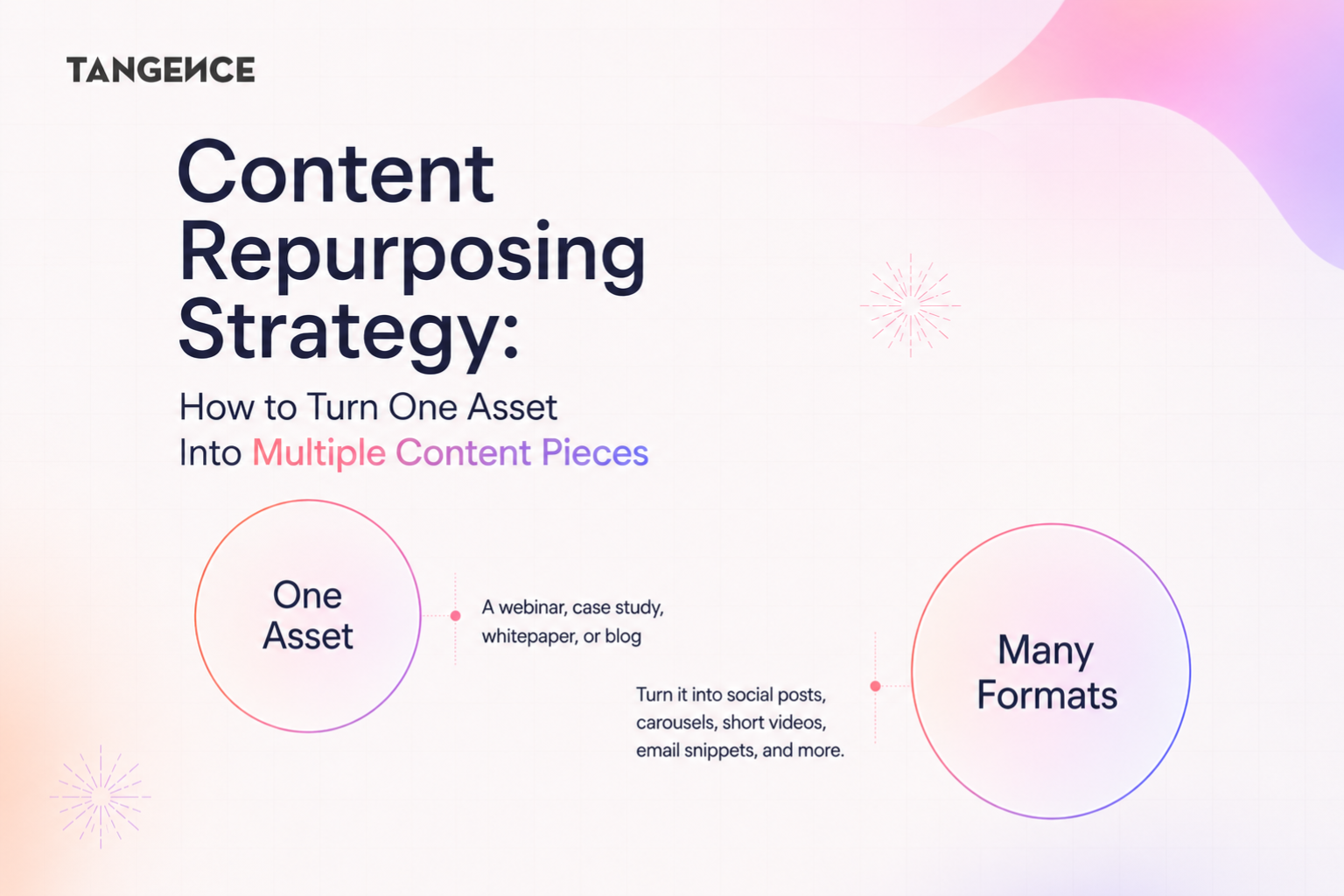
The secret is a smart content repurposing strategy. It is about taking one core asset and turning it into many different pieces. This saves time and reaches more people.
In reality, 65% of content repurposing marketers enjoy a better return on investment. Indeed, one of the clients was able to transform just 4 podcasts into 48 separate pieces of content and earned $89,000. And creators who repurpose live streams into short clips see a huge 71% return on investment.
Stop creating and forgetting. Start repurposing and growing. This guide will show you exactly how to build a system that works. It is time to get more value from everything you create.
What Is Content Repurposing?
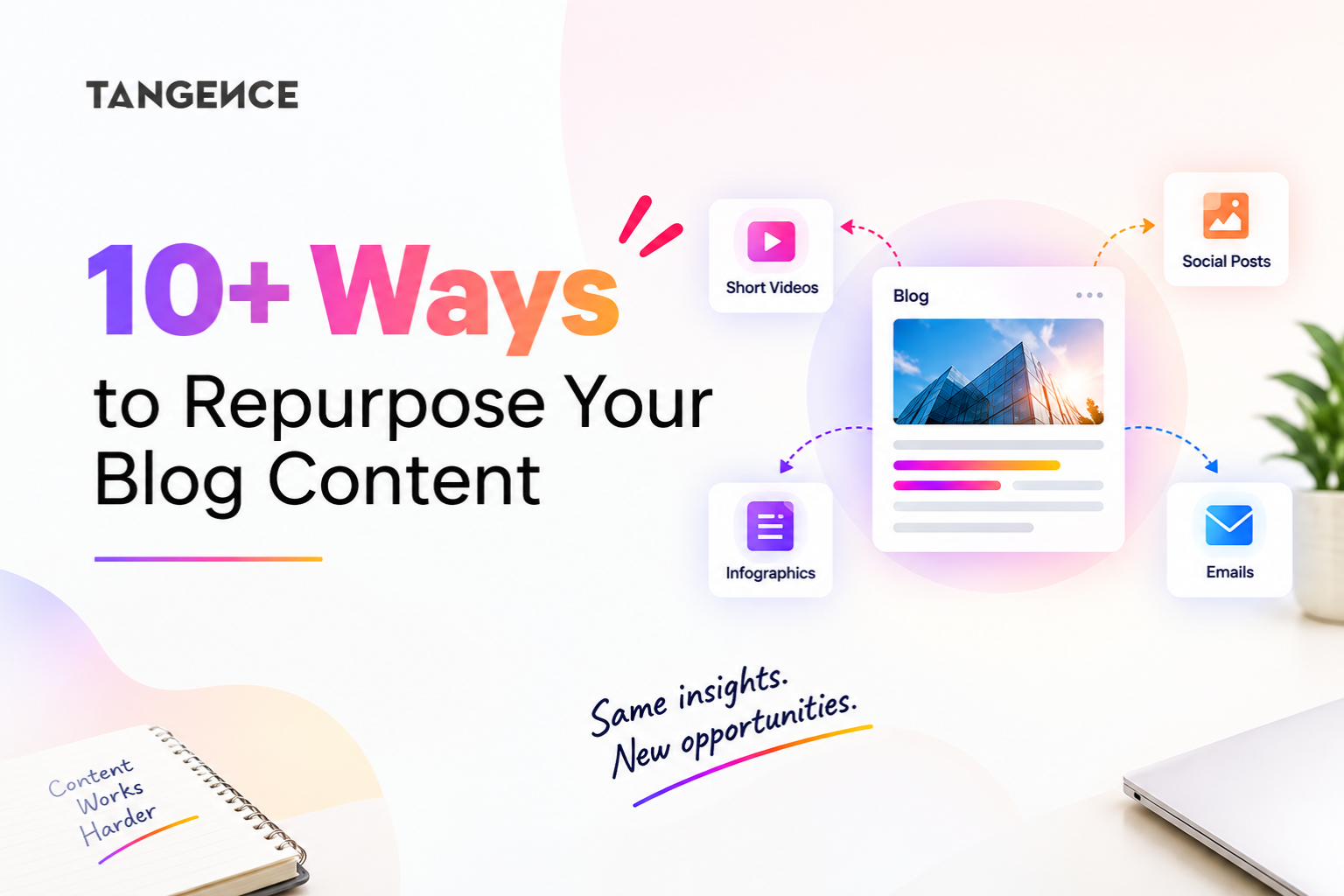
Content repurposing means taking one piece of content and changing it into different formats. You are not just copy-pasting the same thing everywhere. That is cross-posting. Repurposing is smarter. It means you adapt the message for each platform.
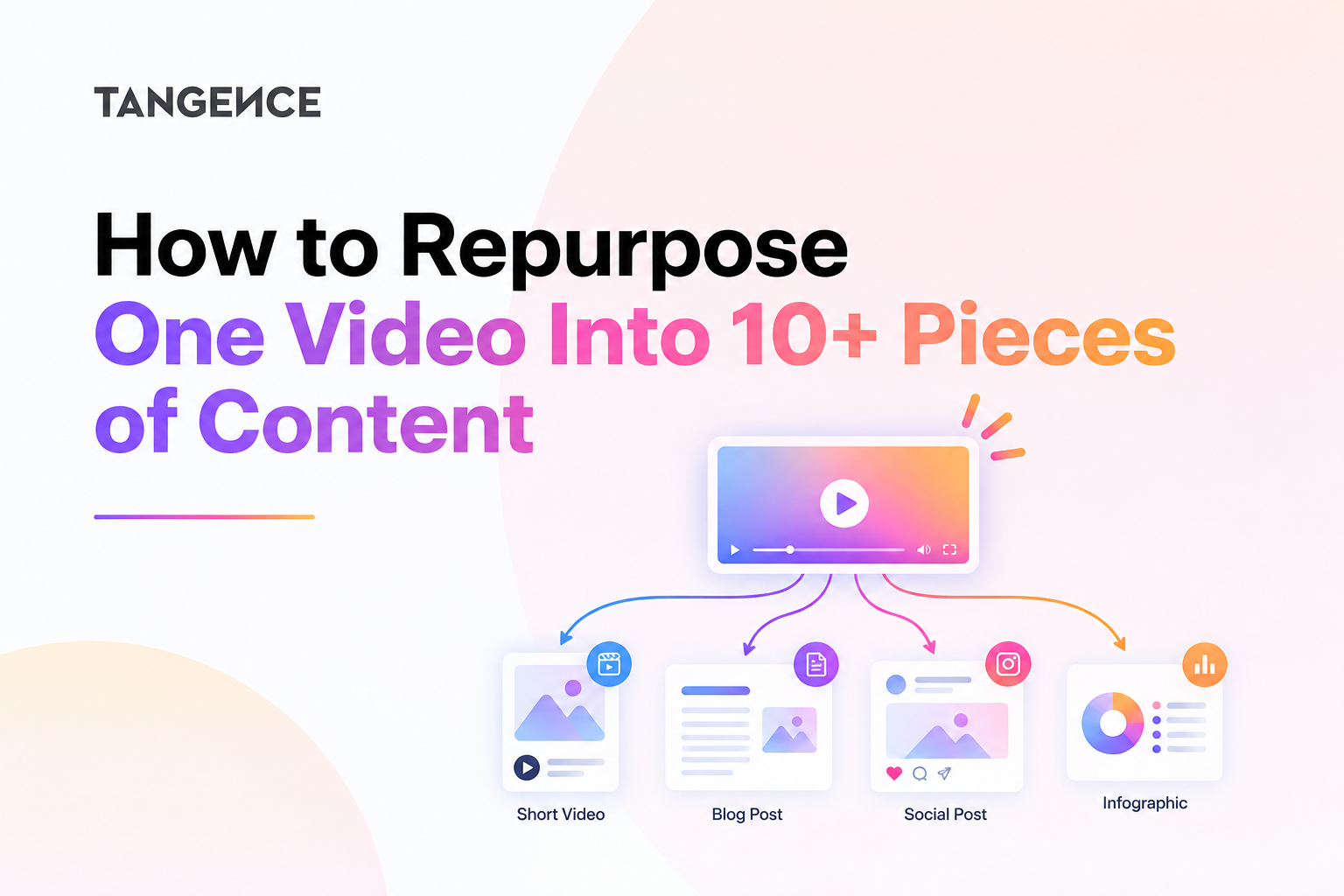
For example, your company creates a 45-minute webinar about AI tools for sales teams. That single webinar can support many marketing activities.
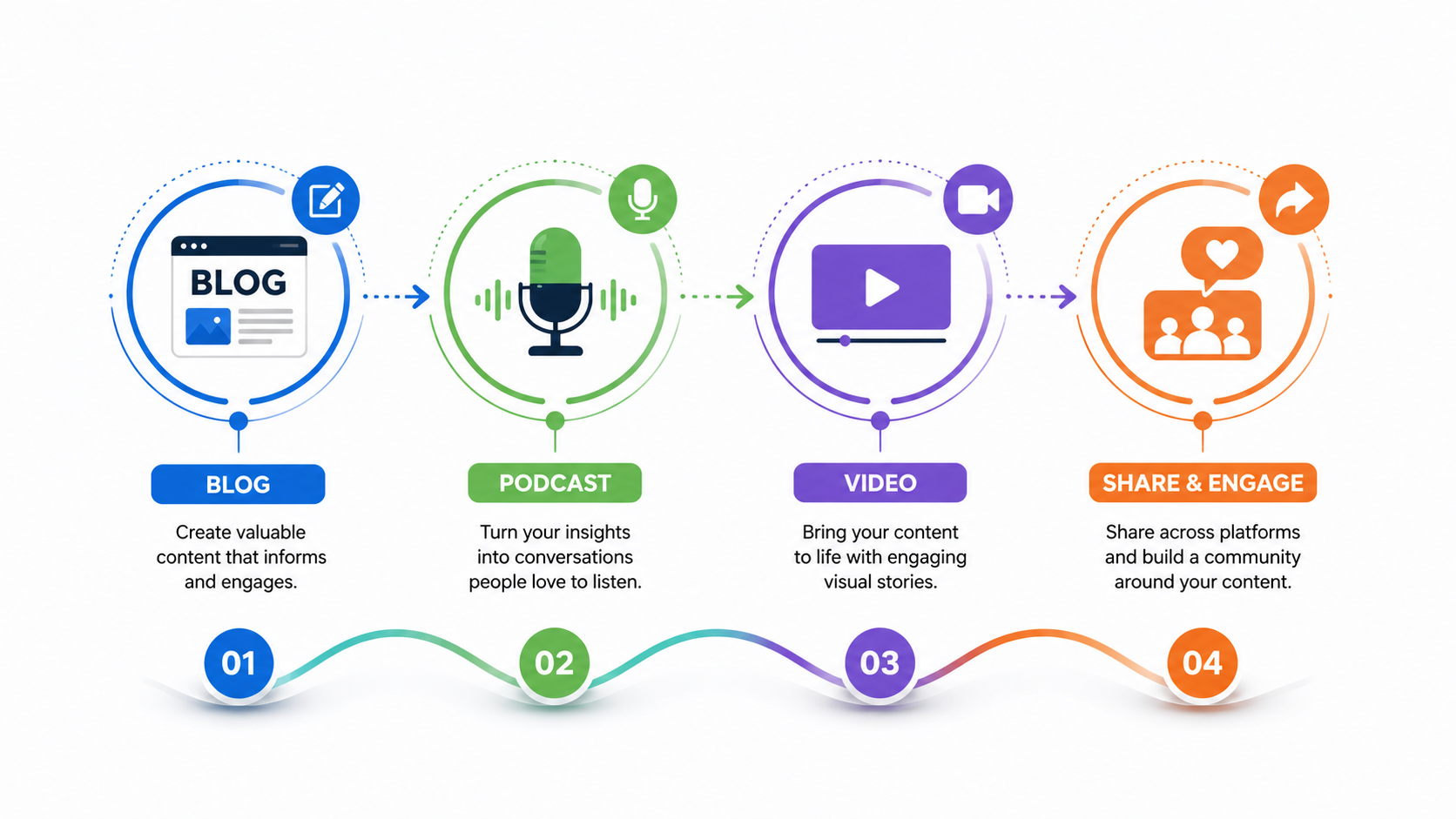
You could turn it into:
- A detailed blog post
- Five short social posts
- Three short videos
- An email newsletter
- A LinkedIn carousel
- A sales enablement guide
- A set of FAQs
- A podcast discussion
- A quote graphic
- Short clips for Instagram
The core idea stays the same. The delivery changes to fit the platform. You should always optimize for where the content lives.
Why It Matters More Now
Attention spans are short. People use many platforms every day. In fact, the average person uses 6.5 different social networks each month. You cannot reach all of them with just one blog post.
Repurposed content also performs well. An analysis of 258 brands found that those who repurpose content average 114,907 monthly social media views, compared to only 45,516 views for those who don’t, a 152% lift in visibility. That is a huge jump in visibility.
Why Most Strategies Fail
Many people think repurposing is just “cut and paste.” That is why it fails. A good strategy does not just multiply content. It makes your content work harder. The goal is to reach a high volume without your quality dropping.
There is no need to reuse content simply because you think that you need to do so. Make sure that your target audience is even using a particular platform before devoting your effort there.
Why You Need a Repurposing Strategy
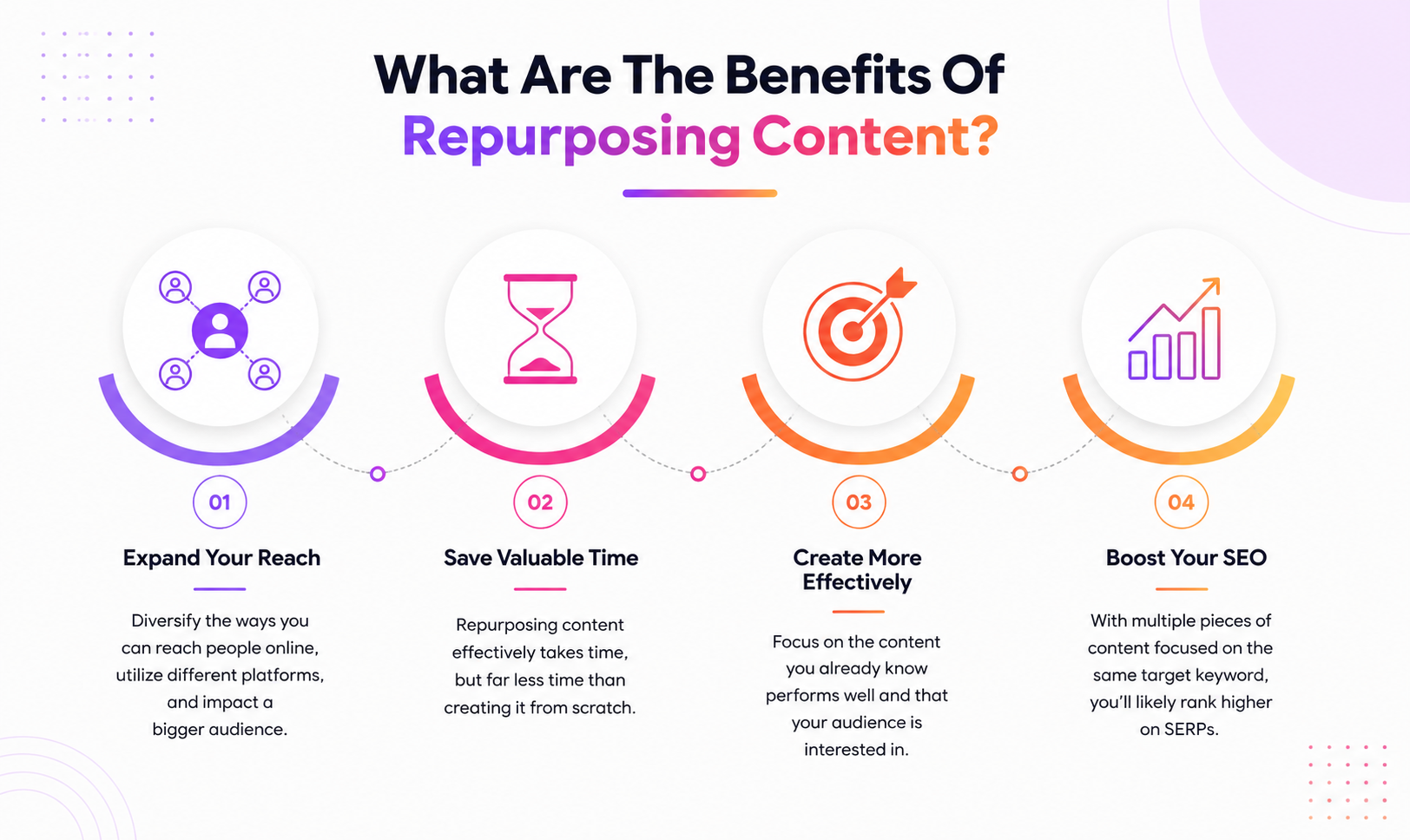
Many teams repurpose content by accident. They post a blog link on social media and call it a day. That is not a strategy. It is a missed opportunity.
It Saves Time and Money
Creating content from scratch takes real effort. Writers need time to research. Designers need time to build graphics. Video editors need time to cut clips.
Repurposing cuts this work down. Teams that repurpose content well reduce production costs by 50-70%. You already did the hard part. Now you just adapt it.
It Builds a Stronger Brand Presence
When your message appears across video, audio, and text, people notice. They see your brand more often. This builds trust over time.
Content repurposing saves up to 60-80% of the time spent creating it, increases the total volume of content created by 40%, and reduces the cost of its creation by 65% with the help of AI. That gives you more opportunities to publish more posts, videos, and other content without hiring more people.
It Helps With SEO and Answer Engines
Search engines and AI-based answering applications find well-structured content very attractive. Through the process of repurposing content on one topic, you create more and more signals on that topic. This makes it easy for search engines and AI applications to recognize you as an expert on that topic.
How Do You Build a Content Repurposing Strategy?
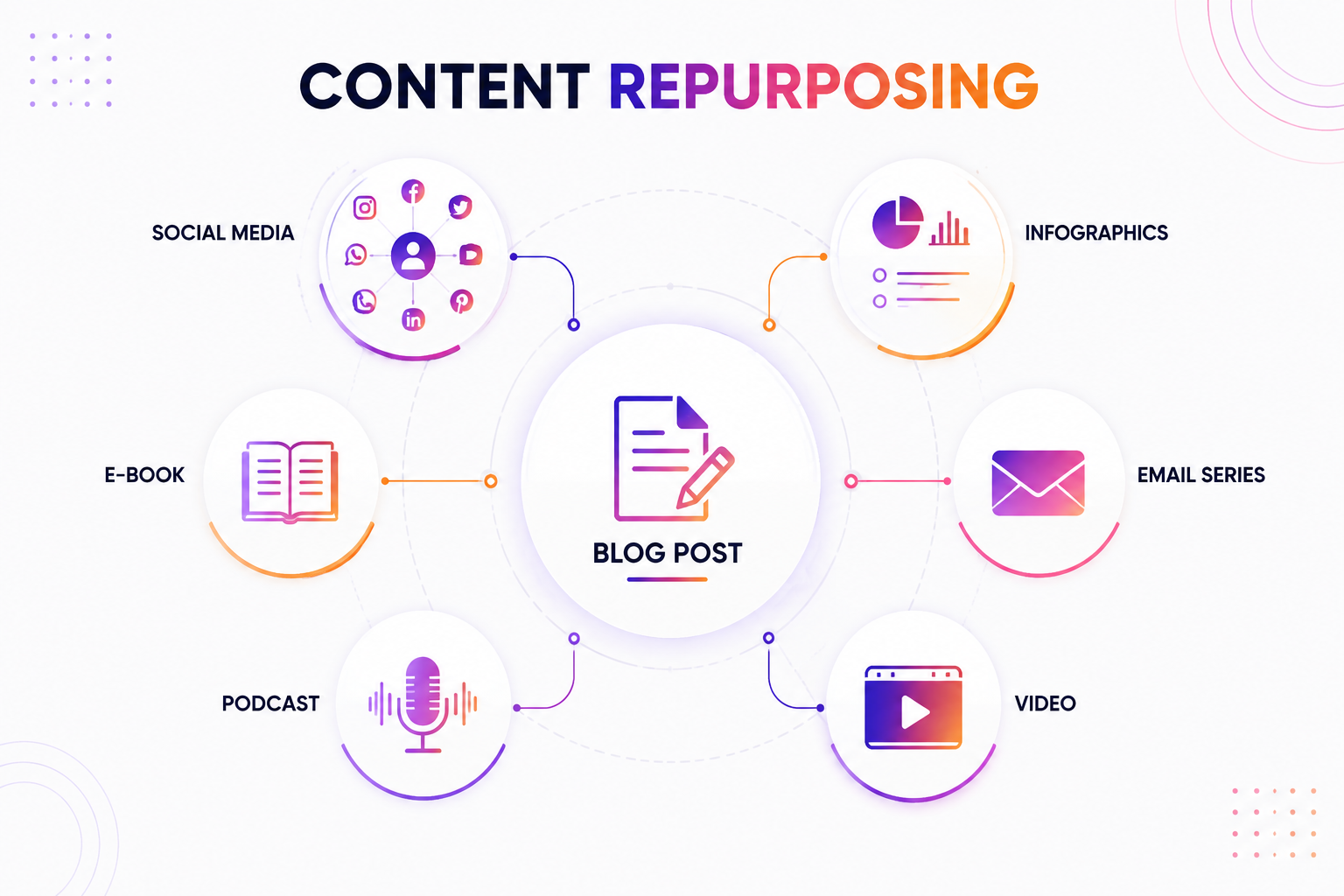
Repurposing content effectively requires more than just turning numerous social media posts into a single blog post. It is about creating an ongoing process.
First, start by identifying one source asset. Then, find the valuable ideas from the asset, find the right format for the ideas, adapt them for each platform, and publish.
It can involve the following process:
- Content audit.
- Identification of a good source asset.
- Identifying good ideas.
- Finding the appropriate format for ideas.
- Adapting the content for each platform.
- Distribution and scheduling of new pieces.
- Measuring results and improving the process.
Such an approach will help you stay organized and avoid having your team create random pieces of content.
1. Audit Your Existing Content
First, let’s look at your current content. Find your most successful blog articles, videos, and tutorials. Identify content that is still getting traffic but can get even more traffic in another form.
Ask these questions during your audit:
- Which posts rank well but get little social engagement?
- Which topics keep coming up in customer questions?
- Which videos or webinars have strong watch time?
Run this kind of audit every quarter. Trends change fast, and older content often needs fresh stats and a new format.
2. Create Blog Content That Keeps Working Across Social Channels
Most blog posts have a short lifespan. You hit publish and move on. But there are gems hidden inside every blog. One-liners, mind-blowing statistics, and useful tips deserve their own stage.
Do not let them be hidden; bring them to light and make them into LinkedIn statuses, tweets, or carousels. If you want to repurpose blog posts, do not try to condense all the content in one post. Just take one message and turn it into a post.
How to do it:
- Scan your blog for 3 to 5 standout insights.
- Reframe each insight into a short social post.
- Include visuals like an infographic or any picture to make it more attractive.
- Include a call to action that directs readers to read the complete article.
Why this strategy works
The people who see your social post may never have seen the original blog. Social content gives them a quick reason to engage with the topic.
The important point is not to copy the entire blog into social posts. Each post should work on its own while encouraging interested readers to explore the full article
3. Reimagined Webinars as Short-Form Video
Webinars and live sessions can contain hours of useful information. However, most viewers will not watch the entire recording. This can be done by pinpointing the most impactful sections.
For instance, a one-hour seminar on artificial intelligence marketing may include:
- A useful expert answer
- A surprising statistic
- A practical tip
- A common mistake
- A strong customer question
- A short case study
Each moment can become a short video. The recommendation in your resource is to make 30-second highlights for platforms like LinkedIn, TikTok, Instagram Reels, and YouTube Shorts.
How to approach it
Start with the recording. Find moments that provide value quickly. This allows one live event to continue generating content after the event ends.
Then:
- Cut unnecessary pauses.
- Focus on one idea.
- Add captions.
- Keep the introduction short.
- Add context where needed.
- Direct viewers toward the longer resource.
4. Turn Podcast Conversations Into Written Content
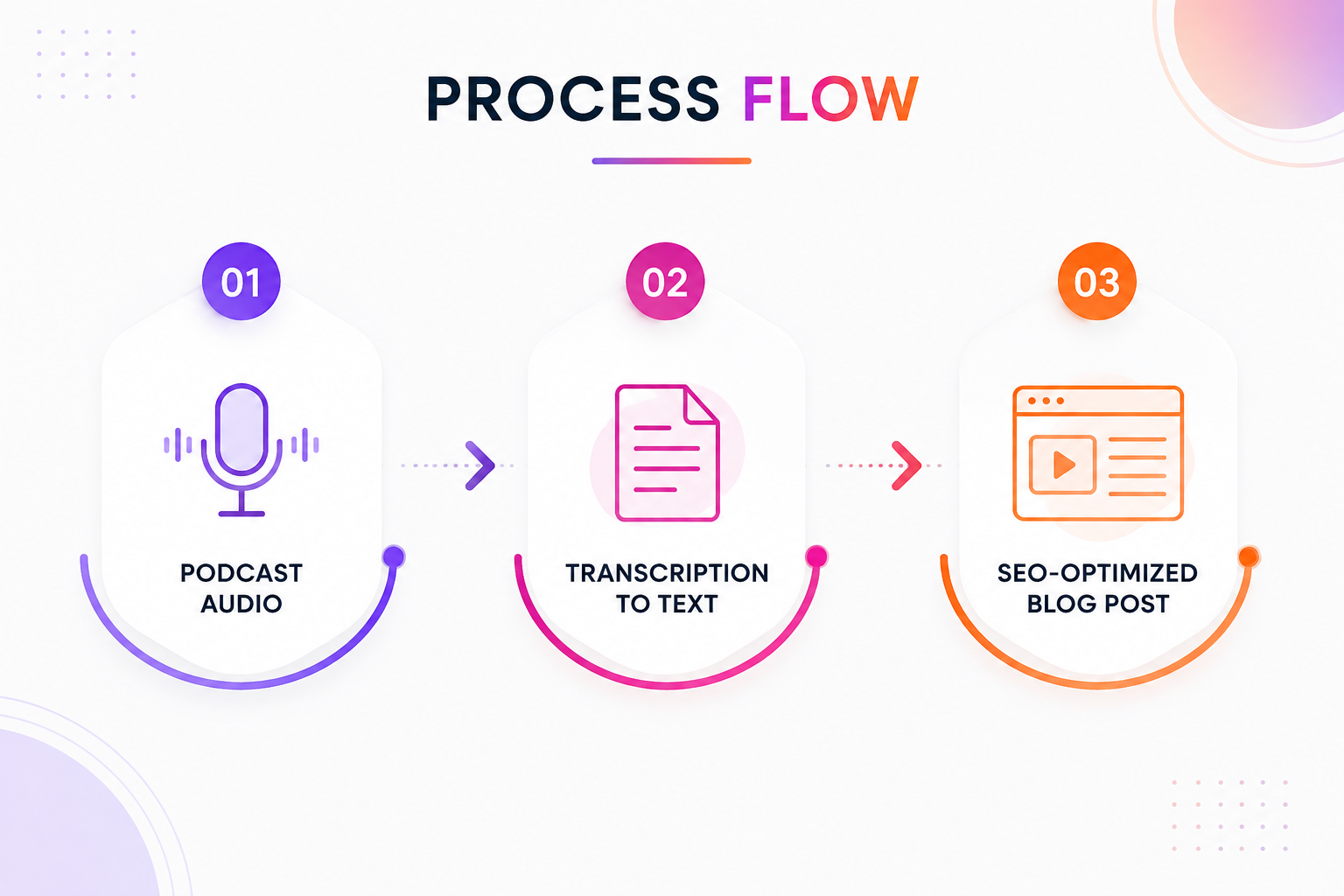
Podcasts are awesome. But all people do not have time to listen to them. Someone loves to read because they want to be able to scan and bookmark valuable information. Your podcast episode is nothing else but an extended conversation packed with stories and insights. Just change its structure, and it will be a blog post or a LinkedIn article.
Here is how to do it:
- Get the transcript of the audio: use any transcription tool for this purpose.
- Edit the text: polish it for your readers.
- Make the structure of the post.
- Share your post.
Pro Tip: Podcasts can also be turned into multiple newsletter articles. It means twice the exposure without twice the effort.
5. Create Carousels and Infographics on Social Media Using Data-Intensive Content
Sometimes the content you make is full of data and frameworks. It works wonderfully in deep research reports. But it is difficult to go through everything all at once. Carousels and infographics come in handy then.
How to do it:
- Make numbers visual: Develop impactful charts or side-by-side examples.
- Dissect the framework using slides: A 7-step framework turns into 7 carousel slides.
- Feature quotable quotes: Identify single lines to develop as visuals.
- Display the result before and after: Develop visuals that highlight the transformation.
Pro Tip: A carousel is like a movie trailer. It is quick and compelling enough to make someone want the full story.
6. Rework Existing Content Into Email Sequences
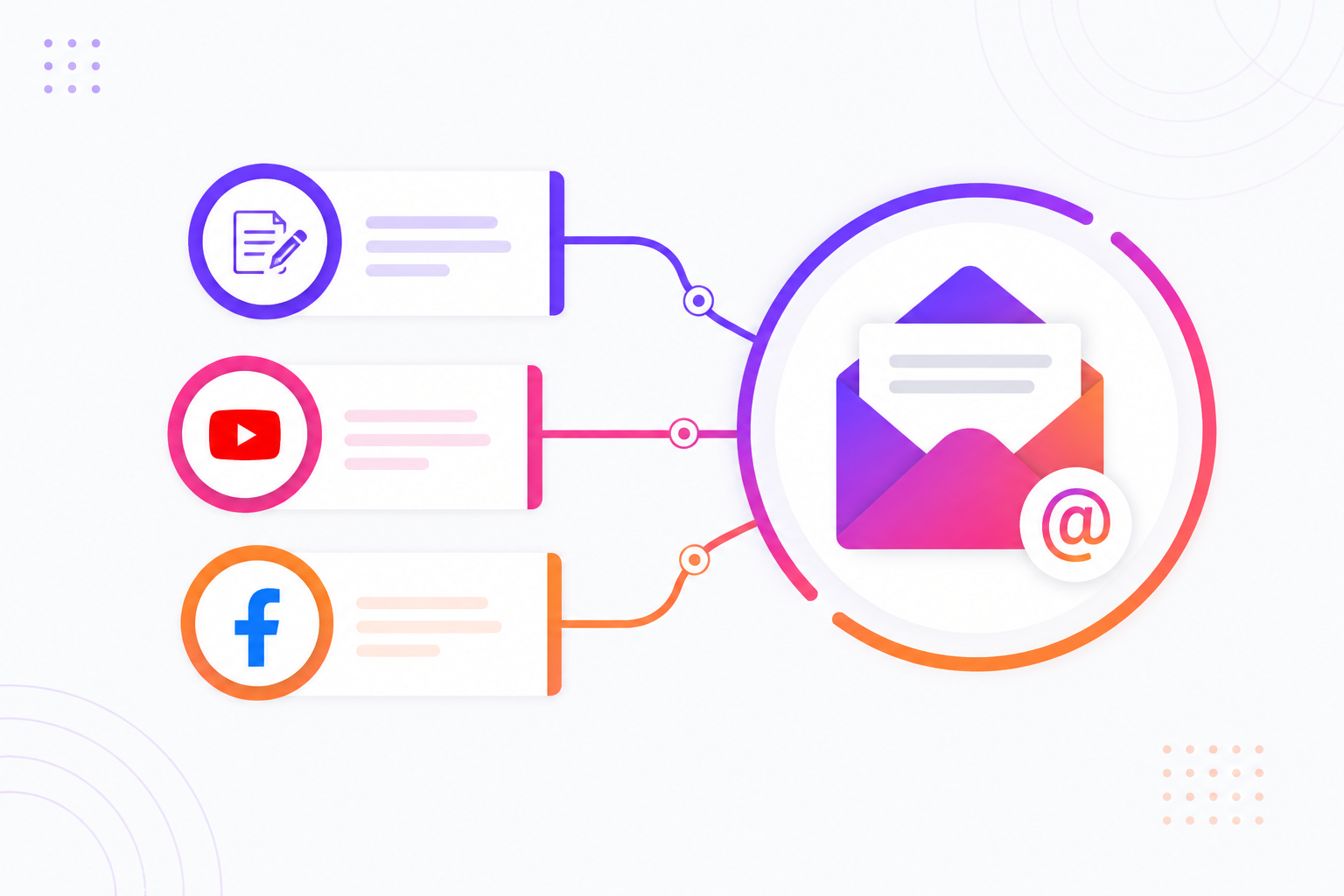
Your email list is one of the few platforms where you can reliably reach out to people without battling the algorithm. But the catch is maintaining the freshness of your inbox without having to keep churning out content every time.
And that’s precisely what content repurposing is there for. Blog posts, podcast transcriptions, and even LinkedIn posts can be transformed into email sequences. Like, for instance:
How to do it:
- Split a long blog post into a series of emails: 10 tips make a 10-day series.
- Transform your podcast into an email newsletter: Use only the most valuable quotes.
- Make an email series in 3 parts: Explain your case study, from problem to solution to results.
Pro Tip: Rather than making one big thing, distribute the value in smaller pieces. Each email is a new contact point for your audience.
7. Transform Live Sessions Into Evergreen Videos
This strategy is related to short video clips but has a different purpose. Focuses on turning the original webinar or live session into longer-lasting evergreen video content.
Your source recommends treating live sessions as raw material rather than finished products. The recording can be polished, captioned, edited, and divided into different video formats. This approach extends the life of the original event.
What can you create?
One webinar could become:
- A polished full-length video
- Several short videos
- YouTube content
- LinkedIn clips
- Educational snippets
- FAQ videos
- Expert quote videos
A webinar that happened six months ago can still provide useful information if the subject remains relevant.
8. Pack Content into Guides, eBooks, or Courses
In some cases, your content may actually be a knowledge base, and upon deeper reflection, you will see some recurring themes emerging. Blog posts, podcasts, case studies, and tweets: all of these may serve to create something larger.
Rather than scattering your most insightful thoughts across various channels, put them together into an end-to-end resource that stands on its own merits.
For instance:
- A blog post series on “Content Marketing Basics” might become an accessible eBook
- Podcasts on leadership topics may be organized into a mini-course on audio
- An annual newsletter may transform into a playbook in your niche
And the two great things about this strategy are:
First, it amplifies the value. The chances of someone downloading or even paying for a systematic guide are higher than them scrolling indefinitely through random posts.
And second, it makes you look like an authority. Not just another author who puts articles everywhere, but a creator of frameworks, systems, and resources that people can rely on.
In other words, content bundling is the ultimate strategy of content reuse and recycling.
Related Post: AI Content Repurposing Strategies to Scale Content Faster
How to Measure a Content Repurposing Strategy
Measuring a content repurposing strategy helps you see whether your existing content is reaching more people and creating real value. Start by tracking the performance of each repurposed asset across its target platform.
Look at reach and impressions to understand how many people see the content. Compare these numbers with the original asset to see whether repurposing helps you reach new audiences.
Next, track engagement. Likes, comments, shares, saves, video views, and watch time can show whether people find the adapted content useful. For example, a short video with high watch time may show that a key idea from a webinar works well in video form.
Also measure traffic and conversions. Use website visits, referral traffic, form submissions, downloads, email sign-ups, or sales to understand whether repurposed content supports business goals. Add UTM tracking to links when possible so you can identify which format and platform generate results.
Another useful metric is content efficiency. Track how many useful assets you create from one original piece. If one webinar produces a blog, several videos, social posts, and emails, you can compare the output with the time and resources required.
Finally, review performance regularly. Keep repurposing formats that generate strong results and change those that do not. The goal is not to create the highest number of content pieces. It is to extend the value of strong content, reach different audiences, and achieve better results with existing resources.
Key Takeaway
Creating content is hard work. It takes time, energy, and money. A smart content repurposing strategy ensures that work pays off.
Not all blog posts, webinars, podcasts, or reports are to be seen only once. One piece of content can serve as a source for different kinds of social posts, videos, emails, graphic material, FAQs, and even guides and other types of useful content.
The true benefit is that you have to produce less source material while having more options for distribution and promotion.
Do not let your valuable content die away after a few days. Establish a system that will ensure that your best content continues to benefit you months after it is first published.
Ready to build a content engine that actually compounds?
With Tangence, you can stop spending hours on tedious content creation. Our system will help you create an efficient workflow for all of your repurposing needs. Whether it’s planning or distributing your content, Tangence makes it all easier to do.
[Get Started with Tangence Today!]
Frequently Asked Questions
What is a content repurposing strategy?
This is an attempt to convert already available content into another format. It will be converted to fit the needs of other platforms. For instance, the blog content is converted to social media content, video content, and email content.
Why is content repurposing important in 2026?
This is vital since coming up with fresh content requires a lot of time and resources. By repurposing, you can maximize your current efforts. Repurposing enables you to reach new audiences through different mediums. It will help increase your ROI by 65%.
How does content repurposing improve ROI?
It cuts down on the cost of creating new content. You spend less time and money on production. At the same time, you get more use out of your best assets. This leads to more engagement and reach without the high cost of starting from zero.
What is Answer Engine Optimization (AEO)?
AEO is a way of writing content so AI tools can find and cite it. This is important because people now use ChatGPT and Google AI for answers. By optimizing for AEO, your content appears directly in AI responses.
How can I start repurposing content?
Begin by looking at your best-performing content. Find the top asset. Then, pick 2-3 formats to turn it into. For instance, take a good blog post and turn it into a short video and a few LinkedIn posts. Start small and build a system.
How does Tangence help with content repurposing?
Tangence simplifies the whole process. It helps you organize your content. It can help with scheduling across multiple platforms. We make it easier for you to turn one piece of content into many. Our platform helps you execute your repurposing strategy without the hassle.
How can Tangence improve my workflow?
Tangence saves you time. Instead of manually copying and pasting, you can manage your content in one place. It helps you plan and distribute your repurposed content seamlessly. This means you spend less time on logistics and more time creating.