blog
What Is Content Scaling? How It Works and How to Scale Content Effectively
Content scaling is the process of increasing content output without a matching rise in cost, headcount, or quality loss.
It replaces one-off writing with systems: documented briefs, reusable templates, content pillars, and repurposing workflows. The goal is simple. One strong piece of content should do the work of ten.
This matters because the demand for content keeps growing. Around 7.5 million blog posts are published every day, making it harder for brands to consistently reach their target audiences.
A scalable content strategy solves this by creating repeatable processes for research, planning, production, optimization, and distribution. It also uses content repurposing, templates, automation, AI tools, and clear workflows to help teams produce more without letting quality drop.
This guide covers what content scaling means, why it matters right now, the strategies that make it work, and the framework top teams use to build a real content engine.
What Is Content Scaling?
Content scaling means growing your content output while keeping cost and headcount roughly flat. Instead of producing every article, video, or post from scratch, you build a system around it.
That system includes:
- Documented briefs and style guides
- Reusable templates for common content types
- Evergreen content pillars
- A repurposing process that turns one asset into many
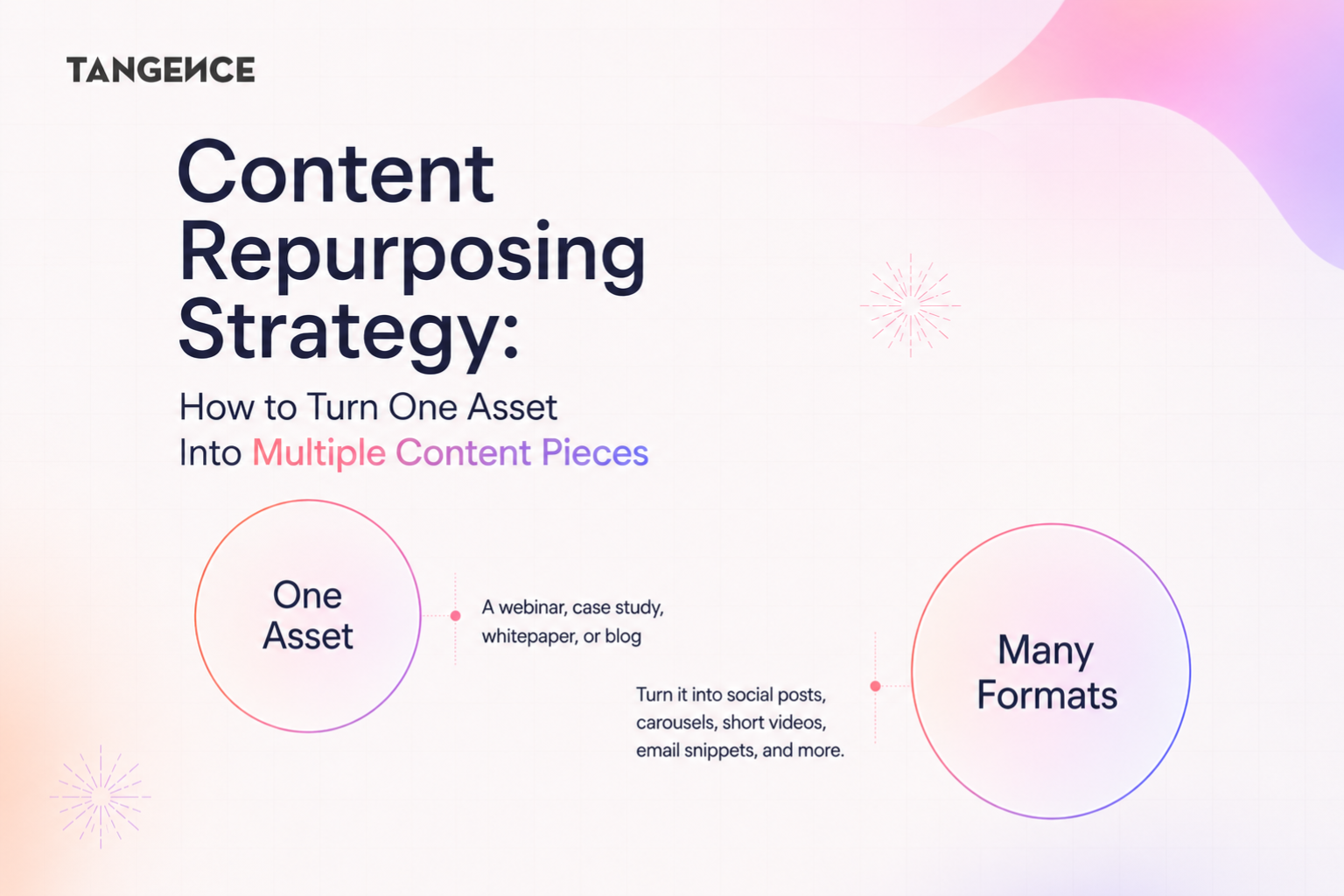
Traditional content creation treats each piece as a standalone project. Content scaling treats content as an asset that compounds. A single guide can become a blog series, a video, an email sequence, and a set of social posts, all from one round of research.
Why Content Scaling Matters in 2026
Content scaling matters in 2026 because AI has made content production faster, but it has also made content more competitive. Brands can publish more than ever, but producing more content does not automatically create more visibility, traffic, or revenue.
In fact, 45% of B2B marketers say their organization does not have a scalable content creation model, according to the Content Marketing Institute.
A scalable content strategy helps teams publish consistently without sacrificing quality. By combining AI, repeatable workflows, content repurposing, and human oversight, brands can produce more useful content with fewer resources.
The goal is not more content. It is more valuable content at scale.
Content Scaling vs. Traditional Content Creation
| Traditional Approach | Scaled Approach |
| Every piece written from scratch | Documented briefs and templates |
| Planned campaign by campaign | Built around core content pillars with long-term relevance |
| One piece serves one purpose | One pillar produces 10+ derivatives |
| SEO added after writing | SEO built into the brief |
| Limited by in-house headcount | Blended in-house, freelance, and AI support |
The core difference isn’t speed. It’s structure. A scaled operation can absorb more volume without losing its voice, because the process, not any single writer, carries the quality standard.
How Content Scaling Works: Strategies For Scaling Content In 2026
Content scaling works by creating a repeatable system for planning, producing, optimizing, and distributing content at a larger volume without reducing quality.
Here are some of the best strategies
1. Build a Documented Content Process
Producing one piece of content isn’t one task.
It’s eight to ten distinct steps: research, keyword analysis, briefing, outlining, writing, editing, fact-checking, visual production, publishing, and distribution.
Teams that scale successfully write this process down. Every step has an owner, a defined output, and a place in the workflow. This makes it possible to spot exactly where a piece is stuck, and where AI or outsourcing can genuinely help versus where it just adds noise.
2. Organize Content Around Topic Clusters
Instead of chasing individual keywords, scaled teams build content around pillars: broad topics supported by a cluster of related, linked pages.
This builds topical authority, which search engines reward more than isolated articles ever could.
A strong pillar starts with three questions:
- Does this topic serve a clear business goal?
- Can we say something genuinely different from what’s already ranking?
- Does a real reader have an unmet need here?
3. Repurpose High-Value Content
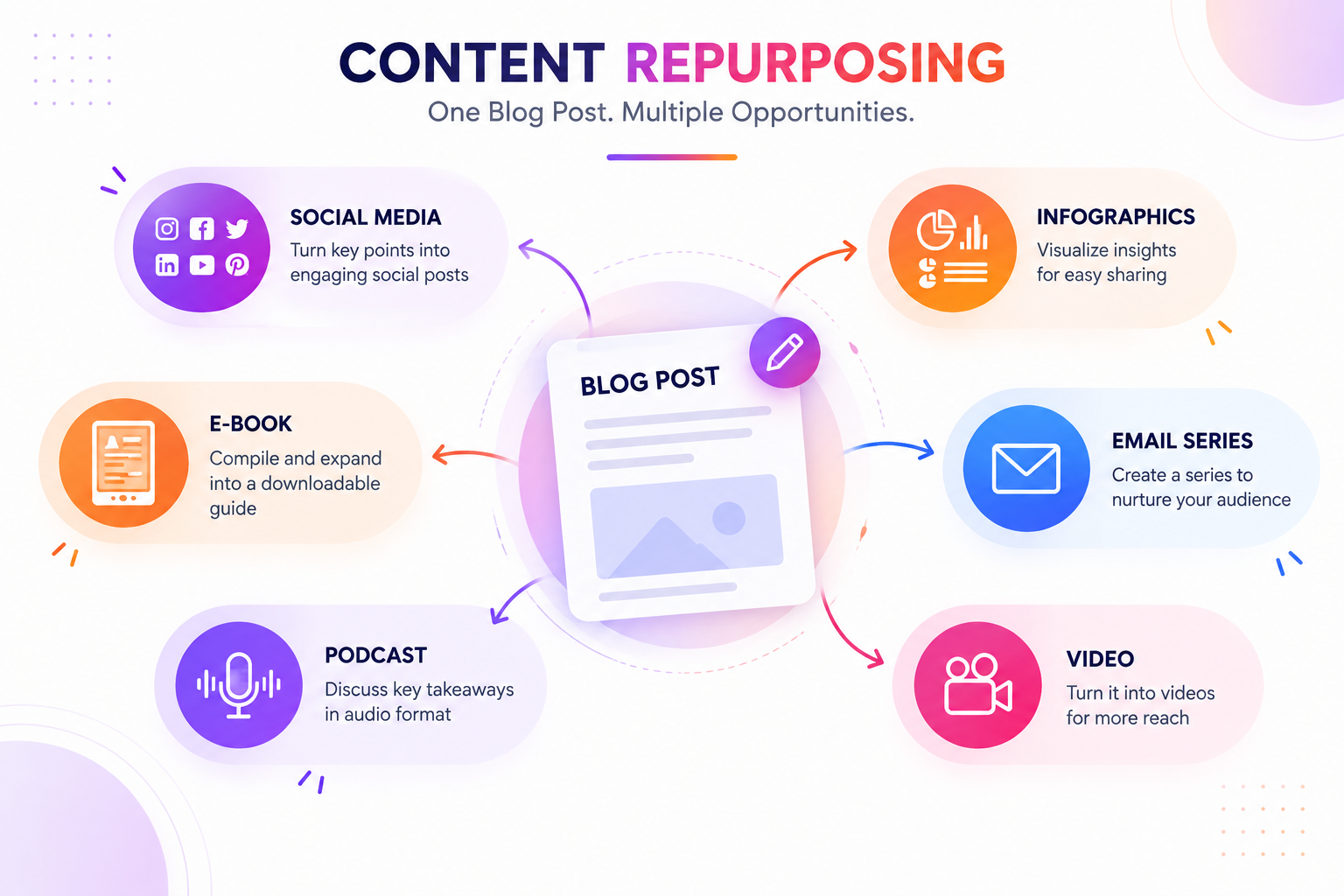
Content repurposing means turning existing content into different formats or assets for new channels and audiences.
For example, one detailed blog can be repurposed into social posts, an email, a video script, an infographic, or a downloadable guide.
This helps teams get more value from content they have already researched and created, instead of starting from scratch each time.
Related Post: 8 Ways to Repurpose Content Into Multiple Assests
4. Use AI With Human Oversight
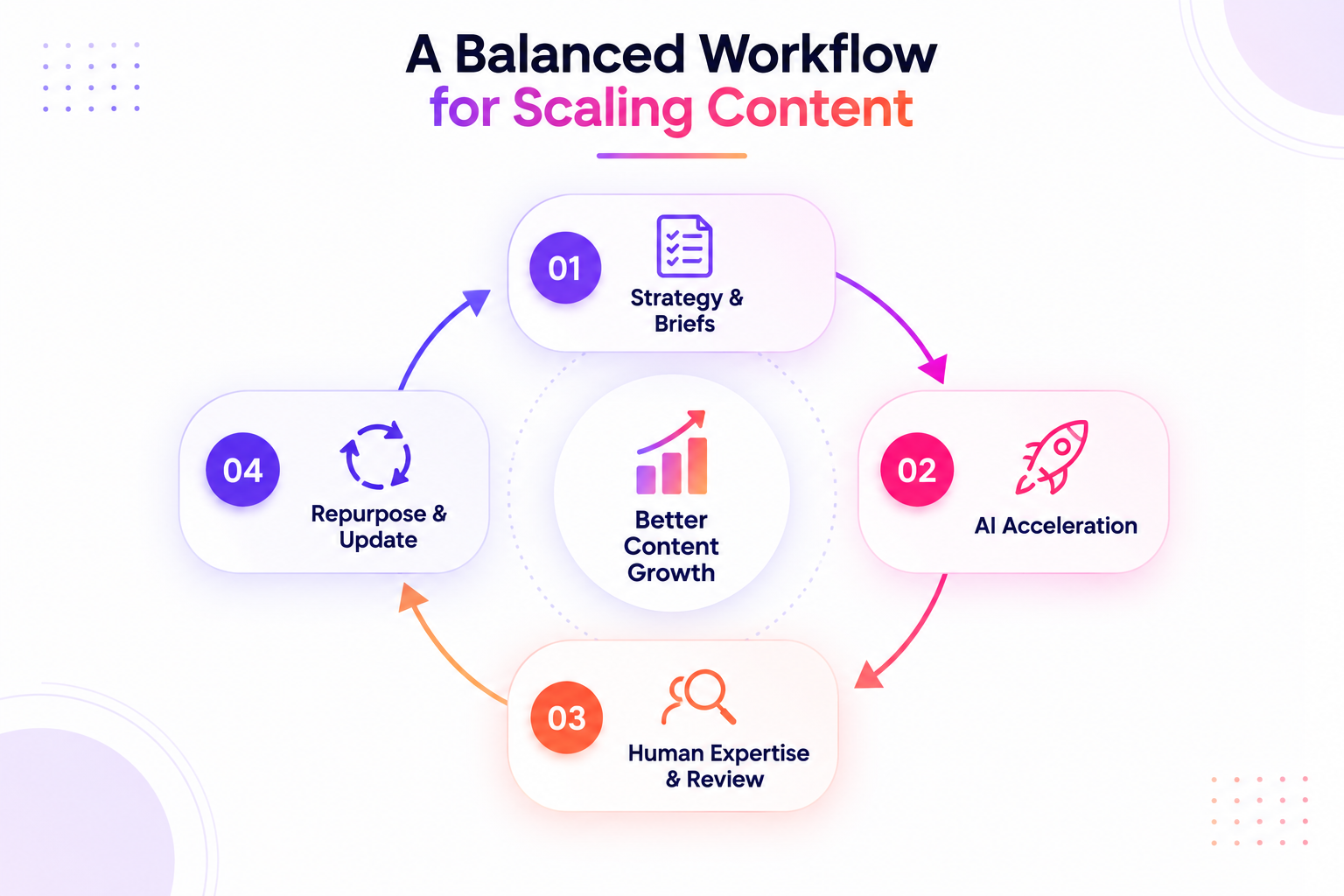
AI-assisted, human-led production means using AI to speed up content creation while keeping human experts responsible for quality and accuracy. AI can help with research, outlines, first drafts, and content repurposing. A human editor then reviews the content for accuracy, originality, brand voice, search intent, and overall quality before publication.
This approach helps teams produce content faster without relying on AI alone.
5. Combine Internal and External Expertise
Scaling content usually means outsourcing parts of the process: keyword research, first drafts, editing, or publishing. Hiring a strong editor first, before adding more writers, keeps quality consistent as the team grows. Domain experts or writers connected to subject matter experts add the firsthand credibility that generic content can’t match.
6. Standardize Content With Reusable Systems
Scaling becomes easier when teams don’t have to reinvent the process for every article.
Create reusable content briefs, editorial checklists, SEO templates, publishing workflows, and content calendars. Track each piece from research and writing through editing, approval, publishing, and promotion.
Standardized systems reduce missed steps and make it easier for multiple people to work on content without creating inconsistent results.
7. Use Performance Data to Improve the Process
Publishing more content does not automatically make content scaling successful. Teams need to understand what is actually working.
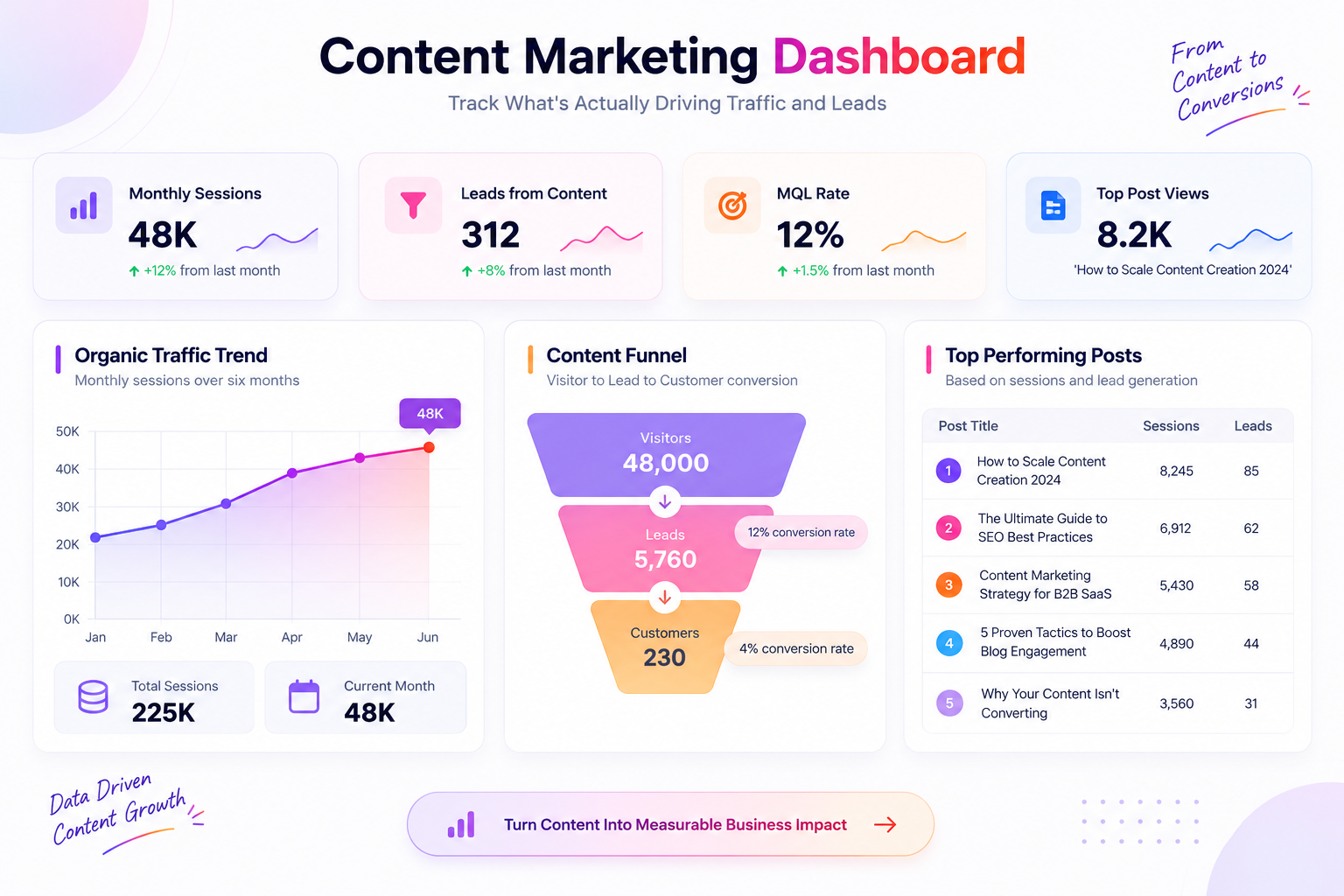
Track relevant metrics such as organic traffic, rankings, clicks, engagement, conversions, and leads. Use these insights to improve existing content, refine future briefs, prioritize stronger topics, and adjust distribution.
This creates a continuous cycle: publish, measure, learn, improve, and scale.
A 5-Phase Framework for Scaling Content
Scaling content works best when you treat it as a repeatable process rather than simply publishing more articles.
Phase 1: Audit. Review your existing content to identify what is performing, what needs improvement, and where important topic or search-intent gaps exist.
Phase 2: Build the system. Create standardized briefs, templates, editorial guidelines, approval steps, and workflows so everyone follows the same process.
Phase 3: Create content pillars. Develop comprehensive core content around important topics. Plan supporting content around each pillar so related pages can strengthen the overall topic coverage.
Phase 4: Scale production. Increase output across relevant topics, formats, and channels while keeping the same quality standards. Repurpose strong content where it makes sense instead of creating every asset from scratch.
Phase 5: Monitor and optimize. Track traffic, rankings, engagement, conversions, and content quality. Use the data to update underperforming pages, improve the workflow, and prioritize content that delivers results.
Phase 5 is ongoing. As publishing volume grows, it becomes easier to create repetitive, outdated, or low-value content. Regular content audits help identify pages that should be updated, consolidated, redirected, or removed. This keeps the content library useful and prevents scaling from becoming a race to publish more pages.
How to Measure Content Scaling Success
Content scaling is successful when you produce more content without sacrificing quality and while improving business results.
Track:
Click-through rate (CTR): Shows how effectively your content attracts clicks from search results, email, social media, and other channels. A strong CTR can indicate that your titles and content topics match what users are looking for.
Bounce rate: Helps you understand whether visitors continue engaging with your website after landing on a page. A high bounce rate may indicate that the content does not fully match the visitor’s intent or needs.
Conversions: Track actions that matter to your business, such as form submissions, signups, purchases, demo requests, downloads, or qualified leads. This shows whether scaled content is contributing to actual business outcomes.
Organic traffic growth: Measures whether your content is gaining visibility in search engines over time. Look at traffic to individual pages as well as overall growth across your content library.
Production time per piece: Measures how efficiently your team creates content. If documented workflows, templates, automation, and repurposing reduce production time while quality stays consistent, your scaling system is becoming more efficient.
Content quality: Review accuracy, originality, search intent, readability, and brand consistency. Scaling should increase output, not create a larger volume of low-quality content.
Review these metrics on a set schedule, and adjust the process accordingly. A scaled content operation is a system you improve continuously, not a one-time setup.
Conclusion
Effective content scaling starts with a strong system, not simply a higher publishing volume. By standardizing your workflow, building around content pillars, repurposing valuable assets, and using AI with human oversight, you can grow content production while maintaining quality. The key is to keep measuring results and improving the process as you scale.
Ready to scale your content, improve efficiency, and drive stronger organic growth? Tangence can help. We combine SEO, AI, research, and human expertise to build scalable content strategies that support your long-term business goals. Connect with Tangence today to build a content system that grows with your business.
Frequently Asked Questions
What is content scaling?
Content scaling is producing more content without a proportional increase in cost or headcount. It relies on systems, templates, and repurposing rather than starting from zero with every piece.
How is content scaling different from content marketing?
Content marketing is the overall strategy for using content to reach business goals. Content scaling is the operational side: the systems and processes that let you produce that content at higher volume without losing quality.
Is AI necessary to scale content?
No, but it helps. AI can speed up research, outlining, and repurposing. It works best as a support tool inside a defined editorial process, not as a replacement for human review.
How long does it take to see results from content scaling?
Most teams see process improvements, faster drafts, fewer revision rounds within one to two quarters. SEO results from pillar and cluster strategies typically take longer, often three to six months, since topical authority builds over time.
How do I start scaling content with a small team?
Start with a documented process and a style guide before adding volume. Then choose one content pillar, build a repurposing plan around it, and outsource one stage of the process, such as first drafts or editing, to free up internal capacity.
Does content scaling work for every type of business?
Yes, though the approach varies by resources. Small teams typically lean on templates and repurposing. Larger organizations add topic clusters, blended teams, and dedicated content operations software.