blog
B2B Content Marketing Strategy: Best Practices That Drive Results

Every major B2B purchase now starts long before a sales call. Decision-makers search online, compare solutions, read expert insights, and evaluate whether a company truly understands their challenges. Your buyers follow the exact same process. In fact, modern B2B buyers complete nearly 70% of their research before ever speaking with a sales representative. That means your content often becomes your first sales conversation.
This is why a strong B2B content marketing strategy is no longer optional. It builds authority before competitors enter the conversation. It positions your brand as a trusted solution during the research stage. It drives qualified traffic, shortens buying cycles, and creates credibility at scale. Companies that invest in strategic content stay visible, earn trust faster, and generate stronger long-term growth while weaker brands disappear from consideration.
In the sections below, you will discover the most effective and proven practices for building a B2B content strategy that delivers measurable business results.
What a B2B Content Marketing Strategy Actually Means
A b2b content marketing strategy is a documented plan for creating and sharing content that attracts other businesses. It helps you reach the right decision-makers at the right time with the right message.
This is very different from B2C marketing. B2C brands often use emotional and fast messaging. B2B content takes a different path. It focuses on education. It builds credibility over time. It speaks to multiple stakeholders inside one company.
Related Guide → What Is B2B Content Marketing?
Why the B2B Buying Process Demands Better Content
B2B purchases involve more people and take longer to close. A single deal might need sign-off from finance teams, operations leads, and department heads. Each of these people needs different information.
Your content must speak to all of them. A blog post might bring in the initial interest. A case study might convince the manager. A pricing guide might close the deal with the CFO. When your content covers every angle, it keeps your brand in the conversation throughout the entire buying cycle.
Proven B2B Content Marketing Strategies That Drive Business Growth
Start With a Clear Goal Before You Write a Single Word
Most content fails because it lacks a clear purpose. The first step in any strong b2b content marketing strategy is setting goals that connect directly to business outcomes.
Ask yourself these questions before creating content:
- What business problem does this content solve
- Who is the specific person reading this
- What action do we want them to take after reading
- How will we measure success
Without answers to these questions, your content becomes noise. With clear answers every piece of content works toward a measurable result.
Align Your Content Goals With Sales Goals
One of the biggest reasons content underperforms is that marketing and sales teams work separately. Sales teams talk to buyers every day. They know the real questions buyers ask. They know the objections that slow deals down.
When marketing teams build content around those real questions, the output becomes far more useful. Sales teams get better tools to share. Marketing teams get content that actually moves buyers forward. Both teams win.
Know Your Audience Better Than They Know Themselves
Strong content starts with deep audience knowledge. This goes far beyond basic demographics. You need to understand what keeps your buyers up at night.
Here are the key things to research about your target audience:
- Their biggest daily challenges
- The questions they ask during the buying process
- The metrics their managers hold them accountable for
- The formats they prefer to consume content in
- The platforms they use to find information
Build detailed buyer personas from this research. A persona is a profile of your ideal customer. It includes their job title, their goals, their pain points, and their decision-making process. Every piece of content you create should speak directly to one of these personas.
Map Your Content to the Buyer Journey Stage by Stage
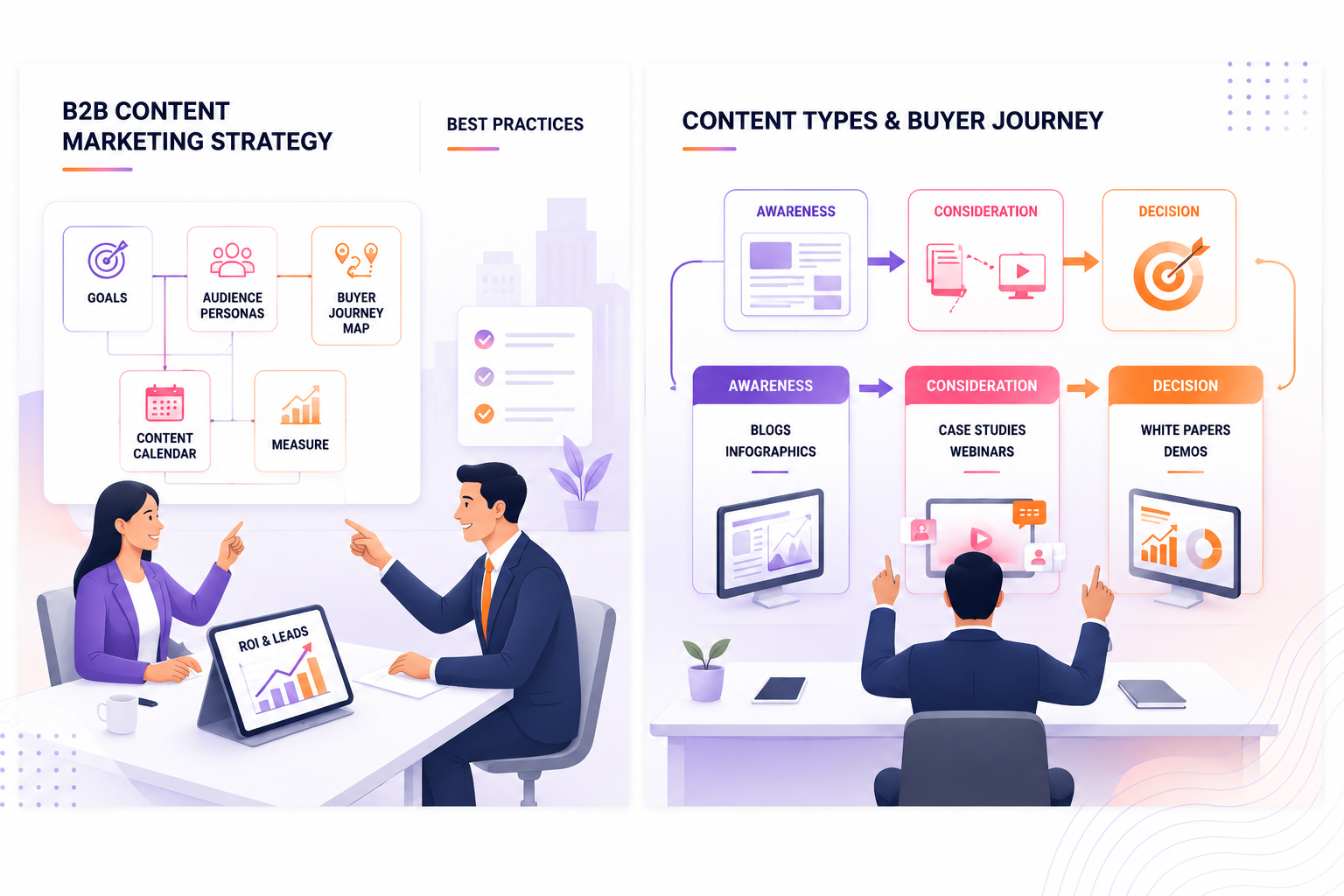
The buyer journey has three main stages. Each stage needs different content. Here is a simple breakdown:
| Buyer Journey Stage | Buyer Mindset | Best Content Types |
| Awareness | “I have a problem, but I am not sure what to do.” | Blog posts, educational videos, and infographics |
| Consideration | I am exploring possible solutions.” | Webinars, comparison guides, case studies |
| Decision | “I am ready to choose a vendor.” | Testimonials, pricing pages, product demos |
Match Content Format to the Right Stage
Picking the wrong format for the wrong stage wastes your effort. A product demo sent to someone in the awareness stage pushes them away. An educational blog post sent to someone ready to buy slows the sale down.
Use the table above as your guide. Create content for all three stages. This way, your b2b content marketing strategy covers the full journey from first click to final purchase.
Build a Modular B2B Content Strategy
Not all content formats are equal. Some formats consistently outperform others in B2B marketing. Here are the ones worth investing in:
Blog posts drive organic traffic through search engines. They work best at the top of the funnel. A well-written SEO-optimized blog post keeps attracting new visitors for months or even years after publication. According to research, B2B marketers who have blogs get 67% more leads than those who don’t.
Case Studies: Case studies build trust fast. They show real results with real numbers. A buyer reading a case study sees proof that your solution works for companies like theirs. Always include specific data points and a direct quote from the customer.
White Papers and Industry Reports: White papers are detailed, research-driven documents that explain industry challenges and solutions. Along with industry reports, they help position your brand as a trusted authority and valuable resource for decision-makers.
Videos: Video is one of the most engaging formats available. Product demos, tutorials, thought leadership interviews, and customer testimonials all work well in video format. B2B lead conversion rates increase by up to 54% when video is part of the content mix.
Webinars combine education with live interaction. They work well in the consideration stage when buyers want to ask direct questions. They also build a strong list of warm leads who have actively engaged with your brand.
Email Newsletters: Newsletters keep your brand top of mind and nurture leads between purchase considerations.
Read More → Using Content Marketing for B2B Lead Generation
Build Topical Authority to Win in Search
Search engines reward websites that cover topics with depth and consistency. When you publish many related articles on a single topic, search engines start to see your site as an expert on that topic. This pushes your content higher in search rankings.
The best way to build topical authority is through a pillar-and-spoke content model:
- Create one long, comprehensive pillar page on a broad topic
- Build multiple supporting blog posts that each cover a specific subtopic
- Link all the supporting posts back to the pillar page
This structure tells search engines that your website has thorough coverage of the topic. It also keeps readers on your site longer as they follow links from one related article to the next.
Repurpose Your Content to Multiply Its Value
Creating fresh content takes time and budget. That is why smart b2b content marketing strategies include a plan for repurposing existing content into new formats.
Here is how to turn one piece of content into many:
- Take a long-form white paper and break it into five individual blog posts
- Turn those blog posts into short LinkedIn posts with key takeaways
- Use the data from the white paper to create an infographic
- Record a webinar walking through the main findings
- Send a weekly email newsletter linking to each related piece
This approach multiplies the reach of every piece you create. It also reinforces your key messages across different channels and formats.
Read More → Content Repurposing: Get More Value From Every Asset
Use a Content Calendar to Stay Consistent
Consistency is one of the most important factors in content marketing success. A content calendar helps you plan what to publish, when to publish it, and where to distribute it.
Your calendar should show the topic, format, target persona, buyer journey stage, and distribution channel for each piece. This keeps your team aligned and prevents content gaps that let competitors fill the space.
Distribute Your Content Where Your Buyers Actually Are
Creating great content is only half the work. Distribution is the other half. Many companies invest heavily in content creation and almost nothing in distribution. This is a major missed opportunity.
Here are the most effective distribution channels for B2B content:
- Your company blog drives organic search traffic over the long term
- LinkedIn is the number one social platform for B2B decision-makers
- Email marketing nurtures existing leads and keeps warm prospects engaged
- Industry publications expand your reach to audiences you have not yet built
- Paid promotion can accelerate reach for your highest-performing content
Pick the channels where your target buyers spend time. Focus your energy there instead of spreading thin across every possible platform.
Measure What Matters and Improve What Does Not Work
A b2b content marketing strategy without measurement is just guessing. You need data to know what is working and what needs to change.
Here are the most important metrics to track:
| Metric | What It Tells You |
| Organic traffic | How well your content ranks in search |
| Time on page | Whether readers find your content valuable |
| Lead generation | How many readers take the next step |
| Conversion rate | How well does content turn visitors into leads |
| Content-influenced pipeline | How content supports sales revenue |
Use tools like Google Analytics and CRM data to connect content activity to business outcomes. Review your metrics monthly. Update underperforming content. Double down on what works.
Update Your Content Regularly to Stay Relevant
Content that ranked well last year might slip if it becomes outdated. Set a schedule to review and refresh your most important pieces. Update statistics. Add new examples. Refresh the introduction. Even small updates signal to search engines that the content is current and relevant. A good update should change at least 10% of the original content to have a meaningful impact on rankings.
Build a Scalable Content Production Process
Many B2B companies create content in a disorganized way. One person writes a blog here. Another post to LinkedIn there. There is no plan and no consistency. This approach does not scale. The best b2b content marketing strategy relies on structured workflows, clear goals, and repeatable systems that keep content quality high while supporting long-term growth.
A scalable content process has these elements:
- A documented strategy that the whole team follows
- Clear roles so everyone knows who creates, edits, and publishes content
- Templates that speed up production without sacrificing quality
- A review process that maintains accuracy and brand voice
- A distribution checklist so no channel gets missed
When your process is documented and repeatable, your content output becomes consistent. Consistency is what builds audience trust and search engine authority over time.
Emerging B2B Content Marketing Trends to Watch Right Now
The content marketing landscape keeps changing. Staying ahead of these trends gives you a competitive edge:
AI-Assisted Content Creation: AI tools now help teams write faster, research topics more efficiently, and personalize content at scale. The best approach combines AI speed with human expertise and editorial judgment.
Interactive Content Quizzes, assessments, calculators, and interactive reports generate far higher engagement than static content. They also collect valuable data about what your audience needs.
Account-Based Marketing Content More B2B companies now create content targeted at specific companies rather than broad industries. This hyper-personalized approach drives higher conversion rates with high-value accounts.
Video and Audio Growth: Short video clips for LinkedIn and long-form YouTube content are both growing fast in B2B. Podcasts continue to build loyal audiences for brands that publish consistently.
Semantic SEO: Search engines now understand the intent behind queries, not just the keywords. Content that thoroughly covers a topic from multiple angles performs better than content stuffed with exact-match keywords.
Keep Reading → B2B Content Marketing Trends Shaping Modern Marketing
The Brands That Win Do These Three Things Consistently
After looking at all the best practices, one pattern stands out clearly. The B2B brands that consistently win at content marketing do three things well:
- They know their audience deeply and create content that speaks directly to real problems
- They publish consistently and distribute content across multiple channels
- They measure results honestly and keep improving based on data
A strong b2b content marketing strategy is not about publishing the most content. It is about publishing the right content for the right person at the right time. When you get that formula right, your content becomes one of the most powerful growth assets your business has.
Conclusion
A successful B2B content marketing strategy is not about publishing more content. It is about creating the right content that builds authority, answers buyer questions, and drives real business growth. Brands that invest in consistent, high-value content earn stronger trust, better leads, and long-term competitive advantage.
The most effective strategies combine audience insights, purposeful content planning, SEO best practices, and ongoing performance measurement. When every piece of content supports your buyers at the right stage of their journey, it becomes a valuable asset that continues to deliver results over time.
Related Guide → How B2B Content Marketing Generates High-Quality Leads
Every piece of content should help buyers make informed decisions while strengthening your brand’s presence in search. If you’re ready to build a strategy that aligns with your business goals, contact us to discuss how a tailored content approach can support sustainable growth.
FAQs:
What is a B2B content marketing strategy?
A B2B content marketing strategy is a structured plan for creating and distributing content that attracts business buyers, builds trust, and supports sales growth. It focuses on educating decision-makers with valuable content throughout the buying journey.
Why is content marketing important for B2B companies?
Content marketing helps B2B companies increase visibility, generate qualified leads, and build authority in competitive markets. Since buyers research solutions online before contacting sales teams, strong content influences purchasing decisions early in the process.
Which content formats work best for B2B marketing?
Blog posts, case studies, white papers, webinars, videos, and email newsletters are among the most effective B2B content formats. Each format supports different stages of the buyer journey and helps educate potential customers.
How can businesses improve their B2B content marketing strategy?
Businesses can improve their B2B content marketing strategy by understanding audience needs, creating consistent content, using SEO best practices, repurposing high-performing assets, and tracking performance metrics to optimize future content decisions.
How long does it take for B2B content marketing to show results?
B2B content marketing is a long-term strategy that typically takes several months to generate measurable results. Consistent publishing, effective distribution, and ongoing optimization gradually improve search rankings, brand authority, and lead generation performance.