blog
B2B Content Marketing: What It Is & How to Do It
Today, companies use content to build trust, answer direct questions, and guide buyers through the decision process. Helpful content can turn a visitor into a lead and later into a loyal customer.
Recent studies show that most B2B buyers now use AI tools and online content at three times the rate of general consumers during their research stage before contacting a company. Experts also report that strong thought leadership and topic-focused content perform better than large amounts of low-quality blogs.
This guide explains what B2B content marketing is, why it matters, and how businesses can create a strategy that works in 2026 and beyond.
What Is B2B Content Marketing?
B2B means “business to business.” Content marketing means sharing useful information to attract and keep customers.
So, B2B content marketing is the act of creating helpful content for other businesses. The goal is to build trust and show that you know your stuff. You want business buyers to see you as an expert.
B2B content budgets are growing. The average planned budget increase for 2026 is 14%, and 31% of marketers now budget between $15,000 and $45,000 per month for content marketing, up from 19% in 2025. Nearly a third of enterprise B2B marketers are raising spending significantly.
How is B2B content different from B2C content? B2C content is for regular people buying things like shoes or pizza. Those decisions are fast. B2B content is for companies buying expensive things like software or machines. Those decisions take a long time. Many people in the company must say yes.
Why B2B Content Marketing Matters Today
Modern buyers are smarter and more informed. They do not want sales calls too early. They want answers first.
Research shows that many B2B deals are influenced before the buyer even contacts a company because buyers have already researched online content during the early stages.
And 94% of B2B buyers used LLMs to synthesize and organize research during their purchase process. This shift has changed marketing completely.
Buyers Want Education Before Sales
Business leaders often ask questions like:
- Which software is best?
- How much does it cost?
- What problems can it solve?
- Is the company trustworthy?
- What results can it deliver?
Good content answers these questions clearly. When businesses provide useful information early, buyers feel more confident later.
Content Builds Long-Term Trust
Trust is one of the biggest factors in B2B sales.
A company that regularly publishes:
- Research
- Industry insights
- Helpful guides
- Real examples
usually looks more reliable than a company with little online presence.
Recent reports also show that buyers now prefer authentic expertise and first-hand experience over generic AI-generated content.
Content Supports SEO and AI Search
Search behavior is changing fast. People still use search engines, but many also ask questions through AI platforms and assistants. Industry reports show that AI-driven discovery is becoming a major part of the B2B buying journey.
This means businesses need content that is:
- Clear
- Helpful
- Well-structured
- Easy to understand
- Backed by expertise
Strong content improves visibility across both traditional search and AI-powered search tools.
How AI Search Is Changing B2B Content Marketing
AI-Powered Search Is Changing Buyer Behavior
Today, many business buyers use AI-powered search tools to research products, compare solutions, and find expert answers faster. Instead of visiting several websites, buyers now ask platforms like ChatGPT and Gemini direct questions about software, services, and industry problems.
This shift is changing how B2B content marketing works. Businesses now need content that is easy for AI systems to understand and recommend.
- Clear headings
- Direct answers
- Structured formatting,
- Detailed explanations
Improve the chances of appearing in AI-generated responses. Companies that create useful and well-organized content are becoming more visible during the early research stage of the buyer journey.
The Main Types of B2B Content Marketing
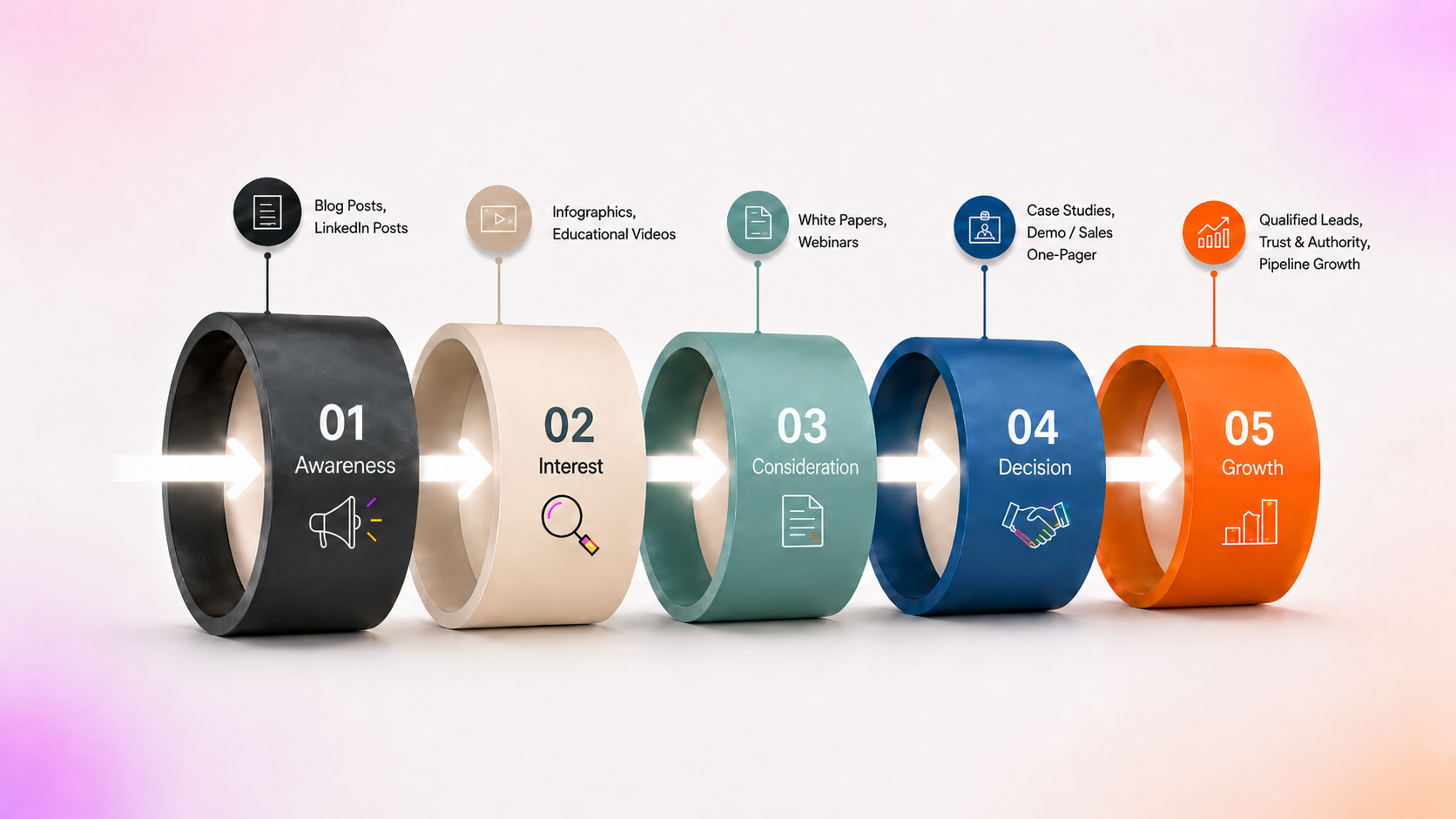
Different content formats serve different goals.
Blog Posts
Blog posts are one of the most useful content formats in B2B marketing. It addresses the common objections and adds value for leads at all stages of the business-to-business sales process, as well as brings in organic traffic through SEO.
They help companies:
- Rank on search engines
- Answer customer questions
- Build authority
- Generate leads over time
Case Studies
The case study can serve as social proof in which the company proves its value in the eyes of the prospect by giving examples of past success stories.
They explain:
- The client’s problem
- The solution
- The outcome.
Videos
Video continues to grow rapidly in B2B marketing. Recent marketing reports show that video is now one of the most effective B2B content formats. Video often creates stronger engagement than text alone.
Businesses use videos for:
- Product demos
- Tutorials
- Interviews
- Webinars
- Industry updates
Whitepapers and Reports
Whitepapers are unique to B2B, usually offering a detailed technical explanation or insight from experts on issues that matter to the target audience of the business. Businesses often use them for lead generation.
They usually contain:
- Industry data
- Trends
- Expert insights
- Research findings.
Email Newsletters
Email marketing still works well because it keeps audiences engaged regularly. Consistency matters more than frequency.
A strong newsletter may include:
- Industry news
- Blog updates
- Tips
- Reports
- Product education
Ready to run email campaigns that actually convert? [See how we handle email and landing pages →https://www.tangence.com/Emails-and-Landing.php]
Social Media Content
LinkedIn is particularly critical for B2B organizations. Blog posts, opinions, and educational videos can be used by brands to directly reach business customers.
How B2B Content Marketing Works: A Simple 6-Step Plan
Now you know why B2B content marketing matters. Let me show you how to do it. Here is a simple six‑step plan based on what is actually working right now. Follow these steps, and you will be on your way to success.
1. Set Clear Goals
Before you write anything, decide what you want to achieve. Do you want more people to know your brand? Do you want more leads? Do you want to help your sales team close deals?
Make your goals SMART. That means Specific, Measurable, Achievable, Relevant, and Time-bound.
Pick a few key performance indicators to track. Good ones include pipeline contribution, qualified leads, and demo requests. Avoid only counting clicks and views. Forty-eight percent of marketers now prioritize ROI and ROAS as their top KPI, yet most admit they can’t track it properly. High-growth firms are pulling ahead here: 62% focus on attributed revenue and 54% track pipeline contribution.
2. Know Your Audience
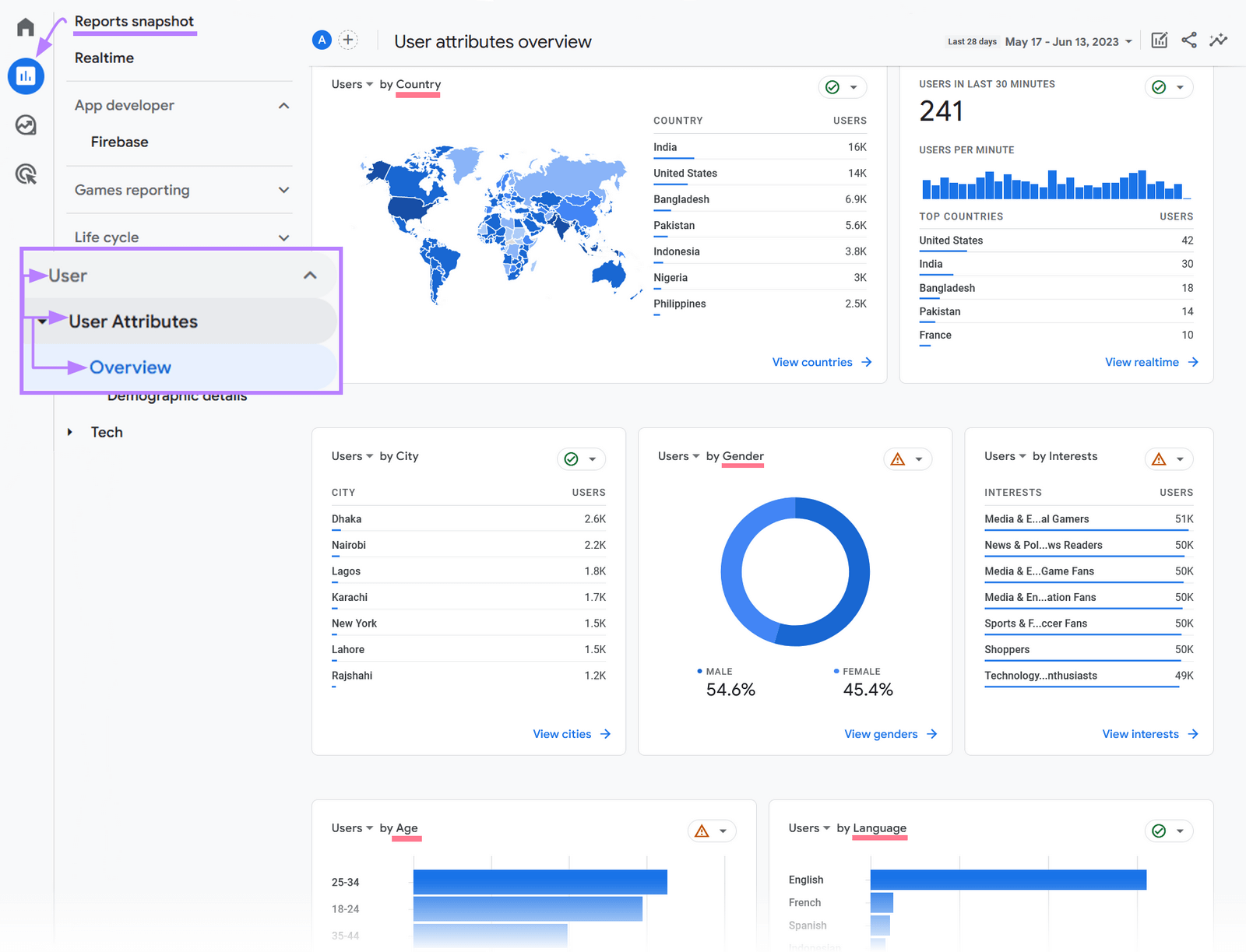
Source: Semrush
Modern B2B buyers do not make decisions in one day. They move through different stages before choosing a product or service. Content marketing works by supporting buyers during each stage.
Awareness Stage
At the beginning, buyers try to understand their problem. They search for educational information and general advice.
Businesses create content such as:
- Beginner guides
- Educational blogs
- Industry trend articles
- Infographics
- Short videos
For example, a logistics company may publish a blog about common supply chain challenges. The goal here is not to sell directly but to help readers understand the issue better.
Consideration Stage
Once buyers understand their problem, they begin comparing solutions. At this stage, businesses create more detailed content that explains how different approaches work.
This may include:
- Case studies
- Product comparison guides
- Webinars
- Expert interviews
- Whitepapers
Today’s buyers often compare several companies online before contacting anyone. Helpful and transparent content can strongly influence their decisions during this stage.
Decision Stage
In the final stage, buyers want proof and confidence before making a purchase.
Businesses use content like:
- Product demos
- Testimonials
- Success stories
- ROI calculators
- Free consultations
This content helps remove doubts and supports the final decision-making process.
3. SEO Helps Buyers Discover Content
Search engine optimization plays a major role in how B2B content marketing works today. Most buyers begin their research through online searches. If content does not appear in search results, it becomes difficult to attract organic traffic.
Businesses now focus on:
- Keyword research
- Topic clusters
- Search intent
- Internal linking
- Featured snippets
- AI-friendly formatting
Search engines also reward content that demonstrates expertise, trust, and originality. Because of this, businesses are moving away from low-quality keyword stuffing and focusing more on helpful, detailed, and experience-driven content.
Generative Engine Optimization (GEO) Is Becoming Important
Traditional SEO mainly focused on keywords and backlinks. Today, businesses also need to think about generative engine optimization, or GEO. GEO means creating content that AI systems can easily analyze, understand, and cite in their answers.
Content performs better in AI search when it:
- Answers questions directly
- Uses clear headings
- Covers topics in depth
- Includes trustworthy insights
- Avoids unnecessary filler
Businesses that optimize for both search engines and AI-powered discovery tools have a stronger chance of attracting modern B2B buyers.
4. Build Topic Clusters Instead of Random Blogs
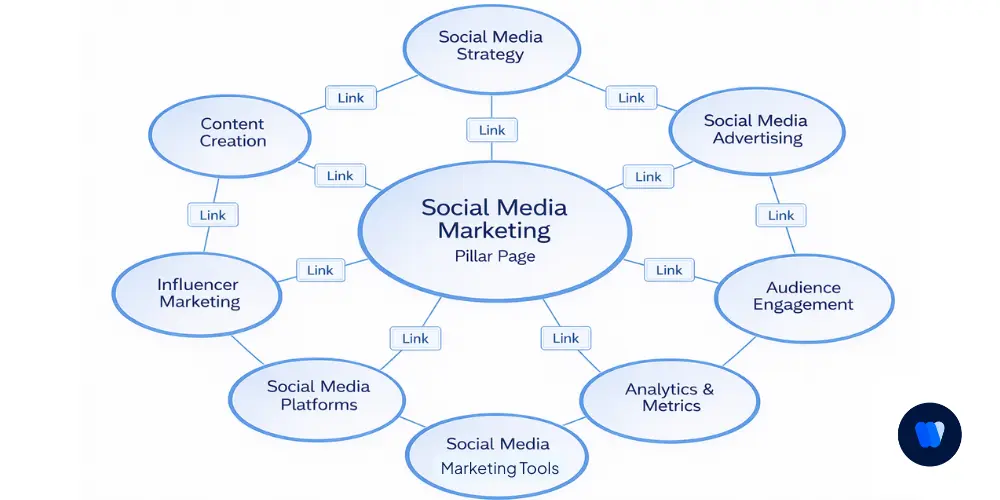
Source: Wellows
Earlier, many companies focused on publishing large numbers of blog posts. Today, search engines and AI tools reward businesses that show deep expertise on specific topics. This is why topic clusters are becoming a major part of modern B2B content marketing strategies.
Sites implementing topic cluster structures see internal PageRank increases of up to 34% for cluster pages within 60 days and organic traffic increases averaging 40% over time.
A topic cluster usually includes:
- One main pillar page
- Several supporting articles
- Internal links connecting related topics
- Detailed coverage of one subject area
For example, a company focusing on email marketing may create a main guide about email strategy and supporting blogs about automation, segmentation, subject lines, and analytics.
This structure helps businesses build authority and improve both SEO rankings and AI visibility.
5. Original Expertise Matters More Than Generic Content
AI-generated content has increased rapidly in recent years. Because of this, buyers now pay more attention to content that feels authentic and experience-driven.
Businesses that share:
- Real customer stories
- Original research
- Industry insights
- Expert opinions
- First-hand experiences
often build stronger trust with readers.
Modern B2B buyers want practical advice from people who truly understand their challenges. Content with real expertise is also more likely to earn backlinks, social shares, and AI citations.
6. Video Content Is Becoming Essential
Video is now one of the fastest-growing parts of B2B marketing. Many buyers prefer watching short videos, webinars, and product demonstrations before making decisions.
According to 95% of B2B consumers, video is crucial in helping them navigate the purchasing process and gain a deeper understanding of goods and services.
Businesses now use videos for:
- Product walkthroughs
- Case studies
- Industry discussions
- Tutorials
- Customer interviews
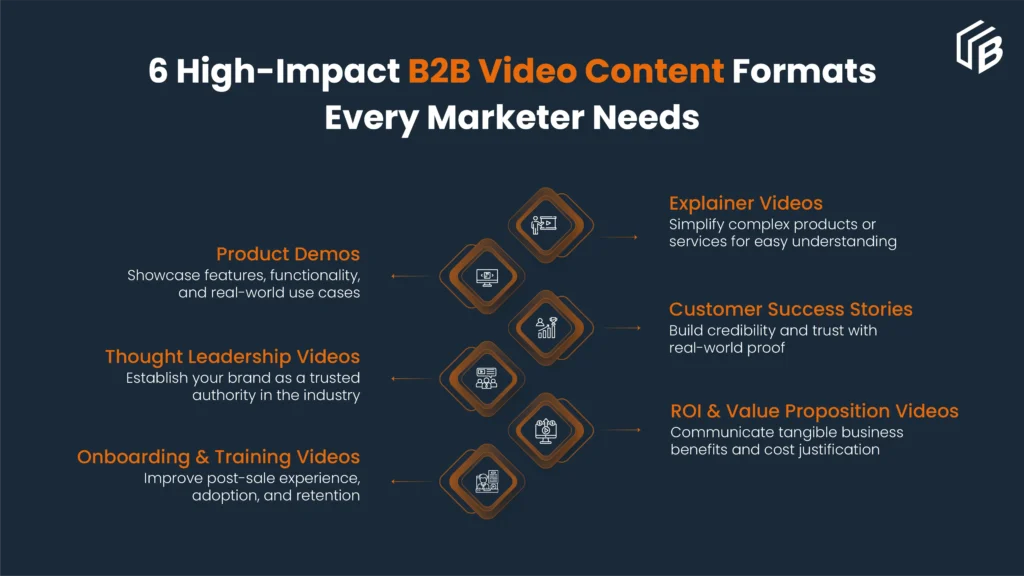
Source: Unbound
Short-form videos (LinkedIn, YouTube Shorts) are also working well to generate awareness at the top of the funnel, especially when used in combination with written content on the same topics. The two formats complement each other instead of competing.
Common Mistakes to Avoid in 2026
Many B2B teams spend a lot of money on content but get poor results. Here are the most common mistakes.
Mistake 1: Focusing on quantity instead of quality.
83% of marketers agree that it is much better to publish high-quality content less often than to flood people with average material. The teams that win produce fewer but much deeper assets that actually give away interesting information.
Companies that invest in:
- Topical authority
- AI-friendly content
- Original insights
- Video content
- Structured topic clusters
They are more likely to stay competitive in the evolving digital landscape.
Mistake 2: Only creating “top of funnel” content.
Most B2B content is built around informational keywords. But that type of content is most affected by AI search disruption. It is also the least effective at converting buyers. You need content for all stages.
Mistake 3: Ignoring distribution.
Research from McKinsey found that B2B buyers engage with an average of 10.2 distinct channels during their journey. You must promote your content on LinkedIn, in online communities, through email, and across multiple channels. Omnichannel expectations are no longer a luxury; they are expected.
Struggling to distribute content across channels consistently?
[See how marketing automation fixes this → https://www.tangence.com/Marketing-Automation.php]
Mistake 4: Letting AI do all the work.
AI can write a blog post in seconds. But AI-generated content focuses heavily on facts and logic. Competing products often sound alike when reduced to features and data points. What makes content stand out today is emotional storytelling and human judgment.
The Future of B2B Content Marketing
The future will focus more on:
- Trust
- Expertise
- Personalization
- AI visibility
- Video
- Thought leadership
Long-form educational content is also making a strong comeback because buyers want deeper insights instead of shallow information.
Businesses that create authentic, helpful, and well-structured content will continue to stand out.
The biggest shift is simple: Winning companies are not publishing more content. They are publishing smarter content.
Conclusion
B2B content marketing is no longer just about publishing blogs regularly. Today, businesses must create helpful, trustworthy, and well-structured content that supports buyers at every stage of the journey.
Companies that focus on topic expertise, AI-friendly formatting, video content, and authentic insights are more likely to build trust and generate quality leads. As AI search continues to grow, businesses that publish smarter and more valuable content will stand out, attract better buyers, and stay competitive in 2026 and beyond.
Want to learn how Tangence can help you build a B2B content marketing strategy that works in 2026? Let’s talk today about creating content that builds trust, drives a pipeline, and grows your business.
Frequently Asked Questions
Q1: What is B2B content marketing, and how does it differ from B2C?
A: B2B content marketing involves creating helpful information to build trust with business buyers. Unlike fast B2C consumer decisions, B2B choices involve expensive solutions, multiple decision-makers, and longer research periods.
Q2: How are modern AI tools changing the B2B buying journey?
A: Buyers now use AI tools three times more during research. Instead of visiting websites, 94% use LLMs to summarize information, making clear, structured, and expert content essential for AI visibility.
Q3: What are the three stages of the modern B2B buyer’s journey?
A: Buyers move from the Awareness Stage (understanding their problem), to the Consideration Stage (comparing different solutions), and finally to the Decision Stage (seeking proof like demos to make a final purchase).
Q4: What is Generative Engine Optimization (GEO) in B2B marketing?
A: GEO is the practice of optimizing content so AI search systems can easily understand and cite it. This requires direct answers, clear headings, in-depth topic coverage, and authentic, filler-free expertise.
Q5: Why should businesses use topic clusters instead of random blogs?
A: Topic clusters build deep authority by linking a main pillar page to supporting articles. This structure satisfies search engines and AI tools, boosting organic traffic by an average of 40%.
Q6: What is the biggest mistake B2B marketers make with AI content?
A: Letting AI do all the work. Purely AI-generated content lacks emotional storytelling and human judgment, making competing products sound identical. Success requires blending facts with authentic, first-hand human experience.