blog
The Future of Content Repurposing: Trends to Watch
Content teams face a simple problem. People want more content, but teams have limited time.
That is why content repurposing is becoming a key part of modern marketing. Instead of creating every post from scratch, brands can turn one strong idea into many useful assets.
The shift is already clear. HubSpot’s 2026 State of Marketing report says 83% of marketers now face pressure to create more content. It also says 35.08% of marketers see repurposing content across channels as a major marketing trend.
AI is accelerating this process. HubSpot reports that 80% of marketing teams use AI for content creation, while 75% use AI for media production.
So, what comes next?
The future will not focus on copying the same post across every channel. It will focus on turning one useful idea into many channel-ready experiences. Here are the key trends to watch.
What Is Content Repurposing?
Repurposed content means taking an existing piece of material and changing its format or medium to share it on a different platform or reach a new audience. Repurposed content is typically transformed into a new format (for example, turning a blog post into an infographic).
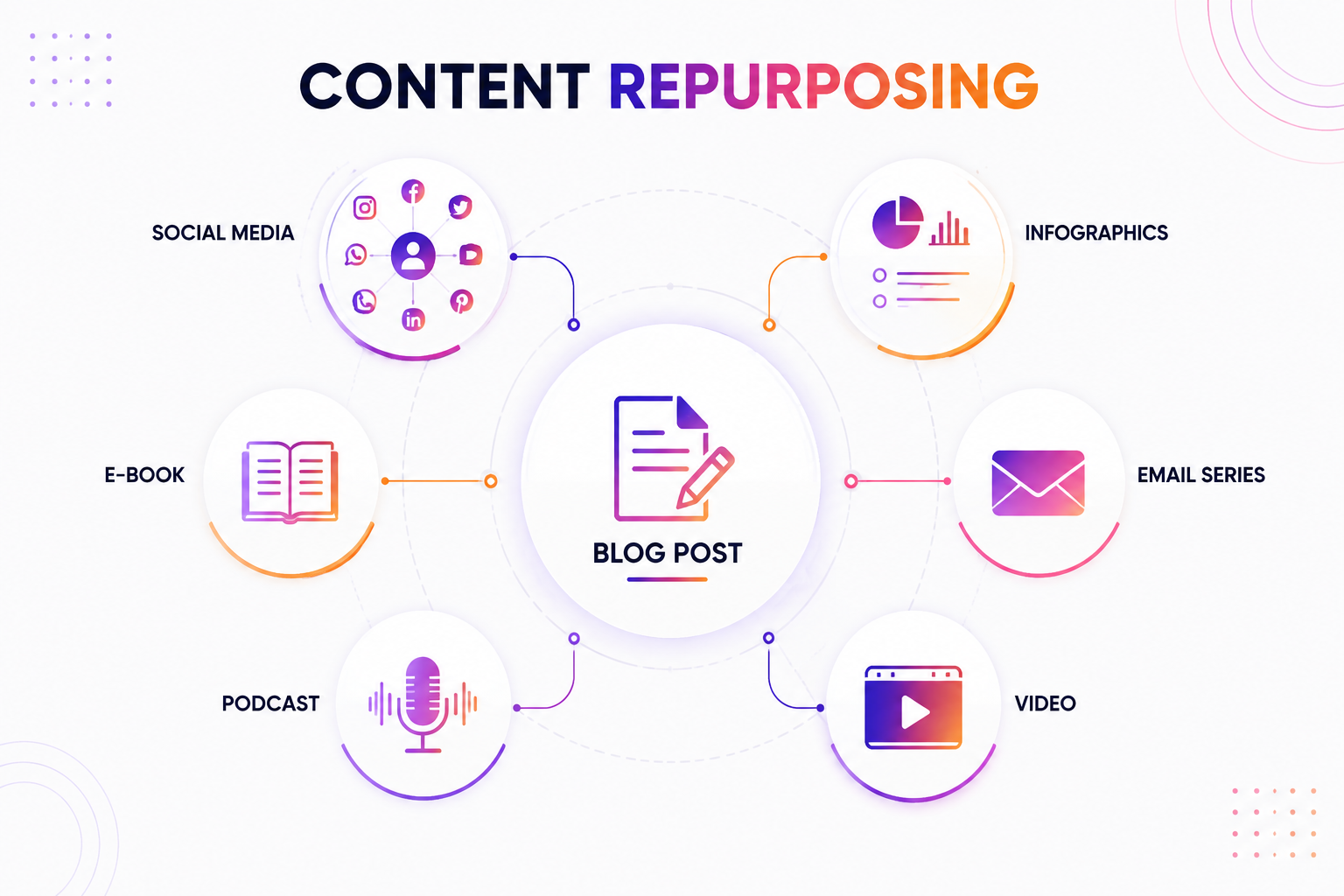
For example, a company can turn one blog post into a LinkedIn post, short video, email, infographic, podcast topic, and sales guide.
For example, a company publishes a detailed blog about cybersecurity. The same research can support:
- A LinkedIn post with three key lessons.
- A short video that explains one common threat.
- An email with practical security tips.
- An infographic with important facts.
- A sales presentation for potential customers
The core idea stays the same. The format and message change to fit the audience and channel.
The future of content repurposing is not about publishing the same content everywhere. It is about turning one useful idea into many relevant experiences.
Why Content Repurposing Matters Now
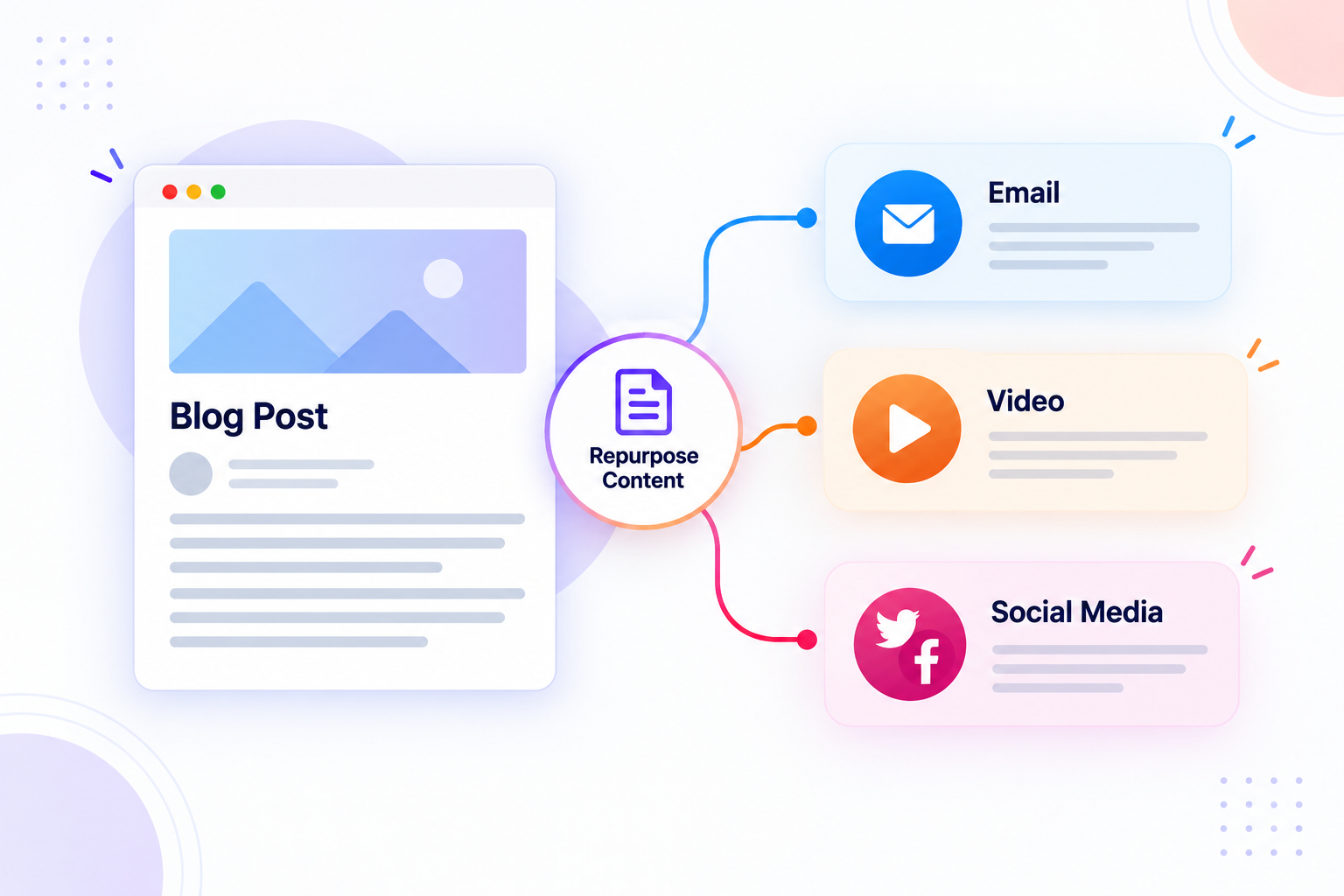
Content creation takes time. Research, writing, design, editing, and promotion all need resources. Repurposing helps teams get more value from work they have already done.
For example, a 2,000-word guide can become:
- Five short social posts
- Three short videos
- One email
- One infographic
- One sales enablement sheet
- Several FAQ answers
- A podcast discussion
- A webinar topic
This does not mean posting the same content everywhere. Smart repurposing of content to each platform.
HubSpot’s 2026 research shows that 49.4% of teams reuse the same content across platforms, while 39.5% tailor content for each platform. The second approach gives brands more room to match user needs and channel behavior. That difference will shape the next phase of content marketing.
1. AI Will Make Content Repurposing Faster
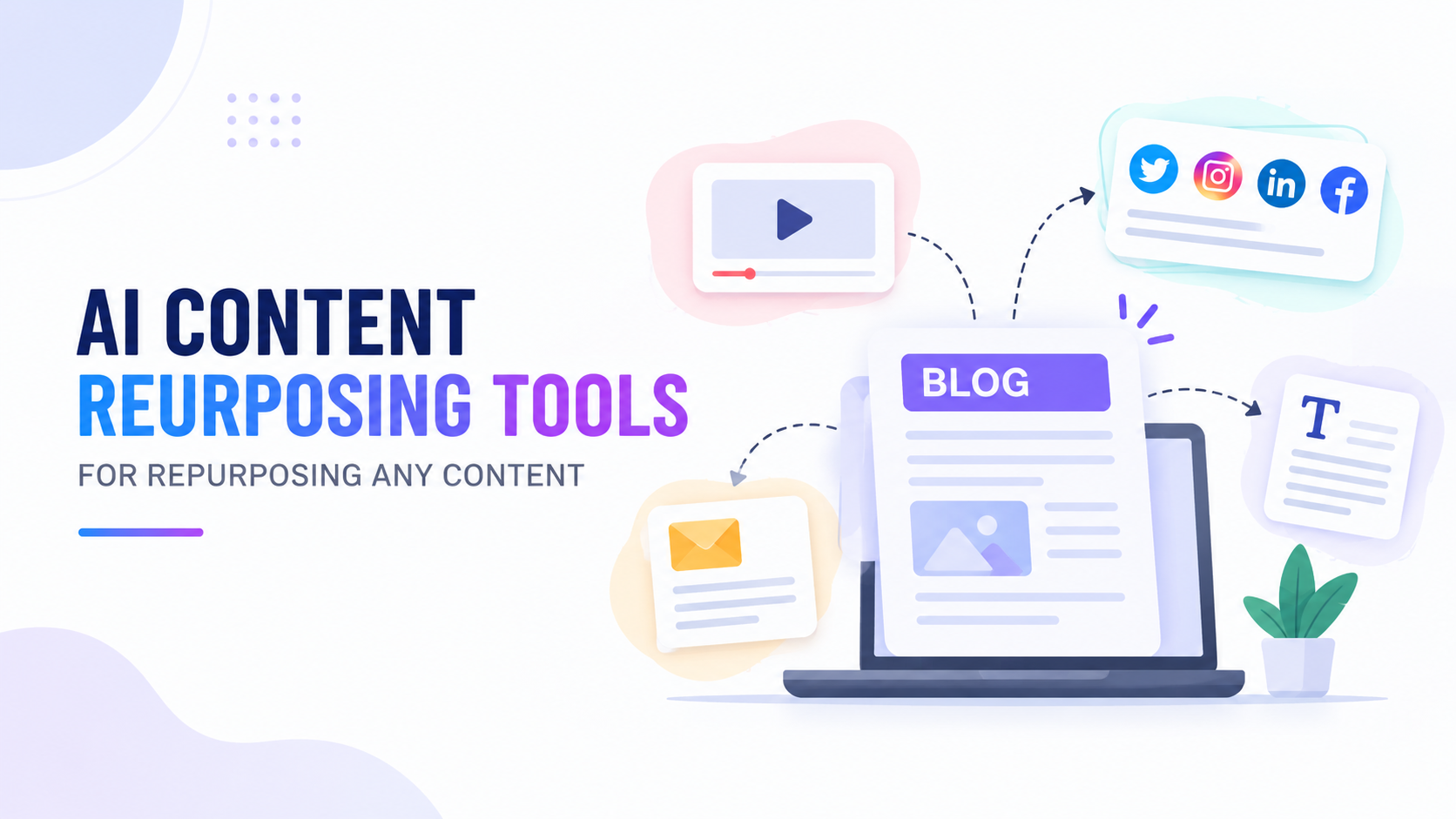
Artificial intelligence is changing how teams plan, create, and distribute content. Repurposing is one area where these changes can have a direct impact.
AI tools can review existing content and suggest new formats. They can also help with transcripts, captions, outlines, and first drafts.
HubSpot’s 2026 State of Marketing report identifies media creation as one of the leading uses of AI in marketing. The report also says that marketers need human review to protect brand guidelines and content quality.
Read more about AI content repurposing.
AI Will Turn One Asset Into Many Drafts
A marketer may upload a webinar transcript into an AI tool. The tool can then suggest:
- Five short video topics.
- A blog outline.
- Social media captions.
- An email draft.
- Questions for a follow-up webinar.
This saves time during the first stage of production. The team can spend more time checking facts, adding examples, and improving the message.
For example, a software company hosts a webinar about data privacy. AI can identify the main lessons and create draft content for different channels.
A subject expert should still review the drafts. AI can miss context, change meaning, or create claims that the original speaker never made.
AI Will Learn Brand Voice and Audience Needs
Generic content often sounds the same. Future tools will place more focus on brand voice, audience needs, and content goals. A B2B brand may need a clear and professional tone. A fitness brand may use a friendly and direct style. The same source content should not sound identical in both cases.
Teams will use brand guidelines, approved examples, and audience data to guide AI tools. The goal is simple. Use AI to speed up production without losing the brand’s human voice.
Human Review Will Stay Important
AI can make content faster. It does not make every piece correct.
HubSpot reports that 46% of marketers who use generative AI are only somewhat confident that they can identify inaccurate AI information.
That creates a clear need for human review. Teams should check facts, tone, examples, sources, claims, and brand details before publishing. The future will likely favor teams that combine AI speed with human experience.
Human reviewers should check:
- Facts and statistics.
- Product claims.
- Tone and brand rules.
- Copyright and permissions.
- Sensitive topics.
- Links and calls to action.
This matters even more when teams repurpose content for sales, healthcare, finance, or other fields that need careful review.
2. Short-Form Video Will Lead Content Repurposing
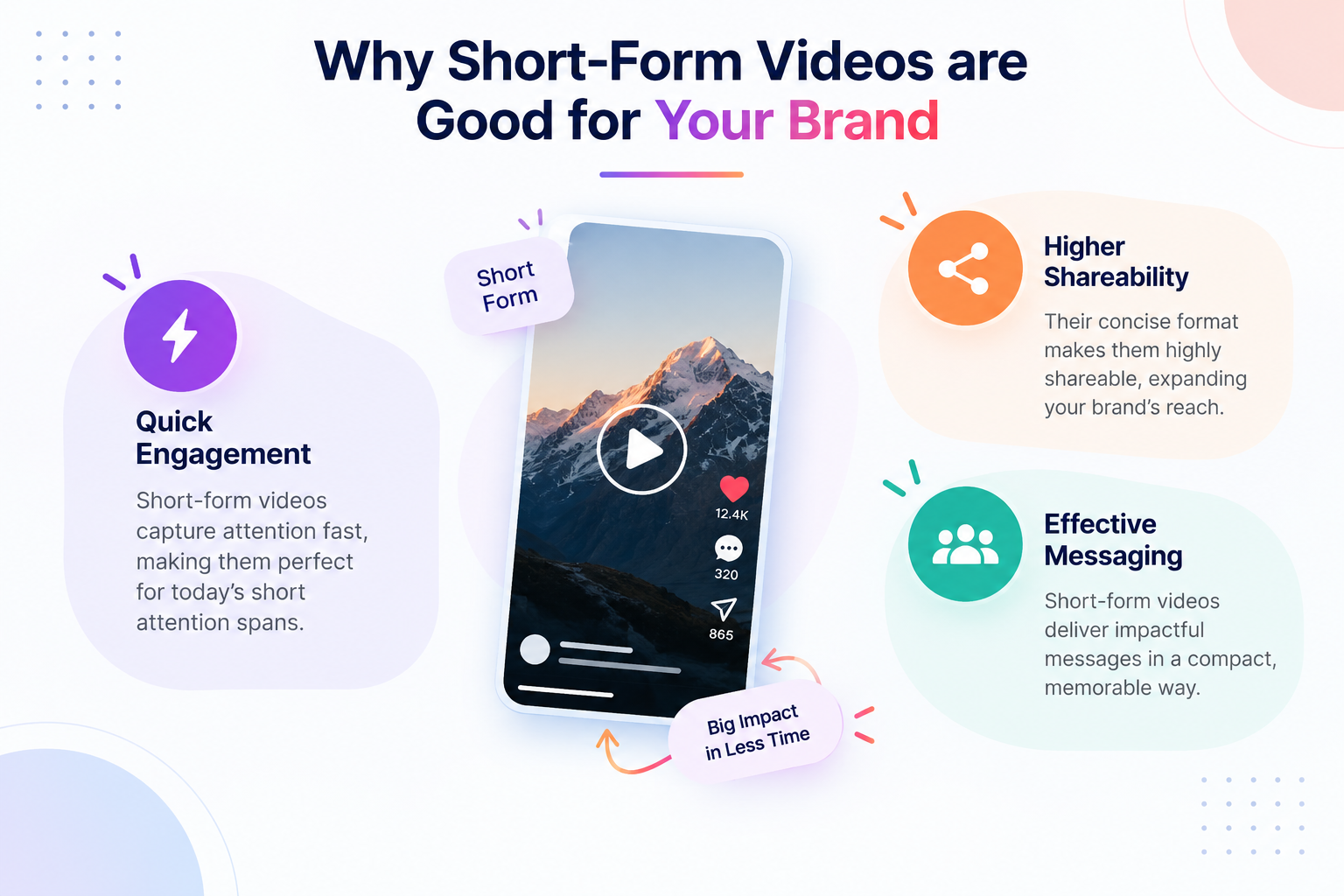
Short-form video has become a major part of content marketing. Brands now use clips to explain ideas, answer questions, and introduce products.
HubSpot’s 2026 research reports that short-form video delivers the highest ROI among the formats it measured, at 48.6%. Long-form video follows at 28.6%.
These results help explain why video will remain a key part of repurposing strategies.
Long Videos Will Become Content Libraries
A long video can contain many useful ideas. A team does not need to publish the full recording on every platform. Instead, it can identify strong sections and create focused clips.
For example, a 45-minute webinar about cloud security may produce:
- A 30-second clip about password risks.
- A 60-second explanation of cloud backups.
- A short answer about access controls.
- A longer video with the full expert discussion.
- A blog post that covers the main lessons.
Each clip can answer one question. This makes the content easier to consume.
Video Editing Will Become More Accessible
AI-assisted editing can help teams find useful moments in long recordings. It can also support captions, transcripts, and format changes.
Wistia’s video marketing research, published through HubSpot, reports that more than half of companies repurpose video into social clips. It also reports that 76% of teams adjust video aspect ratios for different social platforms.
This shows why teams need more than a simple upload process. A vertical clip for Instagram may need a different layout from a LinkedIn video.
Captions and Accessibility Will Matter More
Captions help people follow videos in quiet places or when they cannot use sound. They also make content more accessible.
Future repurposing workflows will include:
- Accurate captions.
- Clear on-screen text.
- Good contrast.
- Descriptive titles.
- Useful audio.
- Easy-to-read layouts.
These features improve the experience for more viewers. They also help teams reuse content across more channels.
3. Platform-Specific Content Will Replace Simple Cross-Posting
One of the biggest changes in content repurposing is the move from copying content to adapting it. A single message may work across several platforms. However, the format, length, and opening should match the audience.
HubSpot’s 2026 report found that 39.5% of marketers tailor reused content for each platform, while 49.4% reuse the same content across platforms.
Both approaches have a place. The right choice depends on the content, audience, and goal.
LinkedIn Content Will Focus on Business Value
LinkedIn audiences often look for professional insights, useful lessons, and business updates. A company can repurpose a webinar into a LinkedIn post by focusing on one key takeaway.
For example:
Source: A webinar about improving customer service.
LinkedIn version: Three ways customer service teams can reduce response delays.
The post should use a clear opening, short paragraphs, and a useful conclusion. It does not need to repeat the full webinar.
Instagram and TikTok Content Will Focus on Visual Stories
Short-form video platforms work well for quick explanations, demonstrations, and visual stories. A home improvement company can turn a detailed article about kitchen design into several short videos.
One clip may show common layout mistakes. Another may explain storage ideas. A third may answer a common customer question.
The team should adapt the opening, visuals, and pace for the platform. Simply cutting a long video may not create a strong short-form asset.
Email Content Will Focus on Direct Value
Email gives brands a way to reach people who already know them. A long blog can become a short email with one key lesson and a link to the full article.
For example:
- Start with one useful problem.
- Share a simple solution.
- Add one example.
- Link to the complete guide.
This approach helps readers decide whether the full content is useful to them.
4. Search and AI Answer Engines Will Change Repurposing
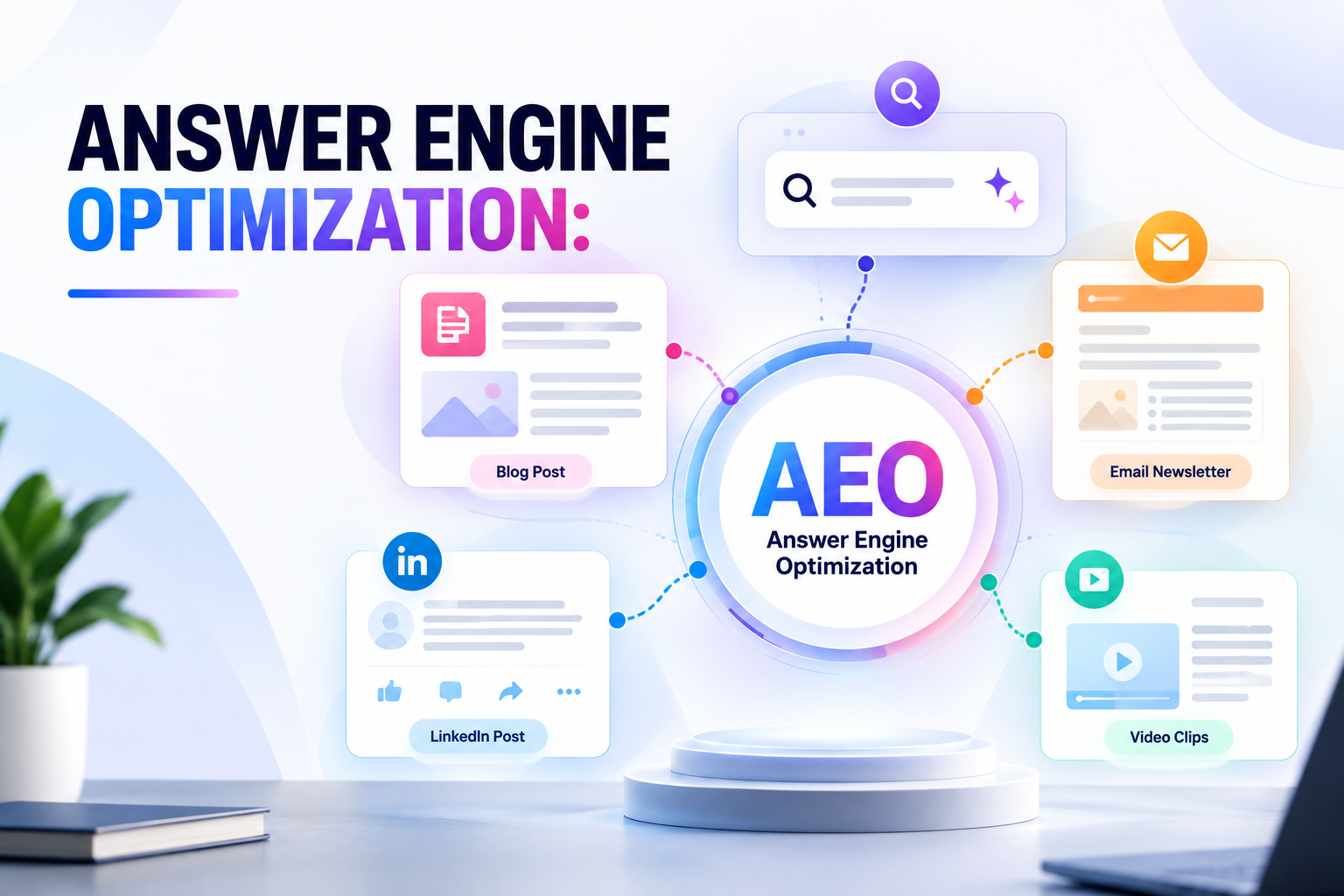
Search is no longer limited to a list of blue links. People also use AI assistants to ask questions and find answers. This creates new opportunities for content teams. Repurposed content can help brands explain the same topic in different ways. However, teams should focus on usefulness rather than creating many similar pages.
Content Will Need Clear Answers
Answer engines work best when content gives clear and useful information.
A strong source article should explain:
- What the topic means.
- Why it matters.
- How to use it.
- What mistakes to avoid.
- When to seek expert help.
Repurposed content should preserve these useful answers.
For example, a blog about email marketing can become a short FAQ video. The video can answer one question directly. The full article can cover the wider strategy.
Structured Content Will Support Reuse
Clear headings and short sections help both readers and content teams.
A well-organized article makes it easier to identify:
- Key questions.
- Main answers.
- Supporting examples.
- Definitions.
- Step-by-step instructions.
These sections can support social posts, email content, video scripts, and other formats. Structured content also helps teams keep their message consistent.
Answer Engine Optimization Will Become Part of the Workflow
Answer engine optimization, or AEO, focuses on creating content that answers user questions clearly. Content repurposing and AEO work well together when teams start with useful source material.
A practical workflow looks like this:
- Identify a real audience question.
- Create a detailed answer.
- Add evidence and examples.
- Turn the answer into short formats.
- Link related content where useful.
- Review every version for accuracy.
Do not create separate pages for every small variation of the same question. Instead, combine related questions into useful resources.
5. Content Repurposing Will Become More Data-Driven
Future teams will use performance data to decide what to repurpose.
Not every blog, video, or podcast deserves the same effort. Some content has stronger audience interest or business value.
High-Performing Content Will Guide New Ideas
A company can review its existing content to find useful opportunities.
Look for:
- Articles with steady organic traffic.
- Videos with strong watch time.
- Posts that receive meaningful comments.
- Emails with high click rates.
- Pages that support leads or sales.
These signals help teams choose where to spend their time.
For example, a blog about cloud migration may attract many visitors. The team can turn its most useful section into a video or downloadable checklist.
Content Performance Will Go Beyond Views
Views and clicks matter, but they do not tell the whole story.
A better measurement plan can include:
| Goal | Useful Metric |
| Reach new audiences | Impressions and unique reach |
| Build engagement | Comments, saves, and watch time |
| Attract website visitors | Qualified referral traffic |
| Support leads | Form fills and assisted conversions |
| Improve sales support | Content used in sales conversations |
| Build trust | Meaningful feedback and repeat visits |
These metrics help teams understand whether repurposing supports business goals. A video with fewer views may still help more customers than a popular clip that attracts the wrong audience.
6. Convert Case Studies to Multiple Formats

Case studies are an ideal marketing resource for the bottom of the funnel, but you should not keep them as PDFs only. Try repurposing them into:
- Video Testimonials: Conduct interviews with satisfied customers and convert them into videos.
- Slide Presentations: Convert case study data into slides for LinkedIn presentations or webinars.
- Social Proof: Extract valuable results from your case study (“Increase in conversion rate by 75%”) for your ad campaigns, social media content, and emails.
Create Infographics to Make Your Content More Visual
Infographics are a powerful way to repurpose content into a visually appealing, easy-to-digest format. It performs especially well on Pinterest, LinkedIn, and as downloadable lead magnets
- Summarize Data & Stats: Turn research findings or case study results into shareable infographics.
- Process Overviews: Break down complex processes into step-by-step visuals.
- Comparison Charts: Show product comparisons, industry trends, or before-and-after insights.
7. Podcasts and Webinars Will Become Repurposing Hubs
Audio and video interviews contain useful ideas, expert opinions, and real-world examples. These formats offer strong source material for content teams. A single expert discussion can support several types of content. The key is to identify useful ideas rather than simply cut the recording into random pieces.
Podcasts Will Support Multi-Format Content
A podcast episode can become:
- A blog post.
- A short video.
- An email summary.
- A quote graphic.
- A LinkedIn discussion.
- A list of key lessons.
For example, a marketing agency interviews a business owner about customer retention. The team can create a written case study from the interview and share short clips that explain the main lessons.
The final content should match the original speaker’s meaning. Editors should check quotes and avoid taking comments out of context.
Webinars Will Support Education and Sales
Webinars often contain detailed explanations and audience questions. A B2B company can reuse a webinar to create educational resources for different stages of the buyer journey.
A beginner may need a short introduction. A potential customer may need a detailed comparison. A sales team may need a short explanation of the product’s value. Each asset should serve a clear purpose.
8. Content Repurposing Will Become More Personalized
Personalization means adapting content for different audiences. A business may serve beginners, experienced professionals, and decision-makers. Each group needs a different level of detail. Repurposing can help teams create useful versions without rebuilding every piece from scratch.
One Topic Can Serve Different Audiences
Consider a blog about business cybersecurity. A beginner may need a simple guide to common threats. An IT manager may want a detailed checklist. A business owner may want to understand cost, risk, and business impact.
The source content can support each audience. The team should change the examples, language, and level of detail. It should not just replace a few words.
Personalization Will Use Customer Questions
Customer questions offer useful content ideas. A support team may notice repeated questions about a product feature. Marketing can turn these questions into short videos, FAQs, and help articles.
This approach helps teams answer real problems. It also gives content a clear purpose beyond publishing more often.
Privacy Will Remain Important
Personalization should respect user privacy. Teams should use customer data carefully and follow applicable privacy rules. They should also avoid exposing personal information in public content. Clear consent and responsible data practices help protect trust
How to Build a Future-Ready Content Repurposing Strategy
A strong strategy starts with a clear source asset and a clear audience. You do not need to repurpose every piece of content. Instead, choose content that has useful information and a real purpose.
Step 1: Choose Your Best Source Content
Start with content that has strong value.
Good options include:
- Detailed blog posts.
- Webinars.
- Podcasts.
- Research reports.
- Customer interviews.
- Product guides.
- Expert videos.
Choose content that answers a real question or solves a real problem.
Step 2: Define Your Audience and Goal
Ask who should see the new content and what action you want them to take. For example, a short video may aim to attract new viewers. An email may aim to bring readers back to your website. A sales asset may help a prospect understand your service. A clear goal helps you choose the right format.
Step 3: Break the Source Into Key Ideas
Review the source content and identify its main points. For a 2,000-word blog, you may find five useful sections. Each section can become a short content asset. For a webinar, you may identify the best audience questions. This step helps you avoid creating random content.
Step 4: Adapt Each Asset for Its Channel
Do not publish the same version everywhere. Change the opening, length, visuals, and call to action as needed. A LinkedIn post may focus on a business lesson. A video may focus on one quick tip. An email may link to the full guide.
Step 5: Add Evidence and Expert Review
Check every statistic, quote, and claim. Use reliable sources when you make factual claims. Add expert input where it improves the content. This supports trust and reduces errors.
Step 6: Measure Results and Improve
Review performance after publishing. Find out which formats attract the right audience and which ones support your goals. Then improve your next repurposing cycle.
Common Mistakes to Avoid
Content repurposing works best when teams focus on quality and purpose.
Publishing the Same Content Everywhere
A single caption may not work on every platform. Adapt the message to fit the audience and format.
Creating Too Many Weak Assets
More content does not always create more value. Start with the strongest ideas. Create fewer useful assets instead of many low-quality ones.
Skipping Human Review
AI drafts can contain mistakes. Review facts, tone, and claims before publishing.
Ignoring Original Sources
Keep track of where facts, quotes, and research came from. This helps teams avoid errors when they reuse content months later.
Measuring Only Views
Views do not show the full business impact. Use metrics that match your goals, such as qualified traffic, leads, or customer engagement.
How Tangence Can Help With Content Repurposing
Your best content can often do more than it already does. Tangence helps businesses turn valuable ideas, stories, case studies, webinars, and other existing content into engaging formats designed for different audiences and channels.
From developing a repurposing strategy to creating social content, videos, visual assets, and other creative formats, our team can help you extend the value of your content while keeping your brand message consistent.
Ready to get more from the content you already have? Contact Tangence today to explore content repurposing opportunities for your brand.
Conclusion
The future of content repurposing will focus on smart reuse, not simply creating more content. AI will help teams turn source material into drafts faster. Short-form video will support discovery. Platform-specific content will help brands reach audiences with the right message. Search and AI answer engines will increase the need for clear, useful information.
At the same time, human review, original research, and real customer stories will remain important. These elements help brands build trust and create content that people can use.
The best strategy starts with strong source content. Choose a clear audience, adapt each asset for its channel, and measure meaningful results. With the right process, one valuable idea can support many content experiences and help your business make better use of its content investment.
FAQs:
1. What is the future of content repurposing?
The future of content repurposing will combine AI tools, short-form video, platform-specific content, and data-driven planning. Teams will reuse strong source content while adapting each version for its audience and purpose.
2. How will AI change content repurposing?
AI will help marketers create drafts, transcripts, captions, video clips, and content ideas faster. Human review will remain important for accuracy, brand voice, and quality.
3. What types of content are best for repurposing?
Detailed blog posts, webinars, podcasts, research reports, customer interviews, and expert videos are useful source assets. They often contain several ideas that teams can adapt into new formats.
4. How can content repurposing improve SEO and AEO?
Repurposing can help brands explain useful topics across blogs, videos, emails, and social posts. Clear answers, useful examples, and consistent information support a stronger content strategy for search and answer engines.
5. How can Tangence help with content repurposing?
Tangence can help businesses explore content marketing and repurposing opportunities. A content partner can support planning, messaging, and the creation of useful content assets from existing material.
6. How do you measure content repurposing success?
Measure results based on your goal. Useful metrics include qualified website traffic, leads, engagement, video watch time, email clicks, and content production time. Avoid relying on views alone.
7. Is content repurposing better than creating new content?
Repurposing and new content serve different purposes. Repurposing helps extend the value of existing work. New content helps address topics and questions that your current library does not cover. A strong strategy uses both.