blog
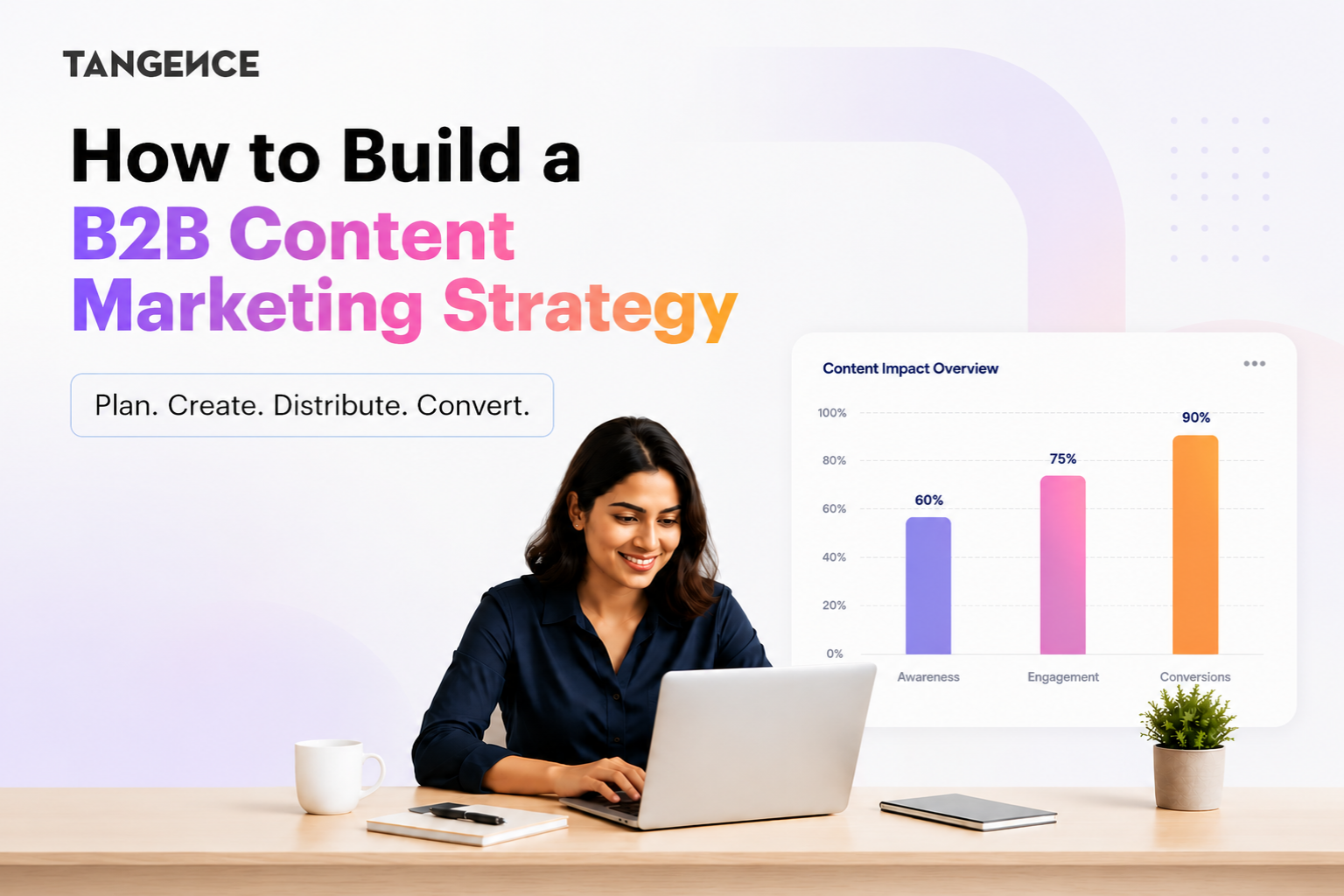
How to Build a B2B Content Marketing Strategy
Content marketing is a valuable resource that most B2B companies use. 91% of B2B marketers use content marketing to acquire new clients.
But today, the way buyers journey to find information has changed. However, the buyer’s journey has evolved in the modern age. Basic SEO is not sufficient now because B2B clients rely on AI-driven answers from platforms such as ChatGPT and Perplexity to investigate solutions.
In fact, 52% of B2B tech marketers rank AI search as their most effective distribution channel. This changes everything.
A good B2B content marketing strategy can connect these needs. It can help your brand build trust, reach buyers, support sales, and drive leads.
This guide will show you how to build a B2B content marketing strategy that works in 2026. You will learn how to create content that ranks, gets cited by AI, and converts readers into customers.
Let’s begin to explain!
What is B2B Content Marketing?
B2B content marketing refers to content marketing used to market one’s products or services through content to businesses. This includes the creation of quality content which resonates well with the problems faced by B2B customers.
A strong strategy can cover:
- Blog posts
- Case studies
- White papers
- Ebooks
- Product guides
- Tutorials
- Videos
- Webinars
- Email content
- Infographic
The most effective content marketing campaigns always have credible insights, such as convincing data, research, and examples, to back up those stories. This will allow their clients to understand a new trend or topic and how they can conquer it.
Why AI Search Has Changed the Rules for B2B Content
Today, consumers don’t simply enter keywords into Google anymore. Instead, they ask entire questions to AI-powered chatbots. They need direct answers. This is known as “answer engine optimization (AEO). AEO refers to the process of optimizing content so that it can be found, trusted, and referenced by AI. This is crucial. You are invisible if your content isn’t AI-optimized.
According to research, 94% of marketers will use AI for content marketing (including blog posts) by 2026.
What’s the Difference Between Content Marketing and Thought Leadership
There is a big difference between creating content and building thought leadership. Content marketing often fills a calendar with “safe” topics. Thought leadership shares a distinct point of view. It challenges common thinking. It draws on real experience and data. B2B buyers trust thought leadership.
88% of business decision-makers say thought leadership increases their respect for an organization. This means that sharing unique insights is more powerful than just writing blog posts
Why Does B2B Content Marketing Need a Clear Strategy?
A B2B transaction is usually not very straightforward. Several people can be involved in just one single purchase. Each individual can have different queries, objectives, and concerns.
For instance, a software purchase could involve the CEO, IT manager, financial manager, and end user. Each person needs different information before they support the deal.
Buyers Want More Control
More than half of B2B buyers today want to find out about their desired product without interacting with any sales reps.
Gartner’s survey conducted in 2026 revealed that 67% of B2B buyers want to buy in a rep-less environment, while 45% used AI to make a purchase recently.
Your content should back up the self-service process. Instead of pushing your customers to contact your sales department to answer all of their queries, it would be much better to offer them relevant information via your website.
Content Can Support More Than Lead Generation
Content can help at many stages of the buyer journey. CMI’s latest B2B research found that content strategy challenges include creating content that drives action, measuring results, and working with limited resources.
A strong strategy should, therefore, support the following:
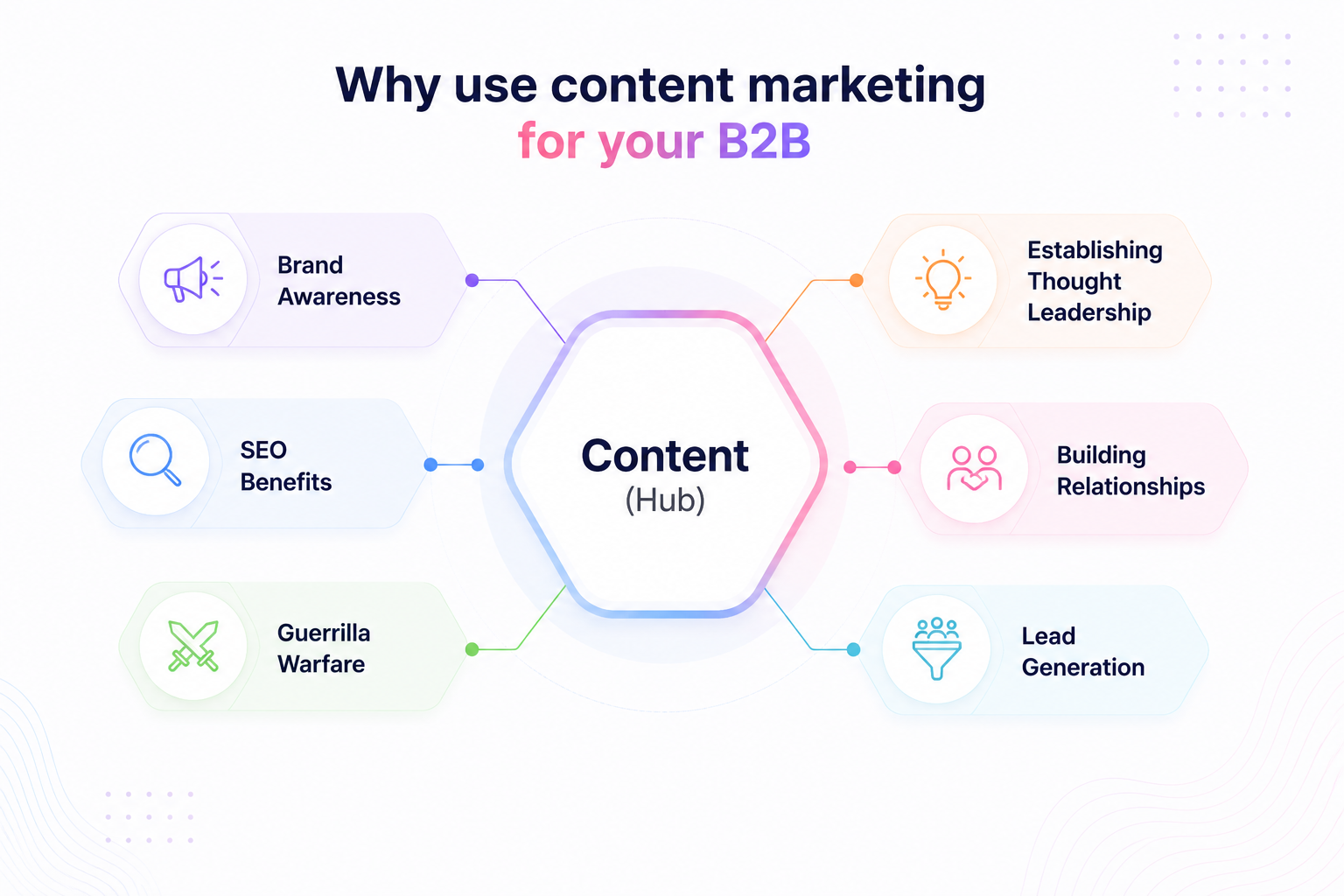
- Brand awareness
- Demand generation
- Lead nurturing
- Sales support
- Customer education
- Customer retention
- Thought leadership
This wider view helps your content team create assets that support real business goals.
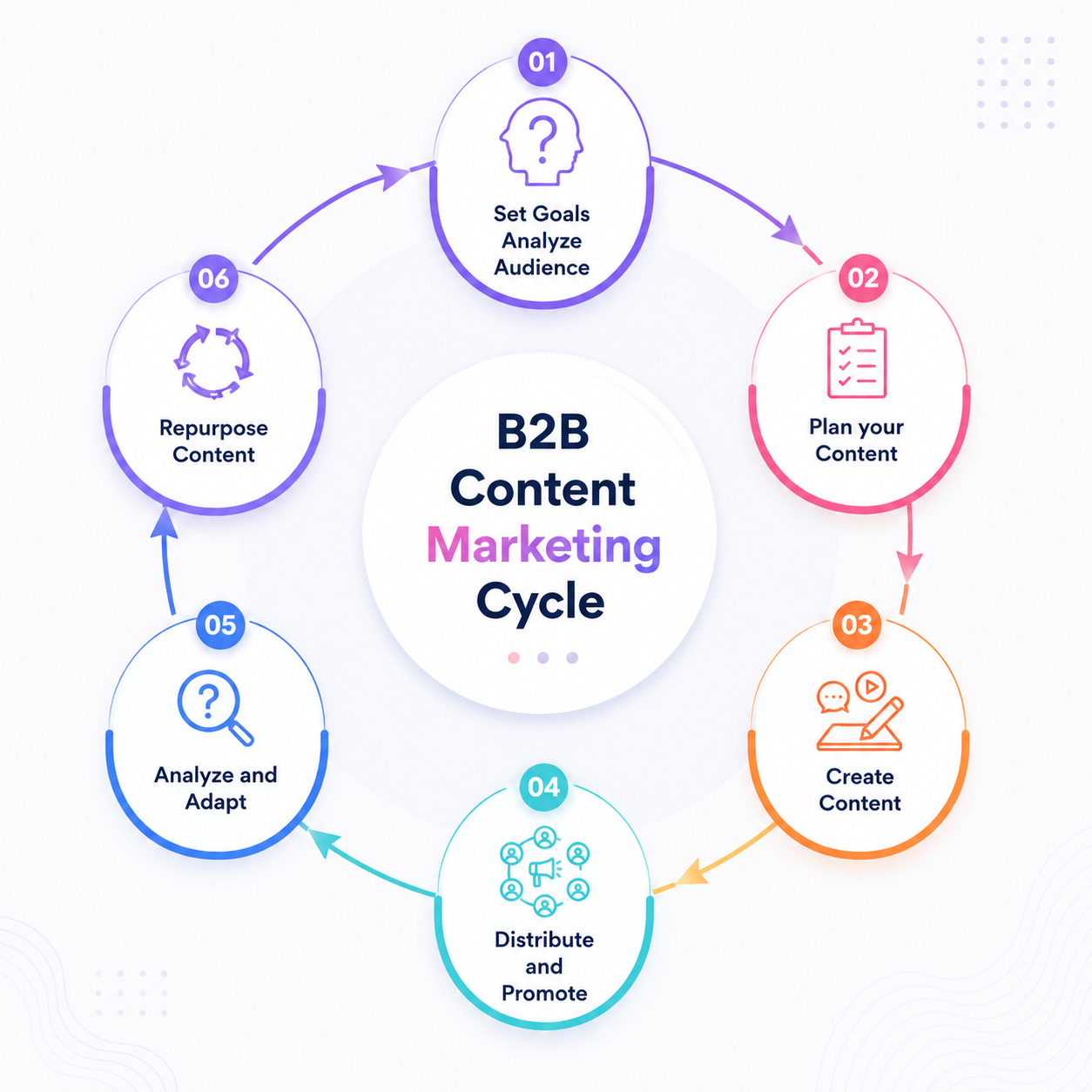
Phase 1: Laying the Foundation for Your B2B Content Strategy
There must be a plan before putting pen to paper. This ensures that the content written always stays on target.
Defining Your Audience and Their Buyer Journey
You cannot write for everyone. You must know who your audience is. This is the first step. But there is a need to know their journey too. It is important to produce content at various points in the buyer’s journey.
- Awareness Stage: The buyer realizes they have a problem. They are looking for answers. Create “how-to” guides and educational posts.
- Consideration Stage: The buyer is looking at different solutions. Create comparison guides and framework pieces.
- Decision Stage: The buyer is choosing a vendor. Create case studies and ROI calculators.
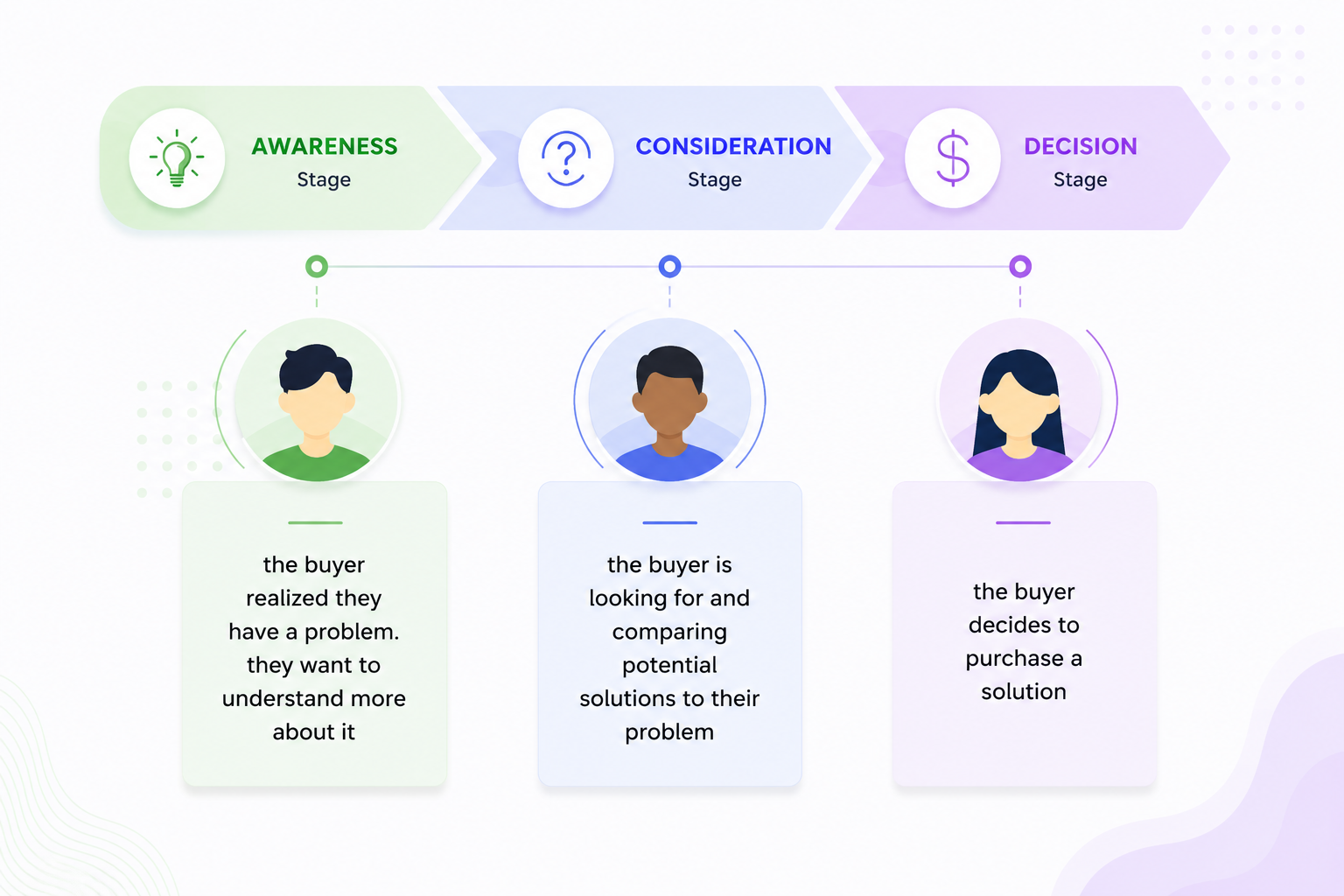
Each stage needs different content.
For example:
| Buyer Stage | Content Strategies |
| Awareness | Guides, educational blogs, research |
| Consideration | Comparisons, webinars, expert guides |
| Decision | Case studies, demos, product pages |
| Retention | Tutorials, FAQs, customer guides |
When you map content to these stages, you help the buyer move forward. This makes your content more effective.
Setting Clear and Measurable Goals
What are your content objectives? You should have concrete objectives. Quantifiable objectives like increased awareness are challenging to assess. You thus need quantifiable KPIs, namely:
- AI Search Visibility: What is the visibility of your content in AI responses? This is the key performance indicator at the moment. 40% of marketers use this as their main performance indicator.
- Marketing Qualified Lead (MQL): It will reveal whether the content produces leads ready for sale.
- Lead Quality: Do your leads close? 85% of marketers report significant improvements in lead quality.
Phase 2: Creating Content That Ranks and Converts
Now that the plan is ready, it’s time for content creation. For 2026, depth, authority, and clarity matter most.
How to Generate Content Ideas from Real Conversations
A lot of marketers use keyword tools for inspiration. It’s the wrong approach. The most effective ideas appear through actual conversations. Talk to your salespeople.
What questions do people ask when they are trying to decide whether to buy from you?
Ask your clients. How did they feel before making the purchase decision?
Choosing High-Impact B2B Content Formats
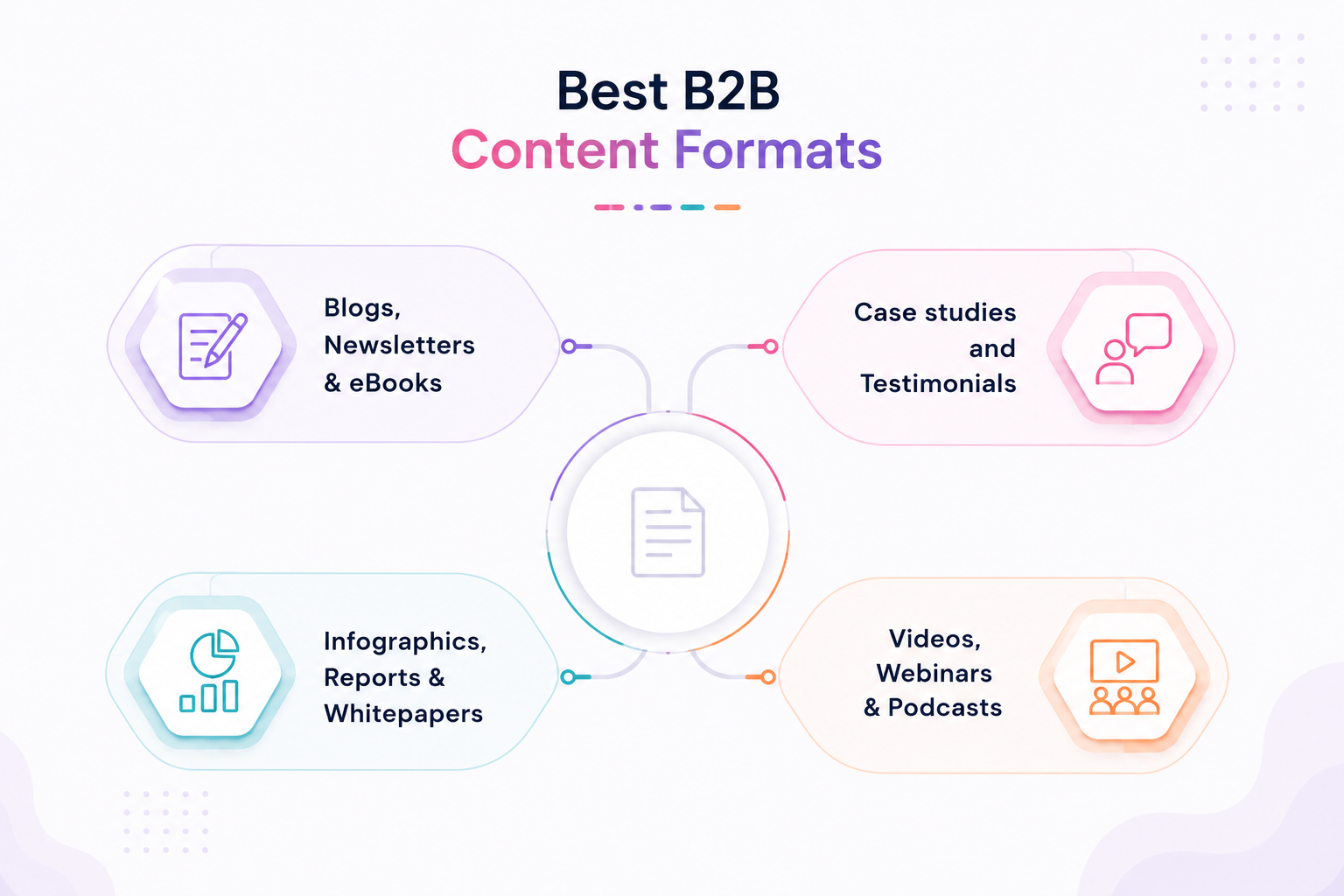
Blog posts are great, but that’s not all. A combination of formats is required to be able to reach your target audience. Here are some of the best-performing formats for B2B:
- Long-form Articles and Guides: These are your SEO workhorses. They rank well and show your expertise. Aim for depth, not just length.
- Case Studies: These build trust by showing real results for real clients. They are essential for decision-stage buyers.
- Webinars: These are high-converting formats. They create real-time interaction with buyers.
- Original Research: This is a huge differentiator. When you publish unique data, AI engines will cite your work.
Writing Content That Builds Trust and Authority (EEAT)
AI engines and Google try to find E-E-A-T. This is an acronym that means Experience, Expertise, Authoritativeness, and Trustworthiness. Your content has to prove that you have some knowledge about the topic. Here is how you can do that.
Show Exprience and Expertise in Your Writing
Do not just rehash information from other websites. Share your own experience. Use real examples. When making an assertion, provide a statistic to prove your point. For instance, don’t say, “We help companies succeed”; rather, say, “We have helped our clients improve their traffic by 34% within 90 days.” It is a verifiable statement.
Cite Sources and Use Author Bylines
AI and human readers trust content that cites reliable sources. Link to .gov, .edu, or well-known industry sites. This helps AI engines verify your facts.
Also, add author bylines to every piece of content. Content authored by an actual individual commands more trust. Identify the writer of the article and the credentials they hold to justify writing about the topic. This simple step builds trust.
Be Transparent About Your Business
Do not hide your business information. The “About Us” page and contact information should be easily available on your website. This is an important indicator of trust.
Structuring Content for Answer Engine Optimization (AEO)
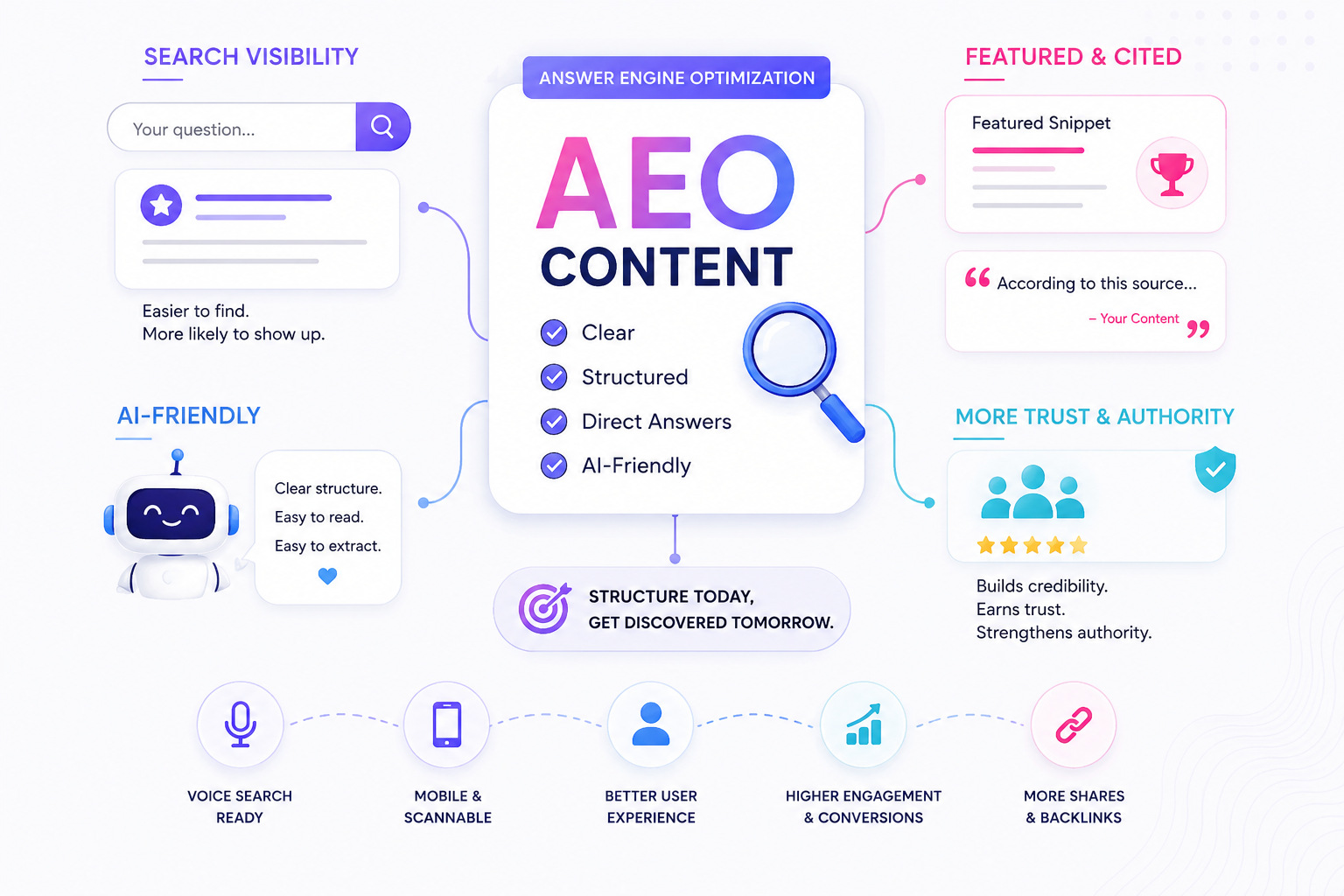
You must write for both humans and AI. A clean structure helps everyone understand your content. Here are the key AEO best practices.
Use Clear Headings and Direct Answers
AI engines need clear signals. Use question-style headings for H2 and H3. Next, in the paragraph that follows, directly answer that question. Don’t put your answer in the middle of a long paragraph. Answer it immediately.
Example Heading: What is Answer Engine Optimization?
Example Direct Answer: Answer Engine Optimization (AEO) is the process by which content is structured in such a way that it can be easily extracted and cited by AI-based answer engines. This structure makes it easy for AI to pull your content.
Add FAQ Sections and Schema Markup
FAQ sections are perfect for AEO. They answer common questions directly. You can even add FAQ schema markup to your page. This is code that helps search engines and AI understand the Q&A pairs. This makes your content more likely to appear in voice search and AI summaries.
Allow AI Crawlers to Access Your Content
This is a technical step that many people miss. Some companies block AI crawlers by mistake. Check your robots.txt file. Make sure you are not blocking important bots like GPTBot or PerplexityBot. You want these bots to read your content. If they cannot, you will not get cited.
Phase 3: A Smart Distribution Plan
Creating great content is only half the battle. Once you’ve set up a good content-marketing plan and developed content, you have to spread it around. This is how content can be distributed effectively.
Why Distribution Matters More Than Creation
Many companies spend 80% of their effort on creating content. They spend only 20-25% on distribution. This is a mistake. Successful companies flip this ratio. A great piece of content with no distribution is like a tree falling in a forest. It makes no sound.
Building a Multi-Channel Distribution Plan
Leverage LinkedIn and Email Newsletters
LinkedIn is the most effective B2B channel. According to B2B marketers, 78% believe LinkedIn to be the most effective social medium. LinkedIn posts should be opinionated and short.
Email newsletters are also incredibly effective. 71% of B2B marketers prefer email newsletters for distributing content. Build your email list and share your best content there.
Repurpose Content Across Different Formats
Do not create one piece of content and stop. Repurpose it. A long blog post can become
- 10 short LinkedIn posts
- A few video clips for YouTube
- A section in an email newsletter
This approach saves time. It also helps you reach people on different platforms.
Optimize for AI Search and Citations
AI search is now a top distribution channel. Visibility is critical. Make sure your content is clear, concise, and credible. When AI answers a question, it will reference your content.
Phase 4: Measure, Learn, and Improve Constantly
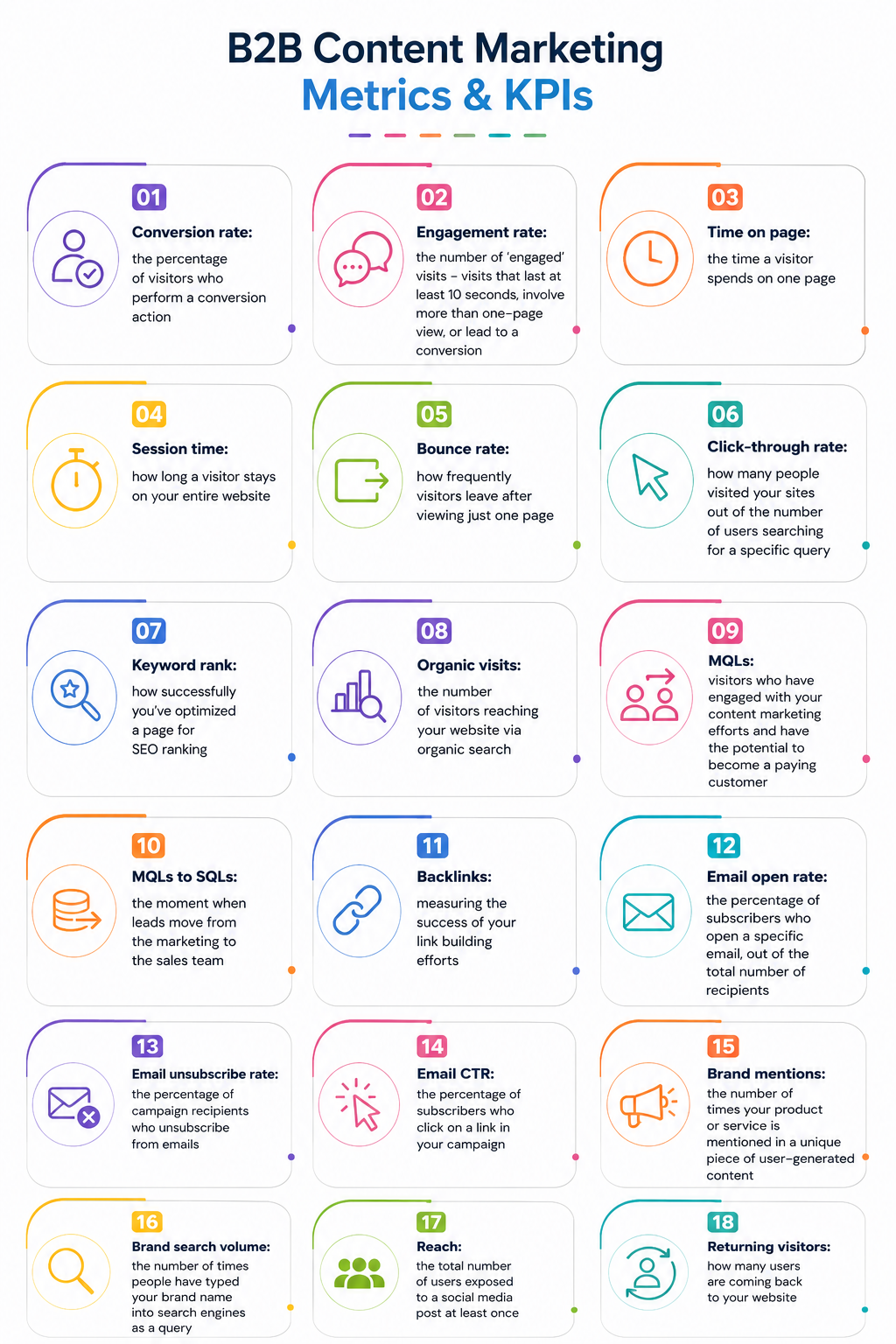
Content strategy is dynamic. Buyer needs change. Search behavior changes. Your strategy must adapt too.
Review Performance Every Quarter
Schedule a quarterly review for analysis on what is performing. Identify which type of content helped generate leads, not just traffic. Eliminate underperforming types of content.
Test New Formats Regularly
Try new formats like short video, interactive tools, or AI chat-based content experiences. Track how buyers respond. Small tests help you find new growth channels before your competitors do.
Key Takeaway
Creating an effective B2B content marketing strategy in 2026 is not going to be business as usual. You cannot simply write blogs for the sake of appeasing Google. You need to create content that will answer the buyer’s questions. You need to demonstrate expertise and authority. Lastly, you must ensure that your content is organized so that both humans and AI can use it.
Do not forget that quality trumps quantity. Produce fewer, but higher-quality, pieces of content. Make sure that they are distributed across various channels and optimized for AI search as well as traditional search. You will generate leads and grow your business.
Developing a successful B2B content strategy requires a substantial time and skill commitment. Consider Tangence if you’re looking for a companion to guide you through this unfamiliar terrain. They specialize in producing excellent, authority-driven content that attracts AI citations and appeals to B2B buyers.
Frequently Asked Questions (FAQs)
What is the difference between SEO and AEO?
Conventional SEO means gaining a top ranking within Google’s search engine rankings. On the other hand, answer engine optimization involves organizing information such that AI chatbots and assistants will be able to find and use the information as an answer to their questions.
How do I know if my content is EEAT-friendly?
An EEAT-friendly piece of writing clearly identifies the author (author biography), their level of expertise, and the reliability of the source. The article is backed up by statistics, reliable sources, and firsthand accounts, and it contains no ambiguous statements.
What are the best content formats for B2B lead generation?
Webinars, case studies, and white papers are the most successful because buyers are willing to share their contact details in exchange for useful information.
How can I get my content cited by AI like ChatGPT?
To get cited, your content needs to be structured and factual. Use clear headings phrased as questions. Answer those questions directly. Cite sources and use original data. Also, make sure AI crawlers can access your site.
How can Tangence help with my content marketing?
Tangence specializes in creating EEAT-optimized content that builds authority and drives results. Their staff helps you formulate a plan, conduct original research, and produce superior content that is trusted by both buyers and AI. They help you show up where it counts and remove the uncertainty from the process.
How important is LinkedIn for B2B content marketing?
LinkedIn is extremely important. It is the most effective social media platform for B2B distribution, with 97% of B2B marketers using it to share content.
What does a modern B2B content marketing strategy look like?
A modern strategy focuses on quality and authority. It involves creating deep, valuable content that shows first-hand expertise. It uses a mix of formats and focuses heavily on distribution through email, LinkedIn, and being visible in AI search results.