blog
How B2B Content Marketing Drives High-Quality Leads
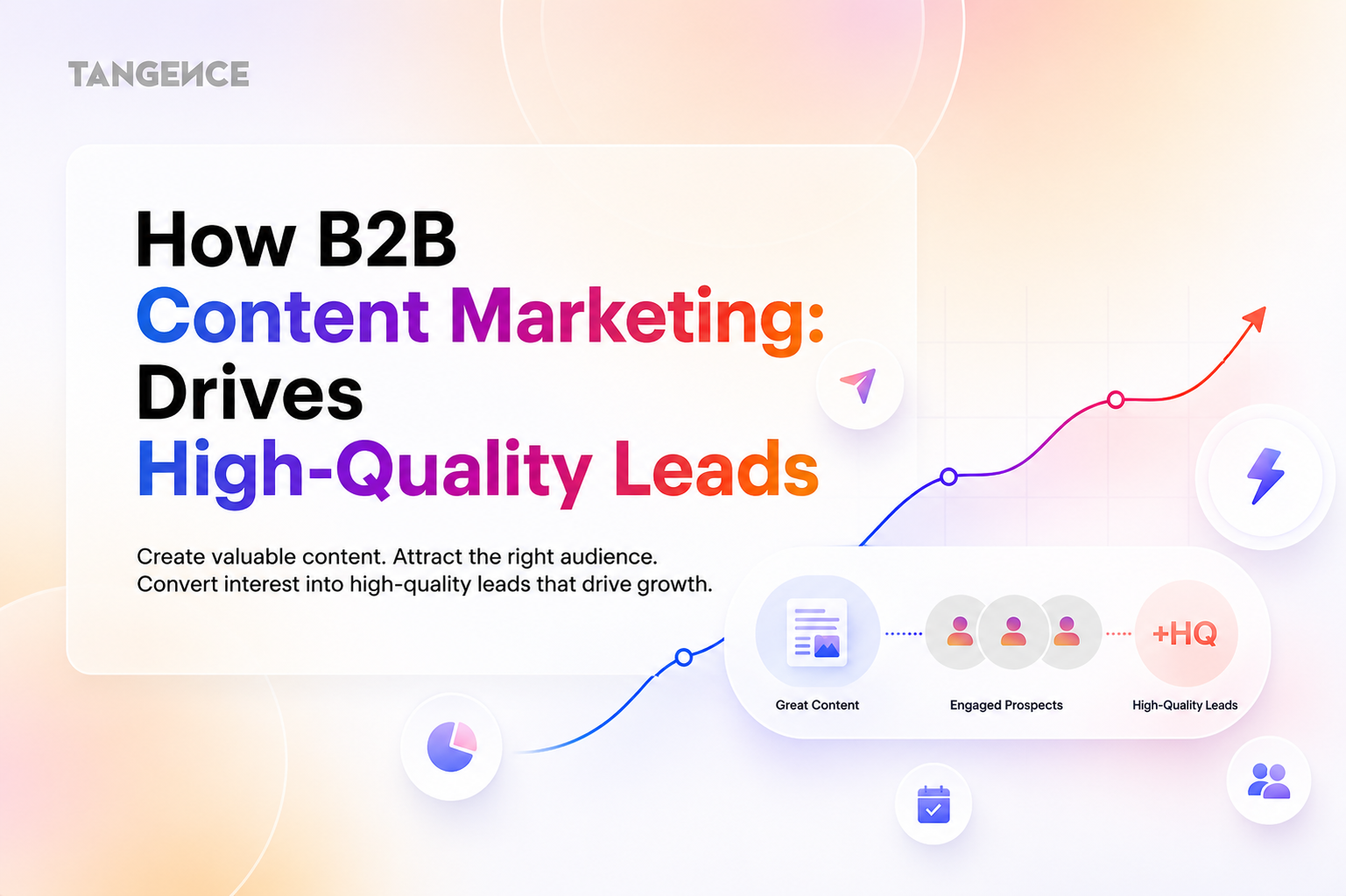
Today, the way B2B buyers shop has changed. Traditional lead generation methods, such as cold calls, static ads, and endless emails, are now outdated.
Meanwhile, the demands for consistently providing top-notch leads become even stronger. You need an approach that will help you fill your pipeline as well as establish credibility among your audience.
Today, smart businesses use content to build trust first. Then they turn readers into buyers over time. That is why more companies now invest in content marketing b2b lead generation strategies instead of depending only on cold outreach or paid ads.
Recent studies show that content marketing costs less than traditional marketing and generates nearly three times more leads. Companies with blogs also get 68% more monthly leads than businesses without blogs.
At the same time, B2B buyers now consume multiple pieces of content before contacting sales teams. Research shows most buyers review three to five content pieces before making a decision.
This article explains how B2B content marketing creates high-quality leads, why it works better than many old methods, and what strategies companies should use in 2026 and beyond.
What Is B2B Content Marketing?
B2B content marketing means creating and sharing helpful, educational information that your business customers actually want. Instead of shouting “buy now,” you answer their questions, solve their problems, and build trust over time. Think blog posts, case studies, videos, ebooks, and webinars that help a purchasing team make a smart decision.
This approach is what is called content marketing B2B lead generation, a strategic process where valuable content attracts and converts the right business buyers into qualified leads, rather than chasing random contacts. The goal isn’t just any lead; it’s a high‑quality lead.
That’s a person or group who fits your ideal customer profile, shows clear buying intent, and is likely to become a paying client.
Key Insight:
Content marketing costs 62% less than outbound marketing, and the leads it generates are six times more likely to convert.
Before we move on, let’s understand Why Content Marketing Is Important for B2B Lead Generation.
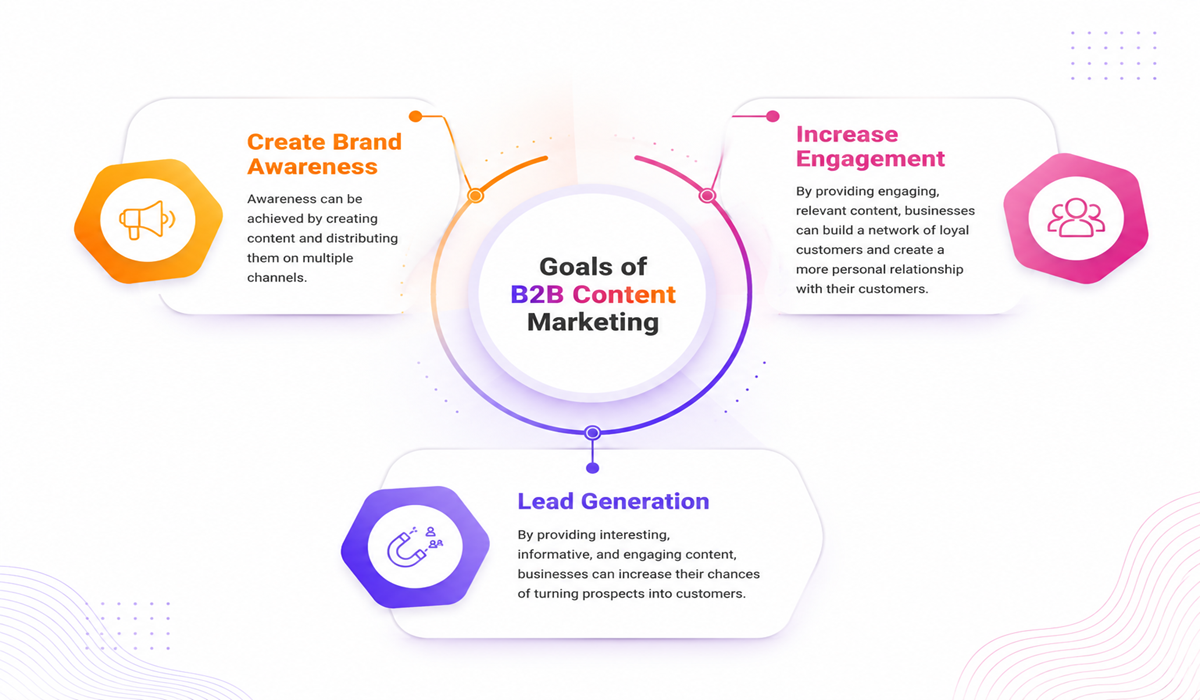
The Hidden Buying Journey (Why You Need Content)
Before a B2B buyer ever talks to a salesperson, they’ve already done a lot of homework. In fact, 90% of B2B buyers conduct research before they reach out to any vendor. By the time your sales team hears from them, the buying committee has already formed opinions, shortlisted vendors, and possibly eliminated you, all without you knowing it.
Today’s buyers use more than just Google. Nearly two-thirds of them use generative AI tools (like ChatGPT or Perplexity) just as often as, or more often than, traditional search engines.
That means your content must be readable to both humans and AI. If your website, case studies, and product documentation are incomplete or inconsistent, AI models may represent your brand inaccurately or not at all.
Challenges in B2B Content Marketing
B2B marketers today face major challenges that are reshaping content strategies.
Generative AI helps teams create content faster, but many marketers still question the quality and trustworthiness of AI-generated content. Scaling personalized emails, which are still the mainstay of lead generation and are used by 66% of B2B teams, is where the technology is particularly useful. Yet, many teams struggle with limited resources and weak lead-nurturing systems.
Search behavior is also changing quickly. With featured snippets and voice search growing, businesses now need Answer Engine Optimization (AEO) to help content appear in AI-driven search results.
On top of this, marketers face growing pressure to deliver better ROI while managing complex marketing technology stacks that often reduce productivity instead of improving it.
Overall, B2B marketers must balance AI adoption, personalization, changing search trends, tight budgets, and technology overload while still generating high-quality leads and meaningful customer engagement.
The Top Formats That Bring in High-Quality Leads
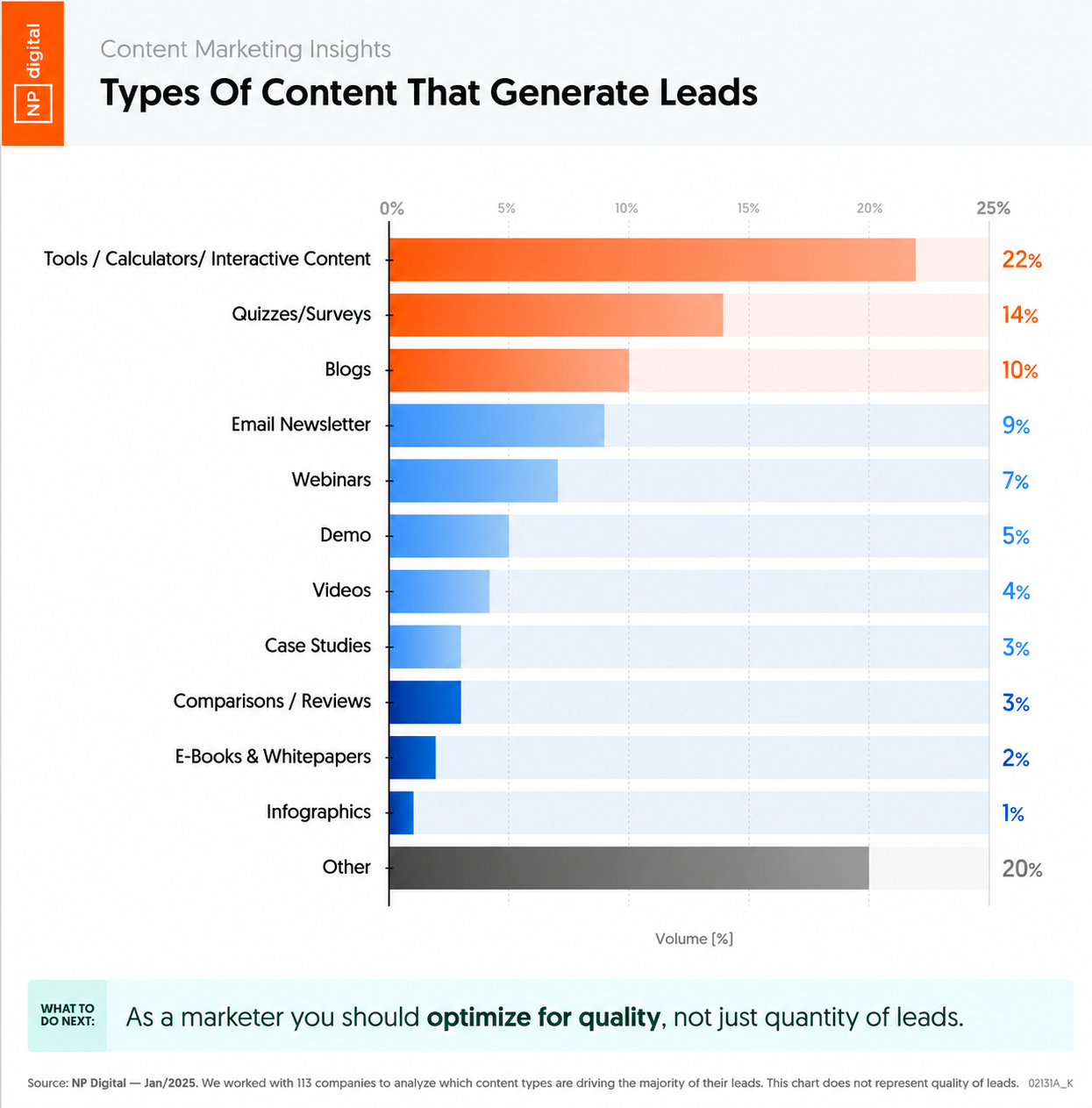
Source: NeilPatel
Not all content is equal. A survey of nearly 2,000 B2B marketers ranked formats by their ability to generate quality leads:
| Content Format | Lead Quality Score (out of 100) |
| Webinars | 38% |
| Ebooks | 29% |
| Whitepapers | 24% |
| Interactive (calculators, quizzes) | 22% |
What This Means for You
- Webinars are the top performer because they mix education, live interaction, and authority. A well‑run webinar can capture attention, build trust, and move a lead closer to a decision.
- Ebooks and whitepapers work well in the middle of the buying journey. Gate these behind a simple form; you exchange valuable content for the lead’s contact info.
- Interactive content like ROI calculators or self‑assessment quizzes engages the buyer right away and gives you useful data about their needs.
Meanwhile, 71% of B2B buyers consume multiple content pieces before ever talking to sales. That means you need a whole library, not just one magic asset.
The Four Stages of the Buyer’s Journey
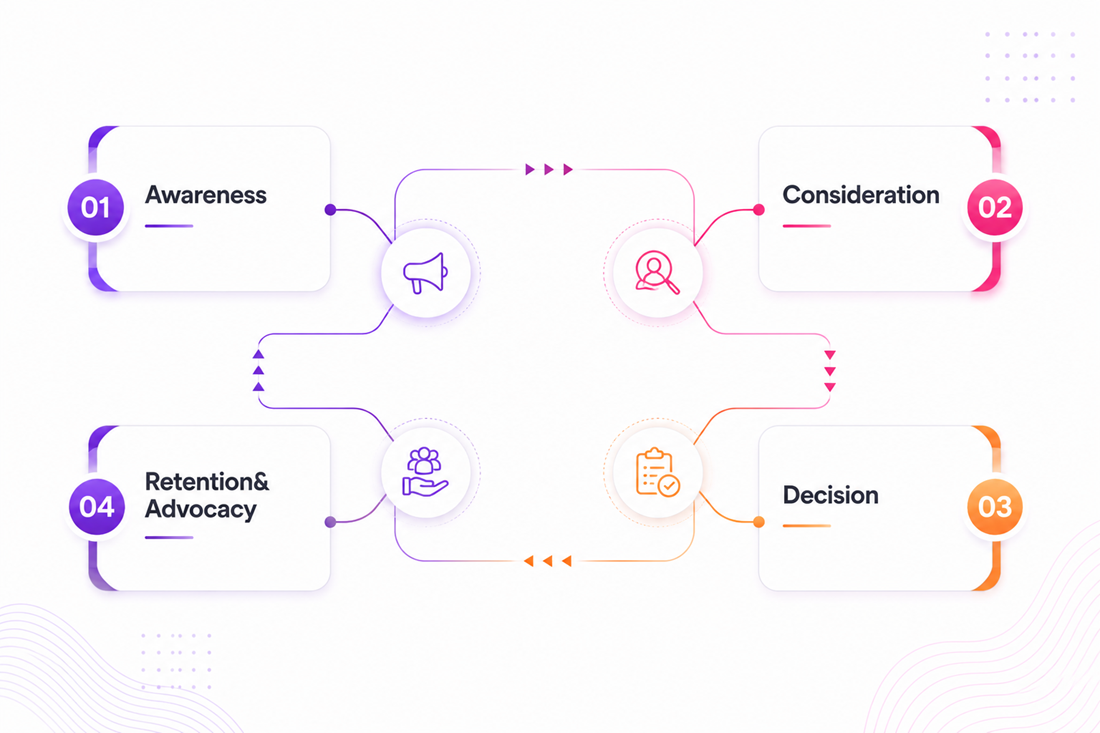
To create great content, you must understand what your buyer is thinking. A customer goes through a few clear steps before they buy something. This path is often called a customer journey (Duong-Helko, 2021).
Let’s look at the four major steps and the kind of content that works best for each one.
| Stage | What the Buyer Thinks | Best Content to Use |
| 1. Awareness | “I have a problem, but I don’t know why.” | Blog posts, simple guides, charts |
| 2. Consideration | “I know my problem. What are the options to fix it?” | Deep whitepapers, webinars, expert ebooks |
| 3. Decision | “I have a list of options. Which company is best?” | Case studies, free trials, product sheets |
| 4. Retention | “I bought it! How do I use it well?” | Help guides, training videos, newsletters |
1. The Awareness Stage
At the start of the journey, the buyer is just realizing they have a problem (Duong-Helko, 2021).
Let’s say a school principal notices that teachers are wasting two hours every day typing grades into an old computer system. The principal does not know what new software exists. They just know their teachers are tired and stressed.
The principal goes to Google and types: “How to save time on school grading.”
If your company makes school software, you should have a blog post titled “5 Simple Ways Schools Can Save Time on Graded Work.” This post shouldn’t shout about your product. It should give general, smart tips. Now, the principal knows your name and sees that you understand their world.
2. The Consideration Stage
Now, the buyer understands their problem clearly and is looking for a specific type of solution (Duong-Helko, 2021). The principal says, “Okay, we need a modern digital grading portal.”
Now they start looking at different ways to solve the issue. They might look at custom software, pre-made apps, or cloud tools.
For this stage, you need deeper content. An ebook titled “The Complete Guide to Picking the Right Grading Software for Large Schools” is perfect here. To download this big guide, the principal gives you their work email address.
Boom! You just got a high-quality lead. They are actively trying to solve a real problem that you fix.
3. The Decision Stage
The buyer has picked the exact type of solution they want. Now they are comparing your company against your top rivals. They are asking, “Should we buy from Company A or Company B?”
This is where you show proof that your tool works. The best content for this stage is a case study. A case study is a real-world story of how you helped another customer.
For example: “How Oak Creek High School Saved 10 Hours a Week Using Our Software.” When the principal reads how a school just like theirs found success with your tool, they feel safe. The risk goes away, and they are ready to sign a contract.
4. The Retention Stage
The journey does not stop when someone hands you a check. It costs much more money to find a new customer than to keep an old one. Content helps keep your current customers happy.
By sending them training videos, product updates, and advanced tips, you make sure they get full value from their purchase. Happy customers stay with you for years and tell their friends about you.
How to Mix AI and Human Magic
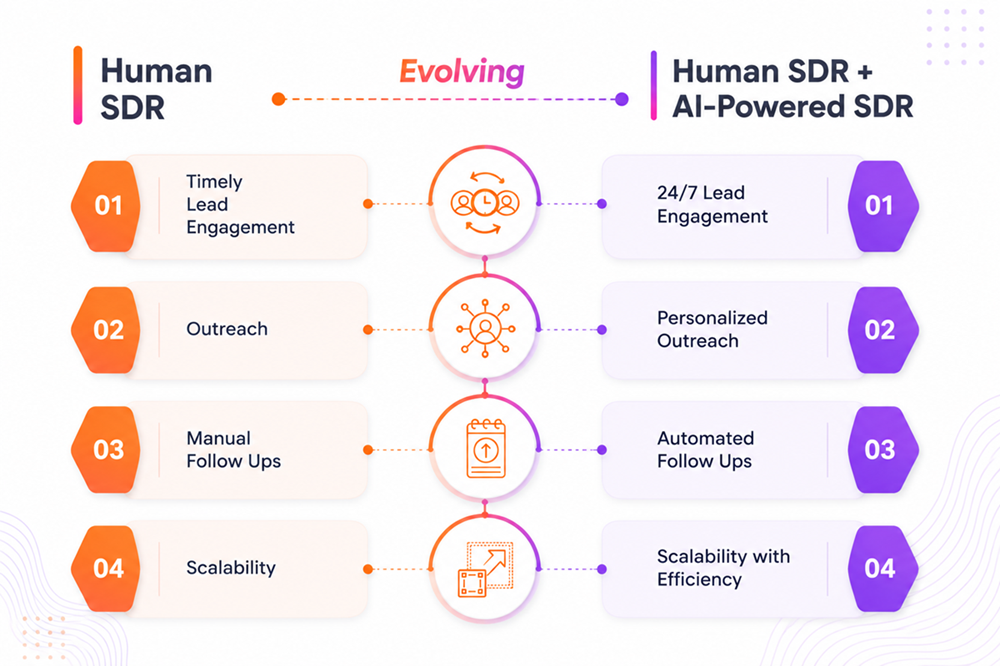
Today, we have amazing artificial intelligence (AI) tools that can write text in seconds. Many businesses make the mistake of using AI to pump out thousands of cheap, boring articles. This is a bad idea.
Buyers can spot robotic, low-effort writing from a mile away. Plus, search engines want to show content that has real human experience and deep knowledge.
The secret to winning today is using a hybrid model:
- What AI Does Well: AI is great for brainstorming ideas, organizing your thoughts, and sorting out huge piles of data to score your leads.
- What Humans Do Well: Humans are needed to add real stories, share true feelings, and talk to industry experts.
If you use AI to do the boring setup work, you free up your human writers to talk to your engineers, designers, and customers. That direct human insight is what makes your content truly unique and valuable
How to Build a Content Marketing Engine for Lead Generation
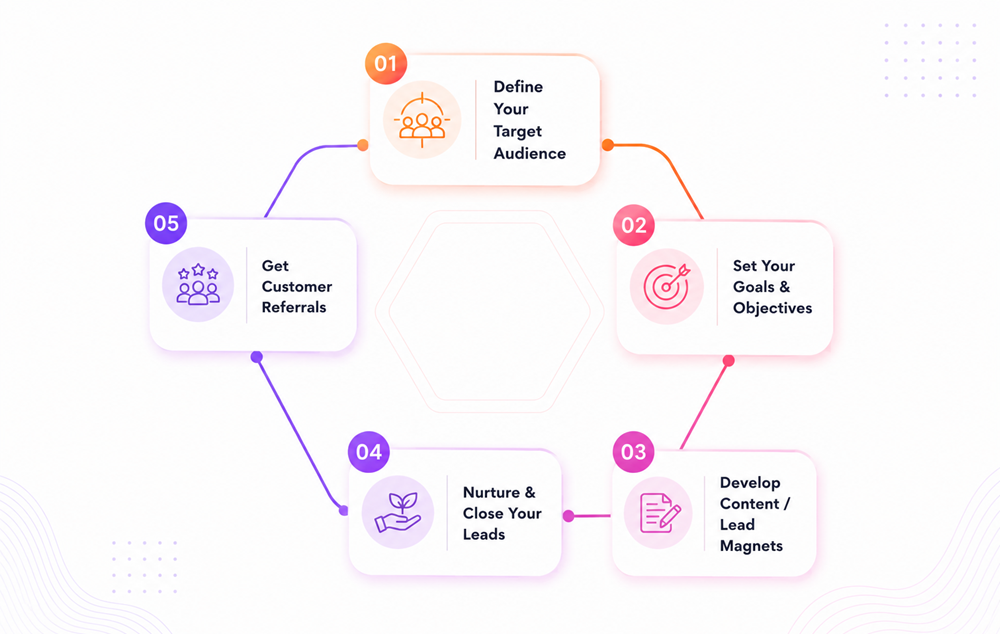
Step 1. Know Your Audience’s Pain Points
You cannot write a good guide if you do not know who is reading it. Sit down and create a detailed profile of your ideal buyer. What keeps them up at night? What are they afraid of? What are their goals? Write directly to that one person.
Survey your sales team and existing customers. What questions do they ask again and again? Those are your content topics.
Step 2. Focus on Topics, Not Just Keywords
Old SEO plans told people to repeat the same word 50 times in an article. That makes text painful to read. Today, search engines look for depth. Pick a major problem your customer faces and cover it from every angle. Answer all the small questions they might have about that topic.
Step 3. Map Content to the Buyer’s Journey
| Funnel Stage | Content Formats |
| Awareness (top) | Blog posts, infographics, short videos |
| Consideration (middle) | Ebooks, webinars, analyst reports, whitepapers |
| Decision (bottom) | Case studies, product datasheets, and ROI calculators |
Step 4. Distribute and Amplify
Use a mix of channels:
- LinkedIn is the leader for B2B lead quality. It scores 86% in lead quality, far above other social platforms. Almost 49% of B2B marketers are increasing investment in social platforms like LinkedIn.
- SEO and organic search also deliver top‑quality leads. Google’s lead quality score for B2B is 72%.
- Email newsletters are used by 71% of B2B marketers to nurture leads.
Don’t put all your eggs in one basket. Diverse channels reduce risk and reach different buyer preferences.
Read Our Content Repurposing Guide.
Step 5. Nurture, Don’t Just Capture
The average B2B deal requires 62+ touchpoints over six months or more. Most of those touchpoints happen through content: a blog here, a webinar there, an email follow‑up, a case study download. Build automated email sequences that deliver the next helpful piece based on what the lead has already consumed.
Step 6. Measure What Matters
Set up dashboards that track lead‑to‑opportunity conversion, sales acceptance rate, and buying‑group engagement. Review these numbers monthly. Cut what isn’t working and double down on formats and topics that drive real pipeline.
The Future of B2B Content Marketing
B2B content marketing is evolving quickly as businesses adapt to AI, changing buyer behavior, and new search trends. Companies now use AI tools to speed up content creation, personalization, and campaign management. However, human expertise and original insights remain essential for building trust and credibility.
Businesses are also investing more in engaging content formats, including:
- Short-form videos
- Interactive tools
- Virtual events
- Live webinars
- Personalized demos
These formats improve engagement and help generate better-quality leads.
Another major trend is the growing focus on first-party data. Privacy updates are pushing businesses to collect customer insights directly through website interactions, newsletter signups, and content downloads. This helps companies build more personalized and ethical marketing strategies.
At the same time, modern analytics tools are improving revenue tracking. Businesses can now measure how blogs, webinars, and campaigns contribute to lead generation and sales growth. In the future, successful B2B brands will combine AI efficiency, personalization, and data-driven strategies to stay competitive.
Read More: Top 7 B2B Content Marketing Trends Shaping in 2026
Final Thoughts
B2B content marketing has become one of the most effective ways to generate high-quality leads in today’s digital landscape.
Modern buyers want education before sales conversations. They trust businesses that provide useful insights, solve real problems, and demonstrate expertise consistently.
That is why strong content marketing b2b lead generation strategies focus on trust, SEO, personalization, education, and long-term visibility.
As AI, personalization, and demand generation continue shaping the future of marketing, businesses that combine technology with real expertise will continue winning more high-quality leads.
Ready to Turn Content Into a Consistent Lead Generation Channel?
After reading how modern B2B buyers research, compare, and choose vendors, the next step is putting that strategy into action. Whether you’re building a content program from scratch or improving an existing one, the right mix of strategy, creative execution, and marketing automation can help you attract more qualified leads and shorten the sales cycle. Tangence works with B2B brands to create content that supports every stage of the buyer journey from awareness to conversion. If you’re ready to build a scalable content engine that delivers measurable business results, Contact Us to discuss how we can help.
FAQs:
- How long does it take for content marketing to generate leads?
Most B2B teams see initial results in 3–6 months, but the biggest gains come after 9–12 months of consistent publishing. Content builds momentum over time.
- How much content should I publish each month?
Quality beats quantity. Start with 4–8 high‑value pieces per month (blogs, case studies, videos). Companies that publish 16+ blog posts per month see 4.5x more leads, but only if every piece is truly helpful.
- What’s the difference between a marketing qualified lead (MQL) and a sales qualified lead (SQL)?
An MQL has shown interest (e.g., downloaded an ebook). An SQL has been vetted by sales as ready for a conversation. Focus on moving leads from MQL to SQL through nurturing.
- Should I gate all my content?
No. Ungate top-of-funnel content like blog posts and short videos so anyone can find and share them. Gate mid‑funnel assets (eBooks and webinars) to capture leads. Use bottom‑funnel content (case studies, product comparisons) for warm prospects.
- How do I know if a lead is “high quality”?
Use the BANT framework: Does the lead have Budget, Authority, Need, and Timeline? Also track their engagement across multiple pieces of content. High‑quality leads consume several assets and come from companies that match your ideal customer profile.
- Is content marketing worth it for small B2B businesses?
Absolutely. Content marketing levels the playing field. A small company with deep expertise can outrank larger competitors by answering niche questions better than anyone else. Plus, it costs much less than paid ads.