blog
Why Content Marketing Is Important for B2B Lead Generation
Years ago, sellers would call strangers on the phone all day long or send thousands of emails hoping someone would answer. Today, things are very different.
Recent data from a 6sense report shows that 81% of buyers choose their vendor before ever making direct contact with a sales team.
Nowadays, buyers no longer depend only on sales calls or direct meetings before making decisions. Today, business buyers spend more time online researching products, reading blogs, comparing services, watching videos, and checking reviews before they contact a company.
Creating this useful material is called content marketing. But why do companies spend so much time writing guides and making videos?
Let us dive deep into the world of business shopping and look at why content marketing is important for b2b lead generation.
What is Content Marketing and B2B Lead Generation?
Before seeing how they work together, let us break down what these big words mean.
What is Content Marketing?
Content marketing is when a company shares helpful information for free. This information can be a written story, a blog post, a video, a podcast, or a downloadable chart.
The secret of content marketing is that it does not scream, “BUY OUR TRACTORS NOW!” Instead, it says, “Here is a guide on how to take care of your big machines during the freezing winter.” The company does not force anyone to buy anything right away. They just want to help solve a problem.
In the midst of successful content-marketing, a report has recently found out that:
- Over 80% believe that personalized content is important.
- 78% of chief marketing officers think that custom content will be the way of the future.
- “When content falls short, they walk away,” says Dom Scarlett, research director at Salsify.
That is why content marketing is important for B2B in a nutshell. It is not just effective. It is also incredibly cost-efficient.
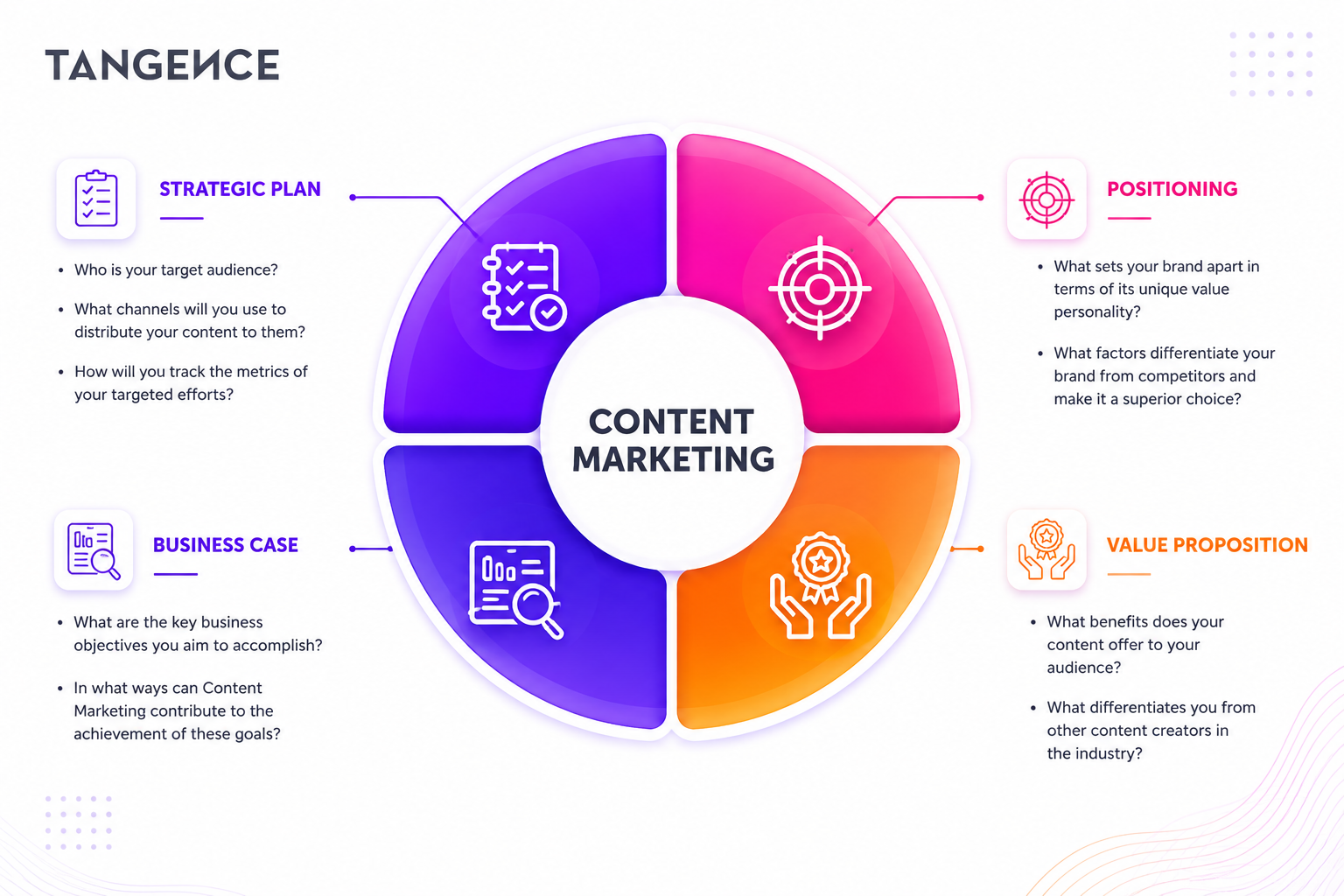
What is a B2B Lead?
In regular shopping, like buying a candy bar, a person sees it, wants it, and buys it. It takes two minutes.
In B2B shopping, things are huge and expensive. A company might spend one million dollars on a new software system or a fleet of trucks. Because it costs so much money, a group of ten or more people inside the company will talk about the purchase for months before making a decision.
A “lead” is a business that has shown interest in a solution. Lead generation is the special map and safety rope used to find these businesses and guide them toward making a purchase.
The Big Shift in How Businesses Buy Things
The way companies shop has changed completely over the last few years. According to 2026 data from Martal Group, business buyers now complete 61% of the buying journey before they ever engage with a sales representative.
Buyers are reading articles, watching videos, and looking at charts without telling the selling company who they are. They want to learn on their own terms.
Furthermore, research from TrustRadius shows that 94% of B2B buyers now use artificial intelligence and large language models to search for and summarize information during their purchase process.
If a company does not have helpful articles online, those buyers will never find them. They will find a competitor’s articles instead.
Also, search engines have become much smarter. People do not just look at standard websites anymore. They use smart computer systems to ask complicated questions.
If a business writes excellent, deeply detailed guides, these new computer systems will pick that information and show it as the top answer. This helps a business gain trust before the buyer even clicks on the website.
Why Content Marketing Is Important for B2B Lead Generation
Many businesses still ask why content marketing is important for B2B lead generation when traditional marketing methods already exist. The answer is simple. Buyer behavior has changed.
1. Content Builds Trust, Not Just Leads
Trust is everything in B2B sales. When a company buys software or services for their business, they are making a big decision. They need to know they can count on you.
Content marketing is one of the best ways to build that trust.
How? By showing that you know what you are talking about. A blog post that answers a tough question. A video that explains a complex topic in simple terms. A case study that shows real results for a real customer. These things prove your expertise.
Over 70% of decision-makers view thought leadership as more trustworthy than regular product marketing. That means buyers want to see your ideas, your insights, and your expertise. They want proof that you are a leader in your field.
Trust also keeps customers around. In B2B, customer success content can reduce churn and increase upsell opportunities. Once you earn a customer’s trust through content, they are more likely to stay with you and buy more from you.
This is another reason why content marketing is important for B2B. It does not just bring in new leads. It helps you keep them.
2. It Costs Less Money and Brings In More Leads
Traditional advertising can be very expensive. A business has to pay every time someone clicks on an ad or every time a billboard stays up. Once the payments stop, the ads disappear, and no more leads come in.
Content marketing is different. It is like planting an apple tree. It takes some work to plant the tree and help it grow. But once the tree is tall, it gives sweet apples year after year for free.
Industry benchmarks from Taboola show that content marketing generates three times more leads than traditional outbound marketing while costing 62% less money. That is a massive win for any business budget.
3. Helps You Get Found Online (SEO)
How do B2B buyers find content? Mostly through search engines like Google. But things are changing fast.
Nearly 80% of B2B buyers said AI search has changed how they do product research. Instead of just using Google, they now use AI chatbots like ChatGPT and Perplexity. AI search engines and review sites are now the top two sources used by
enterprise buyers, outpacing traditional Google searches.
This means your content strategy must evolve. You still need to optimize for Google. But you also need to optimize for AI search engines.
The good news is that good content works everywhere. When you create helpful, honest content that answers real questions, both Google and AI chatbots will find it. They will show it to buyers who are looking for answers.
4. Buyers Spend More Time Researching Online
Today, most B2B buyers complete a large part of their research before contacting a company. They search on Google, read industry blogs, check LinkedIn posts, and watch educational videos.
This means your content often becomes the first interaction buyers have with your brand.
If your company publishes helpful and informative content, buyers begin seeing your business as a trusted source. If your business has little or no useful content online, buyers may never discover your brand during the research process.
This is one of the biggest reasons why content marketing is important for B2B companies today. Businesses must stay visible where buyers are searching for information.
Modern B2B Content Marketing Trends You Need to Know
Content marketing is not static. It changes every year. Here are some trends from 2025 that you need to know.
The video is huge. Short-form video gives the highest ROI of any content format, according to 41% of B2B marketers. Video increases conversion rates from 2.9% to 4.8%. That is a 66% improvement. Read more on how motion design strengthens brand storytelling and why B2B teams are making it a core part of their content mix.
LinkedIn is the place to be. LinkedIn is now the leading B2B lead generation tool, appearing in both the top organic and paid categories. Email outreach usage has dropped from 72% to just 30% in the last two years.
Personalization is expected. Generic content is dead. Buyers want content that speaks directly to their needs, industry, and role. Hyper-personalization is now the minimum standard.
AI is changing everything. Marketers need to optimize content for AI search engines, not just Google. This is called Generative Engine Optimization or GEO.
Explore more B2B Content Marketing Trends Shaping in 2026.
What Are the Different Types of Content That Bring in Leads
Not all pieces of content are the same. Different formats help buyers at different times during their shopping journey. Let us look at the most popular shapes content can take.
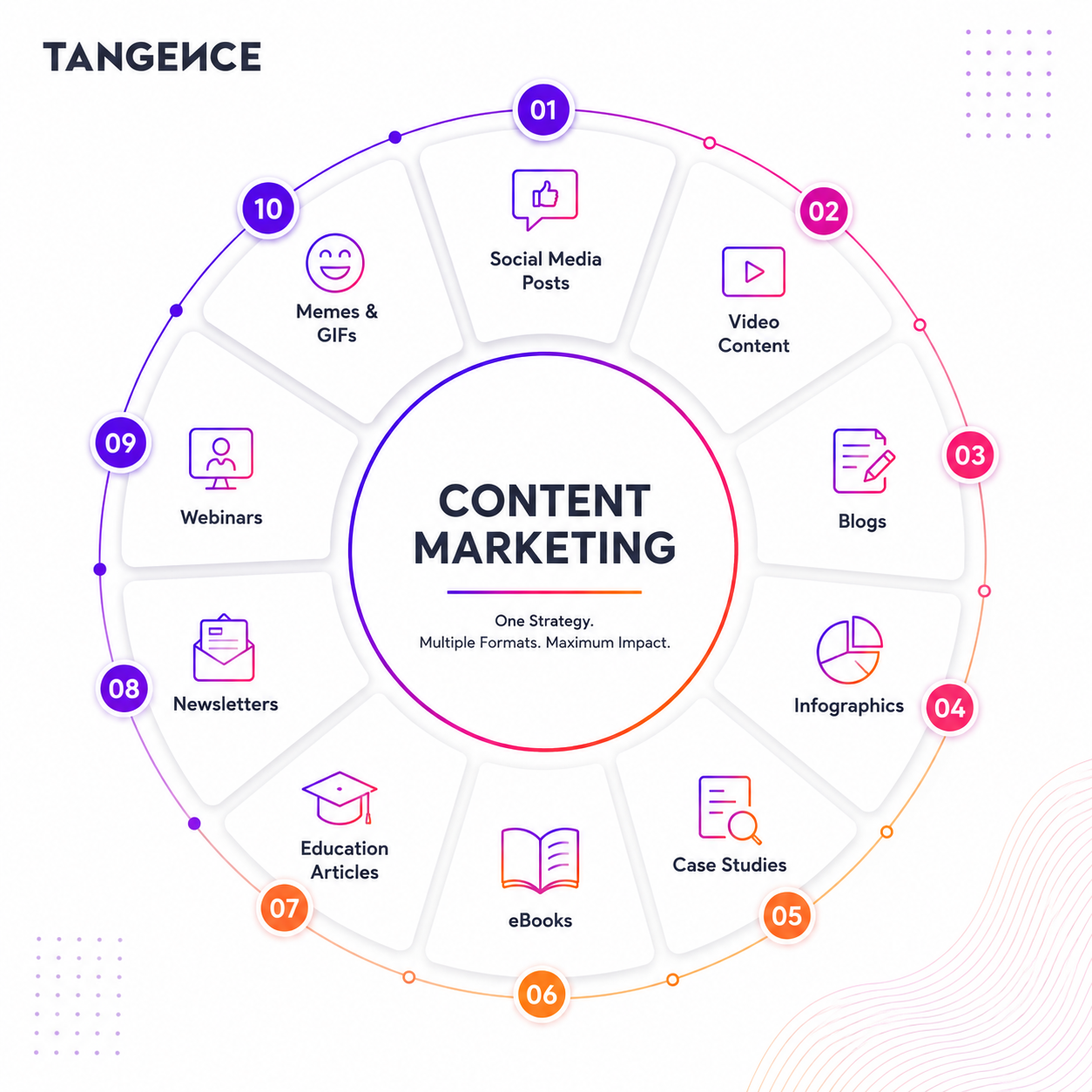
| Content Type | What It Is | Why It Helps Generate Leads |
| Blog Posts & Articles | Short or long written stories that answer a single question clearly. | They show up on search engines and invite new visitors to a website. |
| Whitepapers & eBooks | Deep, highly detailed guidebooks that explain a massive problem. | Buyers will happily share their email addresses to download these useful guides. |
| Case Studies | True stories about how a company helped another real business succeed. | They act as proof that products actually work in the real world. |
| Videos & Demos | Visual clips that show software or machinery in action. | They are easy to watch and help explain complicated ideas very quickly. |
| Interactive Tools | Math calculators or quizzes that give instant, personalized data. | They give the buyer immediate value while showing the seller exactly what they need. |
Step-by-Step: How Content Turns a Stranger into a Lead
How does a simple article on a computer screen turn into a massive business deal?
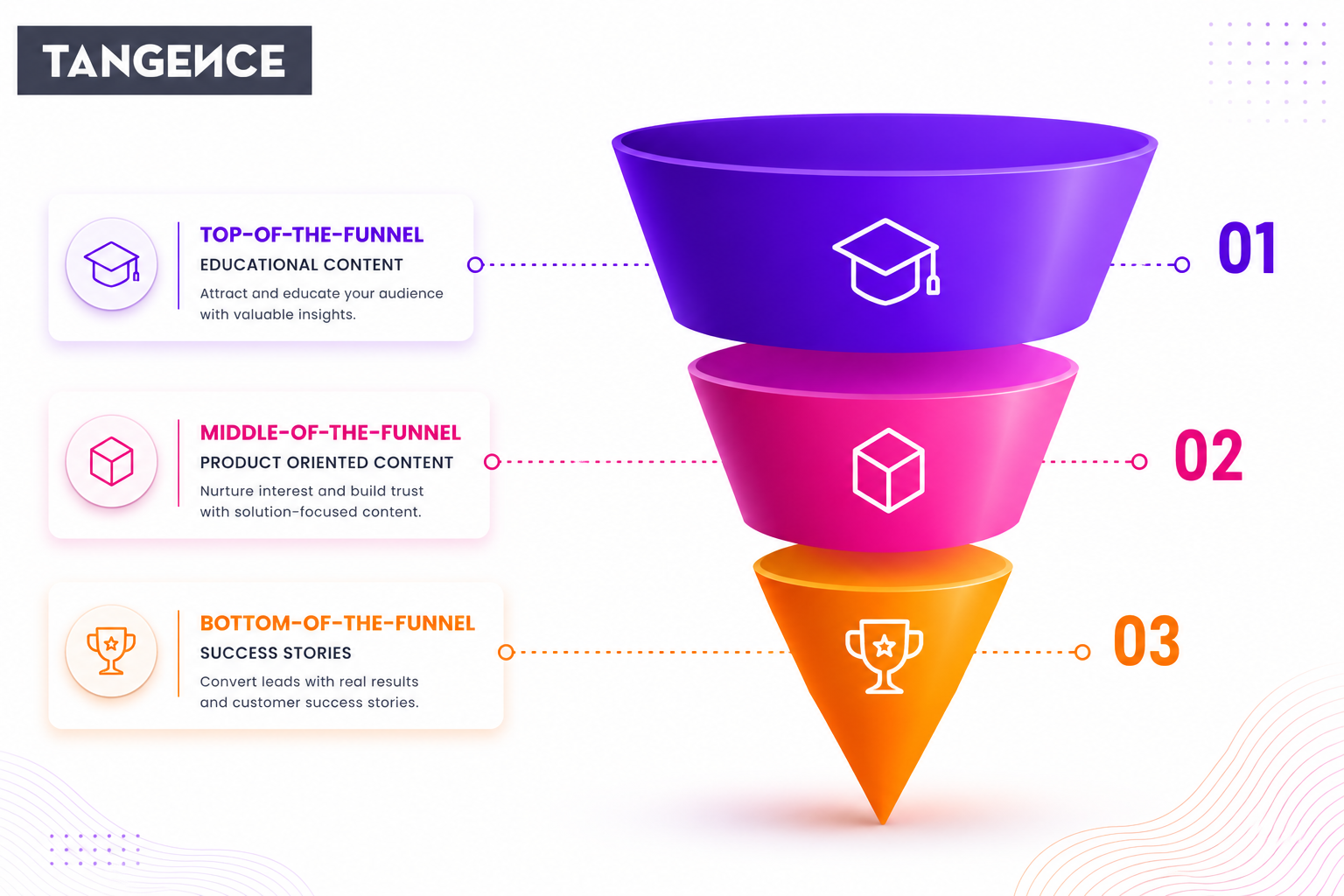
Step 1: The Discovery (Top of the Funnel)
A business encounters a specific operational problem, such as experiencing inventory tracking mistakes that cause the company to lose money. This issue creates immense workplace stress. A team member opens a computer and types a phrase like “How to stop warehouse tracking mistakes.”
Because a specific vendor wrote a fantastic, clear blog post on this exact topic, the business finds its website. The article does not try to sell anything right away. It simply gives five great tips to fix the issue. The reader realizes that this vendor thoroughly understands the industry.
Step 2: The Deep Dive (Middle of the Funnel)
At the end of the article, the reader sees a button that reads, “Click here to download our free, printable Warehouse Setup Map.” The business needs that map. Clicking the button opens a small box asking for a name and a work email address. Because the downloadable map offers valuable assistance, the user types in the information and clicks download.
The exact moment a buyer shares an email address, a regular website visitor officially transforms into a lead.
Step 3: The Nurturing (Building the Relationship)
Now that the marketing team has the buyer’s work email, they do not bombard the inbox with aggressive sales messages. Instead, they send one helpful educational email per week.
- In week one, they sent a video showing how automated scanners speed up workflows.
- In week two, they sent a true story about another business that saved $50,000 using smart tools.
The buyer reads these emails during morning routines. Over a month, the business becomes fully convinced that this vendor knows the absolute best way to run this type of facility.
Step 4: The Decision (Bottom of the Funnel)
The business is finally ready to purchase a new tracking system. The buying team does not look for other vendors because the current relationship is already built on deep trust. A team member clicks the “Book a Meeting” button inside the latest email. The sales team schedules a talk, and the deal is closed.
This journey shows exactly why content marketing is important for B2B growth. It holds the customer’s hand from the moment a problem appears all the way until they buy the solution.
According to research published by The SEO Works, B2B buyers review an average of 11.4 pieces of content before they are ready to contact a vendor.
Common Content Marketing Mistakes
Many businesses create content but still struggle with lead generation. Common mistakes include:
Creating Content Without Strategy
Many businesses publish blogs, videos, or social posts without a clear plan. This often leads to poor results and weak lead generation. A strong content strategy should include audience research, business goals, target keywords, and a proper publishing schedule for long-term success.
Focusing Only on Sales
Many companies create content that only promotes products or services. Buyers usually avoid overly promotional content because it feels like advertising. Instead, businesses should focus on educational and problem-solving content that builds trust and helps potential customers make informed decisions naturally.
Ignoring SEO
Creating high-quality content is not enough if people cannot find it online. Businesses should optimize blogs and website pages using relevant keywords, search intent, internal links, and proper headings. Good SEO helps content rank higher in search engines and attract more qualified leads.
Publishing Inconsistently
Content marketing requires regular publishing to build authority and maintain visibility. Many businesses post content for a few weeks and then stop completely. Inconsistent publishing makes it harder to grow traffic, improve SEO rankings, and keep potential buyers engaged with the brand over time.
Turn Your Content Strategy into a Lead Generation Engine
Building a content engine is one thing. Making it look credible, move fast, and convert buyers is another.
Tangence has spent 20+ years helping enterprise marketing teams and growth-stage B2B companies produce the exact content assets this article covers. From eBooks that capture emails to videos that shorten sales cycles to email campaigns that nurture leads through every funnel stage, all delivered at speed, at scale, and at a fraction of in-house costs.
If your team is producing content but not seeing pipeline results, the gap is usually execution, not strategy. That is where Tangence comes in.
Final Thoughts
Modern B2B buyers want education before sales conversations. They research deeply, compare solutions carefully, and trust brands that provide useful information. This is exactly why content marketing is important for B2B lead generation today. Investing in content marketing is simply investing in the future of how people do business.
FAQs:
Q. How has B2B buyer behavior changed?
Ans: 81% of buyers choose a vendor before contacting sales. They complete 61% of research online using blogs, videos, AI search, and reviews.
Q. Why is content marketing more cost-effective than ads?
Ans: It generates 3x more leads while costing 62% less. Like planting a tree, it delivers ongoing results without continuous ad spend.
Q. How does content marketing build trust in B2B?
Ans: Over 70% of decision-makers trust thought leadership more than product marketing. Educational content proves expertise and keeps customers loyal.
Q. What role does AI search play in content discovery?
Ans: 94% of B2B buyers use AI chatbots like ChatGPT. Optimizing for AI search (GEO) helps your content get found alongside Google.
Q. Which content types generate the most B2B leads?
Ans: Blogs drive discovery, whitepapers capture emails, case studies prove results, and video boosts conversion rates by 66%.
Q. How does content turn strangers into paying customers?
Ans: Buyers discover helpful blogs, share emails for gated content, receive nurturing emails, and finally book meetings after reviewing 11+ pieces