blog
What Is Content Repurposing? A Simple Guide to Repurposing Content
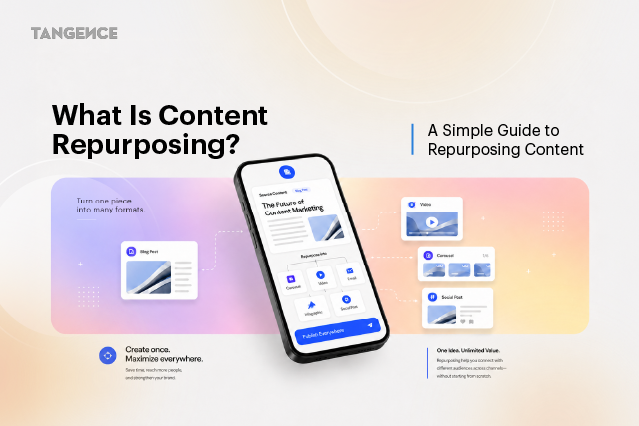
Creating great content takes serious time and effort. But most brands make the same mistake: they publish once, promote briefly, and then move on to the next piece. The result? Valuable content gets buried before it ever reaches its full potential.
That is exactly why smart marketers focus on content repurposing. Instead of constantly creating from scratch, they turn one strong piece of content into multiple assets across different platforms. A single blog post can become social media content, videos, email campaigns, infographics, podcasts, and more. This approach saves time, expands reach, increases visibility, and helps your best ideas keep working long after you hit publish.
In this guide, you will learn what content repurposing really means, why it matters more than ever, and how to use it strategically to grow faster with less wasted effort.
What Is Content Repurposing?
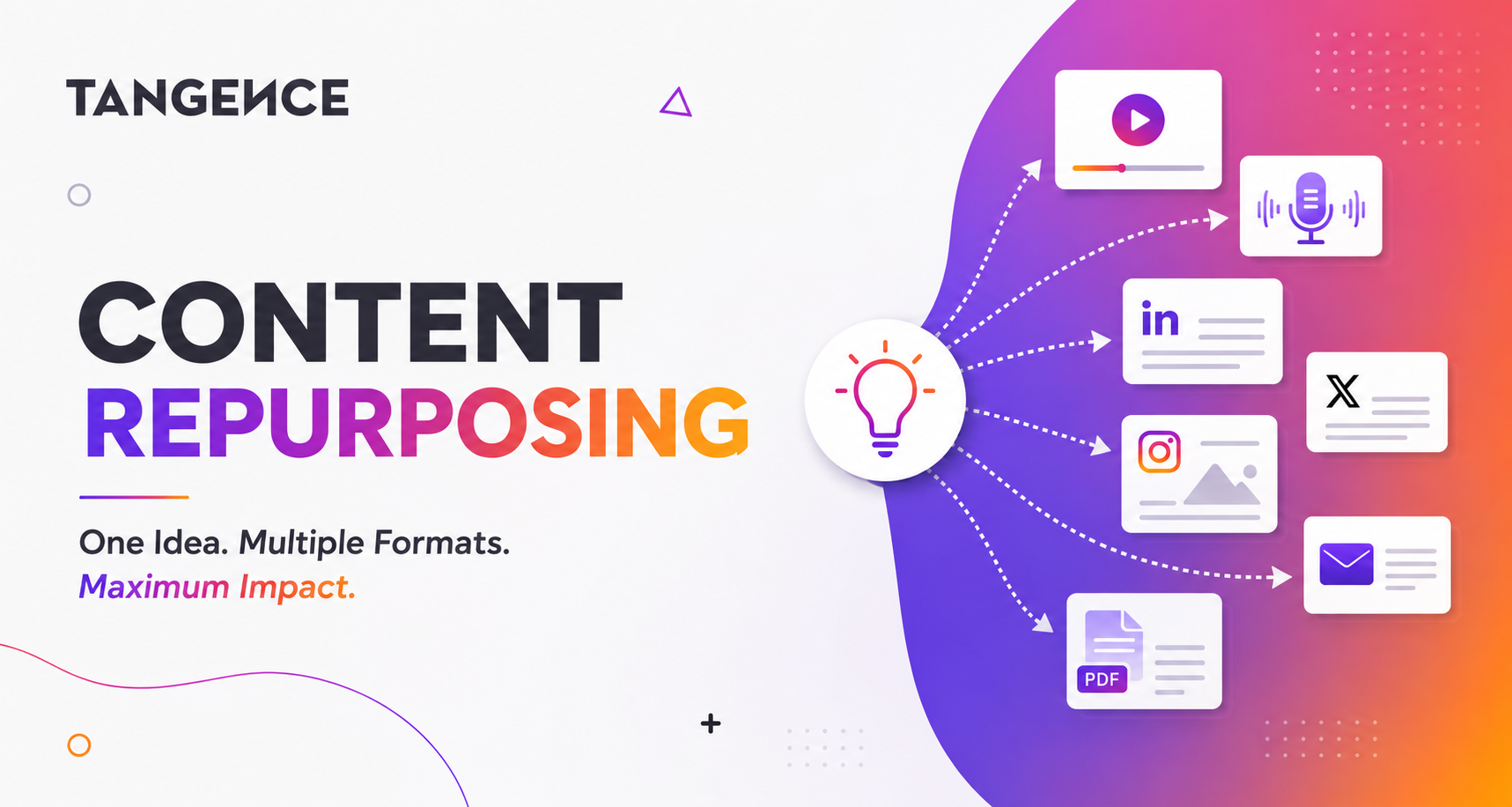
Content repurposing, also known as content recycling, means taking existing content and transforming it into new formats for different audiences on different platforms. It is not copying and pasting the same post everywhere. It is not lazy recycling. It is a smart strategy that pulls fresh value out of work you have already done.
Content repurposing deserves a place in your marketing strategy because it helps you:
- Turn one piece of content into multiple high-performing formats
- Reach audiences across different platforms and content channels
- Keep your marketing calendar active without constantly creating from scratch
- Maintain consistent brand messaging across campaigns
- Extend the lifespan and value of your best-performing content
- Increase content ROI while reducing production time
- Stay visible to audiences who consume content in different ways
That is seven pieces of content from one original post. That is the power of content repurposing.
Why Content Repurposing Is a Game-Changer for Marketers
Every marketer faces the same pressure. More platforms. Tighter deadlines. Smaller teams. Growing content repurposing as a core strategy solves all three problems at once.
The biggest benefit of content repurposing is scalability. Instead of creating every blog, video, or social post from scratch, you turn one strong piece of content into multiple formats. One idea can fuel videos, emails, social posts, webinars, infographics, and more with far less effort.
The Numbers Tell the Story
- Content repurposing saves 60 to 80% of your content creation time
- Brands that repurpose content see up to 300% more reach across platforms
- Brands that repurpose content often experience higher search visibility and up to 35% more organic traffic.
These numbers are not random. They reflect a real shift in how audiences consume content. People on LinkedIn want polished long-form takes. People on TikTok want quick 60-second tips. People on Pinterest want visual summaries. One format does not serve all. Content repurposing lets you meet every audience where they already are.
The Core Benefits of Content Repurposing
Let us walk through the key reasons why content repurposing belongs in every content marketing strategy.
1. Maximizes the Return on Your Best Content
Your top-performing blog post already proved it works. People read it. People shared it. People came back to it. Content repurposing lets you squeeze more value from that proven winner. You extend its life. You reach people who missed it the first time. You present the same great idea in a format they actually prefer.
2. Keeps Your Brand Visible Across Multiple Platforms
Consistency builds trust. But staying consistent across five or more platforms feels impossible when you start from scratch every time. Repurposing content gives you a steady flow of material without burning your team out. Each repurposed piece keeps your brand active on another channel.
3. Strengthens Your SEO Performance
Search engines reward brands that publish regularly around a topic. When you repurpose a blog post into a video, an infographic, and a podcast episode, you create multiple signals around the same keyword. You also earn more backlinks as different content formats attract different linking sources. Your content ranking climbs because you show up in more places.
4. Grows Your Audience Beyond Your Current Reach
Some people never read blogs. Some people skip videos. Some people only check LinkedIn. Content repurposing puts your ideas in front of people who would never find them otherwise. Buffer, the social media management platform, grew its content reach by 400 percent after building a systematic repurposing strategy. New formats bring new followers who become loyal fans over time.
5. Protects You from Platform Algorithm Changes
Relying on one platform is risky. Algorithm updates can cut your organic reach overnight. Repurposing content across multiple channels spreads that risk. If one platform reduces your visibility, your audience on other platforms keeps growing.
How to Pick the Right Content to Repurpose
Not every piece deserves a second life. Smart content repurposing starts with choosing the right material. Ask yourself these questions before you begin.
What Content Already Performs Well?
Check your analytics. Look at page views, time on page, social shares, and conversion rates. High-performing content has already proved it resonates with your audience. That makes it the safest bet for repurposing. Start with your top 10 posts or videos from the last 12 months.
What Content Is Evergreen?
Evergreen content stays relevant long after you publish it. How-to guides, industry definitions, foundational strategies, and timeless tips all fall into this category. A blog post titled “How to Write a Strong Call to Action” stays useful for years. Repurposing evergreen content gives you a steady supply of relevant material without chasing trending topics.
What Content Contains Multiple Ideas?
Long-form content, research reports, and detailed guides often hold dozens of standalone insights inside them. A 3,000-word article on email marketing strategy might contain 15 individual tips. Each tip becomes its own social media post, short video, or email snippet. Data-rich content works especially well because statistics always travel well across formats.
What Content Generates Leads?
Webinars, case studies, and in-depth guides that drive email signups or conversions deserve extra attention. These pieces have already proved they move people to take action. Repurposing them creates more entry points into that same proven path. More formats mean more chances to convert new visitors into leads.
Build High-Converting Email Campaigns → https://www.tangence.com/Emails-and-Landing.php
A Step-by-Step Process for Repurposing Content Effectively
Content repurposing works best when you follow a clear process. Here is a simple framework you can use right away.
Step 1: Run a Content Audit Every Quarter
Set a quarterly reminder to review your content library. Use metrics like page views, social shares, and email click rates to rank your content. Identify the top 10 to 15 pieces with the strongest performance. These become your repurposing candidates.
Step 2: Match Content to the Right Format
Not every piece suits every format. Match your content to the platform based on the type of information it contains.
- Data-heavy content works well as infographics
- Step-by-step guides work well as short videos or carousels
- Expert opinions and insights work well as podcast clips or LinkedIn articles
- Long-form research works well as an email newsletter series
- Customer success stories work well as social media testimonials
Turn Data Into Infographics →https://www.tangence.com/Infographics.php
Step 3: Adapt the Content for Each Platform
This step is where most people go wrong. They copy the same text and paste it everywhere. That approach does not work. Each platform has its own culture, format, and audience expectations. Adapt your message to feel native to each destination.
- LinkedIn readers want professional tone and structured insights
- Instagram audiences want visual storytelling and punchy captions
- TikTok viewers want fast-moving tips with personality
- Email subscribers want clear value delivered quickly
- YouTube viewers want in-depth explanations with practical examples
Step 4: Update Any Outdated Information
Before you repurpose old content, check every fact, statistic, and example. Outdated information damages credibility. Update any numbers that changed. Remove references to old tools or platforms. Add any new insights that strengthen the original piece. Fresh accuracy makes repurposed content feel new rather than recycled.
Step 5: Build a Content Repurposing Calendar
Plan your repurposing schedule the same way you plan original content. Assign each repurposed piece a publish date and a platform. Space them out so you stay consistent without overwhelming your audience. A simple spreadsheet works fine for tracking what comes from where.
The Best Content Formats for Repurposing
Understanding which formats work best for repurposing helps you get the most out of every original piece.
Blog Posts to Social Media
A long blog post contains many bite-sized insights. Pull out the strongest ones and turn them into individual social media posts. Each insight gets its own post. Each post links back to the original blog for people who want more depth.
Blog Posts to Video Scripts
Written tutorials and how-to guides translate well into video. The structure already exists. You rewrite the text in a conversational spoken style and record it. Short videos under 10 minutes work well on YouTube. Videos under 60 seconds perform strongly on TikTok and Instagram Reels.
Convert Content Into Videos → https://www.tangence.com/Videos.php
Webinars and Podcasts to Written Content
Video and audio content contain a goldmine of written material. Transcribe your webinar or podcast episode. Edit the transcript into a clean blog post or article. Pull the strongest quotes out as standalone social media posts. One 60-minute webinar can generate a full month of content.
Research Reports to Infographics
Data tells a story that visuals bring to life. Take the strongest statistics from a research report and build an infographic around them. Infographics get shared three times more often than other content types. They also work well across Pinterest, LinkedIn, and Instagram.
Email Newsletters to Blog Posts
Your email newsletters already contain well-crafted insights your subscribers love. Expand your strongest newsletters into full blog posts. Add more depth, examples, and supporting data. Then publish them on your website for search engine traffic.
Common Mistakes to Avoid in Content Repurposing
Content repurposing delivers strong results when you do it right. These are the traps that slow marketers down.
- Repurposing everything without a strategy. Pick content that already works. Do not waste time repurposing weak performers.
- Using the same exact text on every platform. Adapt the message for each platform’s culture and format.
- Skipping the update step. Old facts hurt your credibility. Always verify your data before publishing.
- Ignoring your analytics. Track how repurposed content performs on each platform. Learn what works and double down on it.
- Publishing everything at once. Space out repurposed content over time for steady visibility.
How to Track the Success of Your Repurposed Content
Repurposing without measurement is guesswork. Track these key metrics to know what works.
- Engagement rate: Are people liking, sharing, and commenting on repurposed posts?
- Traffic from each platform: Which format drives the most visitors back to your site?
- Lead generation: Does repurposed content contribute to email signups or conversions?
- Follower growth: Do new formats attract new followers on each platform?
- Return visits: Do people come back after discovering you through a repurposed piece?
Review these metrics monthly. Identify which content types and platforms deliver the best results. Then prioritize those in your next repurposing cycle.
Content Repurposing and SEO: A Powerful Partnership
Content repurposing and search engine optimization work better together than either does alone. Here is why.
Publishing Multiple Formats Around One Topic Builds Topical Authority
Search engines reward brands that cover a topic thoroughly. When you publish a blog post, a video, a podcast episode, and an infographic all focused on the same subject, you signal deep expertise on that topic. Google reads that consistency as authority. Your rankings climb as a result.
Repurposed Content Earns More Backlinks from More Sources
Different content formats attract links from different sources. A data-rich infographic earns links from visual content sites. A YouTube video earns embeds from bloggers who cover the topic. A detailed guide earns links from industry publications. Each repurposed format opens a new door for high-quality backlinks. Those backlinks push your domain authority higher and improve your search ranking over time.
Why Content Repurposing Fits Every Type of Business
Small businesses, personal brands, enterprise marketing teams, and solo creators all benefit from content repurposing. The strategy scales up or down depending on your resources.
A solo blogger can turn one weekly article into five social posts and one email. A marketing team of five can run a full repurposing pipeline that feeds 10 platforms from 4 original pieces per month. An enterprise brand can build a content repurposing system that supports global campaigns from a central library of core assets.
The entry point is low. The upside is high. Any business that creates content can start repurposing today.
Conclusion: Your Content Already Has More Value Than You Think
Here is the honest truth about content repurposing. Most creators sit on a goldmine without knowing it. Every blog post, webinar, podcast episode, and research report you published contains untapped value. You did the hard work of researching and creating. Content repurposing simply makes sure that work reaches everyone it should.
Stop letting great content fade after one publish date. Start treating every strong piece as a foundation. Build from it. Stretch it across platforms. Give it new life in new formats. Your audience grows when more people find your ideas. Your authority builds when your content shows up in more places. Your team saves time when you work smarter instead of starting from zero every week.
Start with one piece today. Pick your best-performing blog post. Break it into five social media posts. Schedule them for next week. That is content repurposing in action. And once you see the results, you will never go back to the “create and forget” approach again.
Need Help Getting More Value From Your Content?
Creating great content is only half the battle. The real challenge is making sure it continues to drive visibility, engagement, and business results long after it’s published.
At Tangence, we help brands turn high-value content into scalable, multi-channel campaigns through strategic content repurposing, SEO optimization, and distribution planning.
Ready to get more ROI from your content? Contact us to discuss your content strategy and repurposing goals.
FAQs:
Q1: How often should I audit my content for repurposing?
Ans: Run a content audit every quarter. Review page views, shares, and click rates. Identify your top 15 pieces. These become your repurposing candidates for the next cycle.
Q2: Can small businesses benefit from content repurposing?
Ans: Absolutely. A solo blogger can turn one weekly article into five social posts and one email. You do not need a big team. The strategy scales to any budget or resource level.
Q3: How do I avoid making repurposed content feel lazy or repetitive?
Ans: Never copy-paste the same text everywhere. Adapt tone and format for each platform. Update outdated facts. Make every piece feel native to its destination.
Q4: Which content format gets shared the most when repurposing?
Ans: Infographics perform strongest. They get shared three times more than other content types. Data-heavy reports and research work especially well when transformed into visual infographic formats.
Q5: What happens if I rely on just one platform without repurposing?
Ans: It is risky. Algorithm changes can cut your reach overnight. Repurposing spreads that risk across multiple channels. If one platform drops your visibility, other platforms keep your audience growing.