blog
How AI Is Transforming Design Printing Services
Businesses today expect speed, accuracy, and consistency from their print partners. At the same time, clients demand creative designs that match their brand identity and market goals. Because of this shift, companies that offer design printing services must combine creativity with smart technology to stay competitive.
Artificial Intelligence now plays a central role in this transformation. It helps teams work faster, reduce errors, and deliver high quality print materials without delay. Moreover, AI supports better planning, smarter design suggestions, and improved production control.
When companies adopt AI driven systems, they do not replace human creativity. Instead, they strengthen it with data, automation, and clear insights. Let us continue reading how this balance between technology and human skill is changing how design printing services operate across industries.
1. Smarter Design Creation with AI Tools
AI powered design tools now support graphic teams at every stage of the creative process. Instead of starting from a blank page, designers receive layout suggestions based on industry trends and brand guidelines. As a result, they save time while still delivering fresh and unique visuals.
Moreover, AI analyzes color combinations, font styles, and spacing rules to maintain brand consistency within design printing services. When a business orders marketing materials, the system automatically checks whether the design aligns with the brand kit and predefined guidelines. As a result, design printing services maintain visual accuracy across every printed asset. Therefore, teams avoid common mistakes, reduce unnecessary revisions, and deliver high-quality materials with greater efficiency and confidence.
In addition, AI tools learn from past projects. When clients request similar campaigns, the system suggests improved versions based on previous performance data. This support allows design printing services to deliver faster turnarounds while maintaining creative quality.
2. Automated Pre-Press Checks for Error-Free Printing
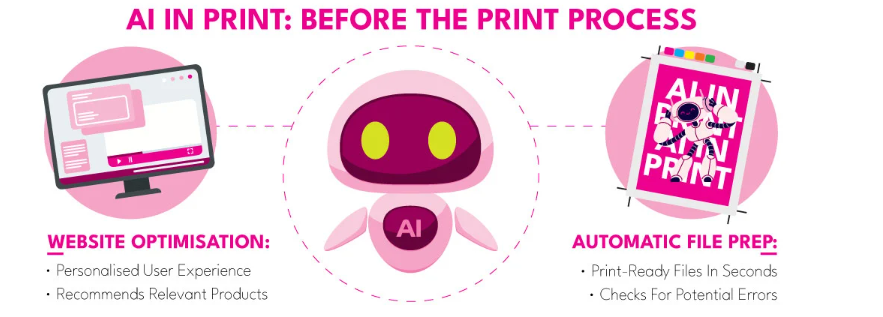
Pre press errors often lead to wasted material and delayed delivery. However, AI now reviews files before printing begins. It checks resolution, alignment, color profiles, and bleed settings with high accuracy.
Source : Aura print
Because the system scans every detail, it quickly identifies issues that human eyes may overlook. For example, it can detect low resolution images or incorrect color formats before they reach the printer. As a result, companies reduce reprints and control operational costs.
Furthermore, automated checks improve workflow efficiency. Teams no longer spend long hours reviewing each file manually. Instead, they focus on client communication and creative improvements. This shift helps design printing services maintain quality standards while improving productivity.
3. Personalized Print Campaigns at Scale
Modern marketing depends on personalization. Customers respond better to content that feels relevant to their needs. AI supports this goal by enabling variable data printing at scale.
How AI Supports Personalization
- AI analyzes customer data to understand buying behavior
- It segments audiences based on preferences and demographics
- It automatically adjusts text images and offers in print layouts
- It tracks response data for future improvements
Because of these capabilities, businesses can create personalized brochures, direct mailers, and promotional materials for thousands of recipients at once. Each piece feels custom made even though the system produces it at scale.
Therefore, design printing services that use AI can help clients improve engagement and strengthen brand loyalty through targeted campaigns.
4. Predictive Maintenance for Printing Equipment
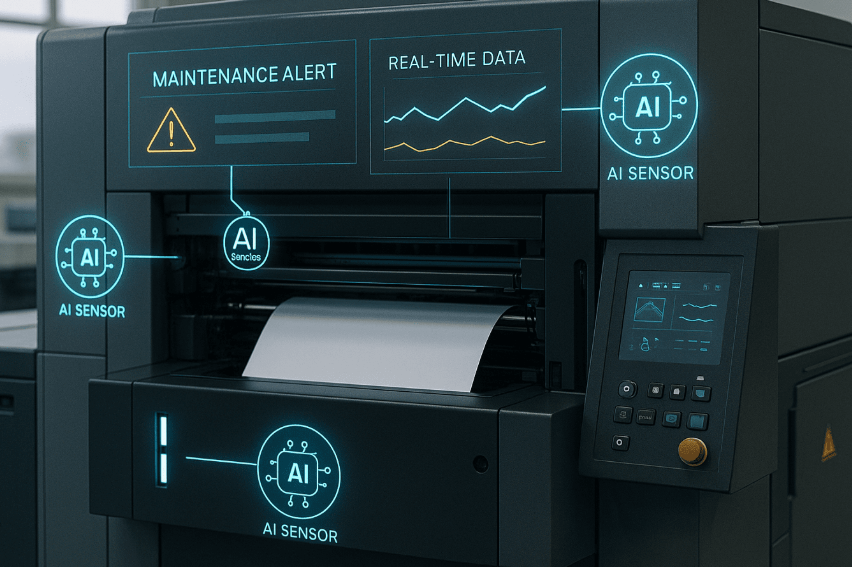
Printing machines must operate smoothly to meet delivery timelines. However, unexpected breakdowns can interrupt production and increase costs. AI helps prevent these issues through predictive maintenance.
Source : Printing technology
Sensors installed in printing equipment collect performance data in real time. Then AI analyzes this data to detect unusual patterns such as temperature changes or vibration levels. When the system identifies a potential issue, it alerts technicians before a major problem occurs.
As a result, companies reduce downtime and maintain consistent output quality. Moreover, predictive maintenance extends machine life and protects long term investments. This reliability strengthens the overall performance of design printing services and ensures that client deadlines remain secure.
5. Faster Proofing and Client Approvals
Client approval often delays print projects. However, AI based proofing systems streamline this stage by offering smart comparison tools and instant feedback options.
For example, AI highlights differences between revised versions and original designs. It also suggests improvements based on layout rules and print standards. Because clients see clear visual comparisons, they make faster decisions.
In addition, online proofing platforms powered by AI allow teams and clients to collaborate in real time. They leave comments, approve changes, and track updates without long email chains. This clear communication speeds up project completion and improves client satisfaction.
Through this process, design printing services build stronger relationships while maintaining efficient timelines.
6. Better Demand Forecasting and Inventory Planning
Print companies often manage paper stock, ink supplies, and packaging materials. Poor planning can lead to overstock or shortages. AI improves inventory management by analyzing historical data and seasonal trends.
Because the system studies order patterns, it predicts future demand with strong accuracy. For example, it may forecast higher demand for marketing materials during festive seasons or product launches. Therefore, companies prepare stock in advance and avoid urgent purchases at higher costs.
Moreover, AI supports smarter scheduling. When teams know which projects will arrive and when, they allocate resources effectively. This planning reduces stress and supports stable growth in design printing services.
7. Enhanced Quality Control with Image Recognition
Quality control plays a critical role in print production. Even small defects such as color shifts or alignment errors can affect brand reputation. AI powered image recognition now monitors print output in real time.

Source – Synergy
High resolution cameras capture printed sheets as they move through the production line. Then AI compares each sheet with the approved digital design. If it detects variation beyond acceptable limits, it immediately alerts the operator.
As a result, teams correct issues before large batches go to waste. This real time monitoring ensures consistent color accuracy and sharp image quality. Furthermore, it builds trust with clients who expect professional standards.
By combining human oversight with AI inspection, design printing services achieve a higher level of reliability and precision.
Conclusion
Artificial Intelligence continues to reshape the print industry with clarity and purpose. It strengthens creative design, improves operational control, and supports smarter decision making across every stage of production.
At the same time, it empowers teams rather than replacing them. Designers gain better tools, operators gain stronger control, and managers gain clear insights into performance.
When businesses invest in AI driven systems, they prepare their design printing services for long term success. They deliver personalized campaigns with confidence, maintain consistent quality, and respond quickly to market demands.
With the support of forward-thinking partners such as Tangence, organizations can streamline workflows, reduce errors, and enhance customer engagement. Most importantly, they build deeper trust with clients who value accuracy and timely delivery.